



Inlaid Wooden Chess Table
An inlaid wooden chess table brings function and historic craftsmanship together, offering a dedicated surface for play that doubles as a striking centrepiece.
Inlaid Wooden Chess Table
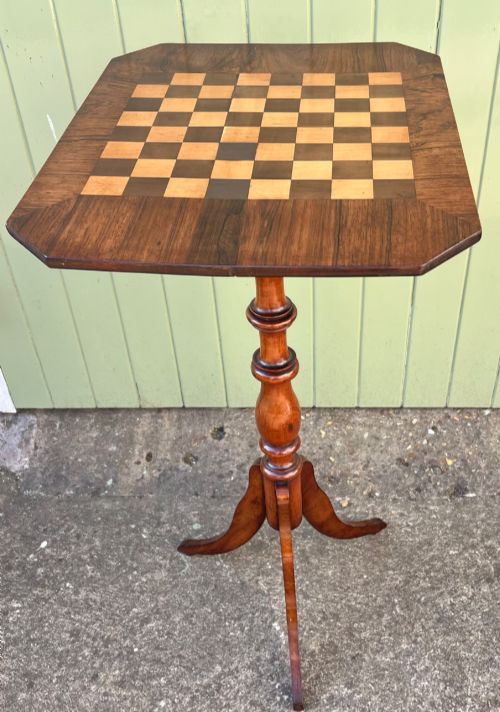
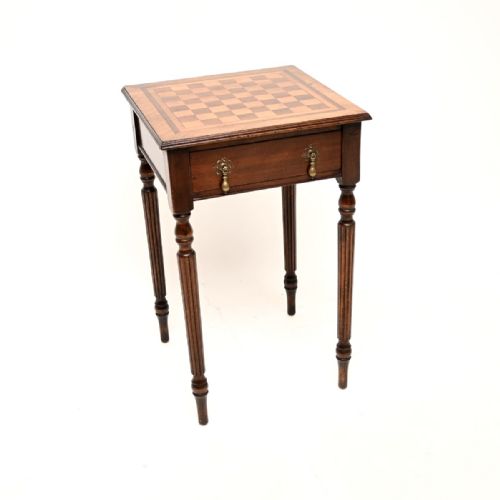
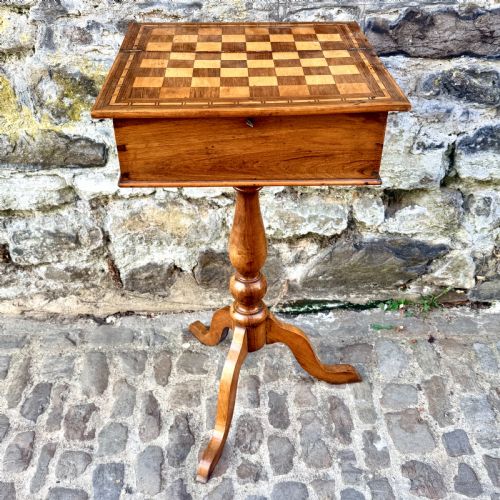
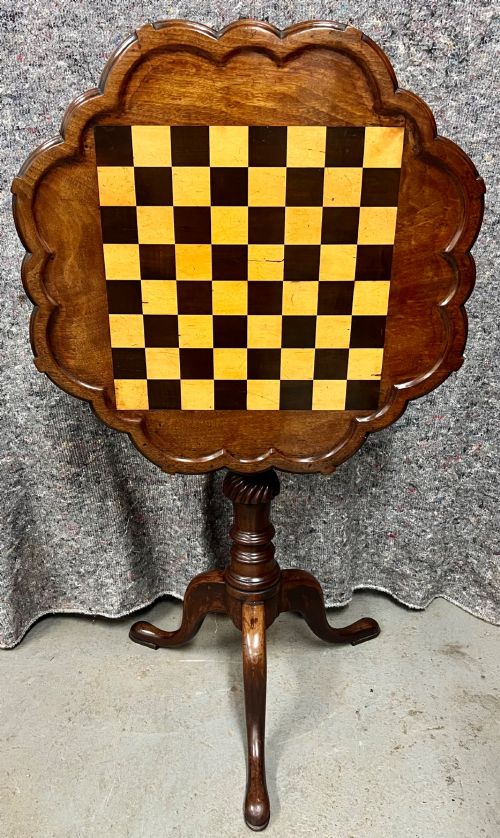
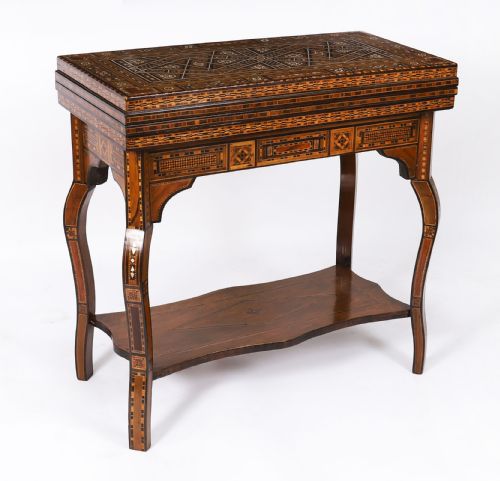
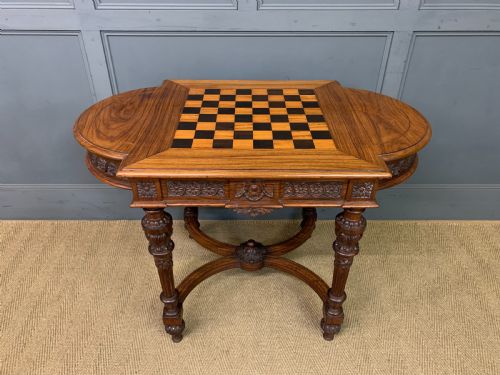
An inlaid wooden chess table combines practical utility with decorative marquetry, appearing in forms ranging from tripod occasional pieces to elaborate games compendiums and sewing tables. These items span periods from the Georgian era through the Regency and Victorian epochs, reflecting changing domestic pastimes.
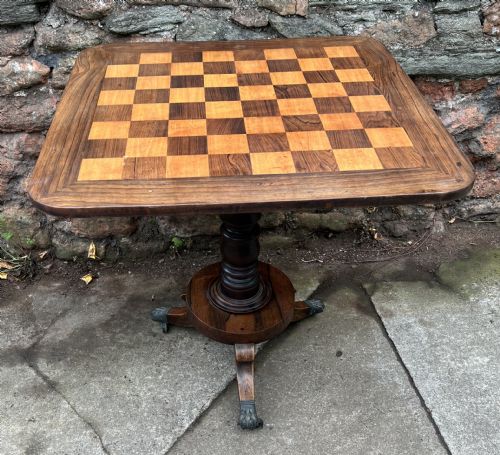
The versions most commonly met on this page include walnut and rosewood occasional tables with chequered surfaces, alongside French Provincial and Anglo-Indian variants. Many incorporate multi-game functionality, serving card or backgammon players alongside chess enthusiasts.
Makers utilised diverse timbers to delineate the board squares, often contrasting dark woods like mahogany or ebony with lighter boxwood, satinwood, or birch. Collectors encounter both folding boards and solid-topped tables designed specifically for the parlour.
Assessing quality and execution
The precision of the wood inlay defines the standard of a piece, with superior examples showing tight joints between contrasting squares of boxwood, ebony, and walnut. Sloppy alignment or lifting veneers indicate lesser craftsmanship.
Timber selection and structural stability separate standard production items from finer regional or cabinet-maker pieces, particularly in tripod bases and multi-functional games compendiums. The richness of the grain in rosewood or mahogany bodies adds to the visual weight of the furniture.
Inlaid Wooden Chess Table Retail Price Guide 2026
Typical asking prices for inlaid wooden chess table among the pieces listed under this phrase on Sellingantiques today, from the lower quarter to the upper quarter. They describe what is for sale here now, not the wider market.
Some tables double as sewing desks, proving that 19th-century artisans expected you to stitch a hem while plotting your next checkmate.
Gillows·British Chess Company
The Inlaid Wooden Chess Table Glossary
- Inlay
- The technique of inserting pieces of contrasting materials into a recessed solid wood base to form a decorative design. This method creates the flush playing surface characteristic of chess tables.
- Parquetry
- A geometric mosaic of wood pieces used for decorative floors and tabletops. It frequently forms the repeating light and dark squares of a chess board.
- Marquetry
- The art and craft of applying pieces of veneer to a structure to form decorative patterns and pictures. Makers utilised this for floral or geometric borders surrounding the central playing area.
- Tripod Table
- A piece of furniture supported by a central pillar resting on three feet. These frequently appear in Georgian and Victorian games tables for stability on uneven floors.
- Games Compendium
- A boxed set or multi-functional table containing equipment for several different pastimes. These often incorporate chess, backgammon, and card playing surfaces.
Inlaid Wooden Chess Table: Frequently Asked Questions
What is an inlaid wooden chess table?
An inlaid wooden chess table is a piece of antique furniture featuring an integrated playing board created through marquetry or parquetry techniques.
These pieces served functional roles in historic parlours, combining domestic utility with surfaces dedicated to leisure and social gaming.
How were antique chess tables used?
Victorians and Georgians utilised these tables for structured board games, social recreation, and occasional writing or sewing tasks.
Many designs incorporated drawers for pieces or multi-game boards for cards and backgammon, reflecting the versatility expected in period drawing rooms.
How do I style a chess table at home?
Place the table as an occasional centrepiece in a living room or study, allowing the contrasting wood grains to stand out.
Keeping a set of antique chess pieces displayed on top maintains the historic character and dual purpose of the furniture.
How can I tell the period of a games table?
Examine the timber choices, structural framing, and inlay styles, as Georgian and Regency pieces favour mahogany and rosewood with understated geometric precision.
Victorian and later 19th-century examples often introduce heavier walnut frames, carved tripod supports, or multi-game compartments.