



Inlaid Wood Trunk
An inlaid wood trunk brings deep warmth and intricate detail into a room, offering both practical storage and centuries of craftsmanship.
Inlaid Wood Trunk
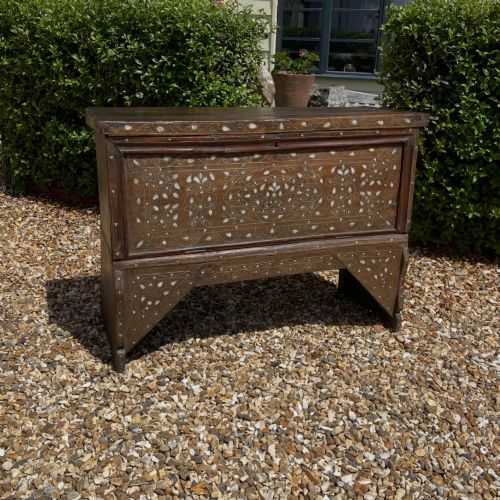
When you search for an inlaid wood trunk, you encounter a robust range of storage chests, blanket boxes, and coffers spanning multiple centuries and geographic origins. These pieces range from substantial 17th century oak coffers to intricately patterned Middle Eastern and Syrian chests adorned with contrasting materials.
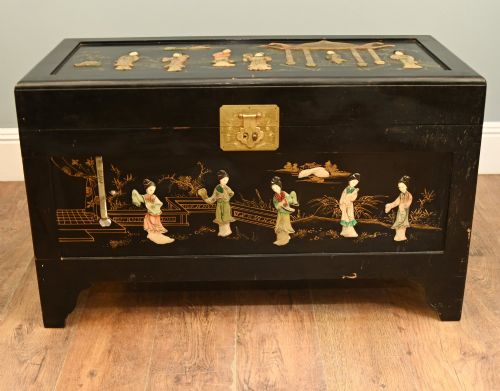
You are most likely to meet pieces from the 19th century on this page, reflecting global trade and diverse regional joinery traditions. Forms vary from Chinese camphor wood storage boxes to elaborate Anglo-Indian and Ottoman examples.
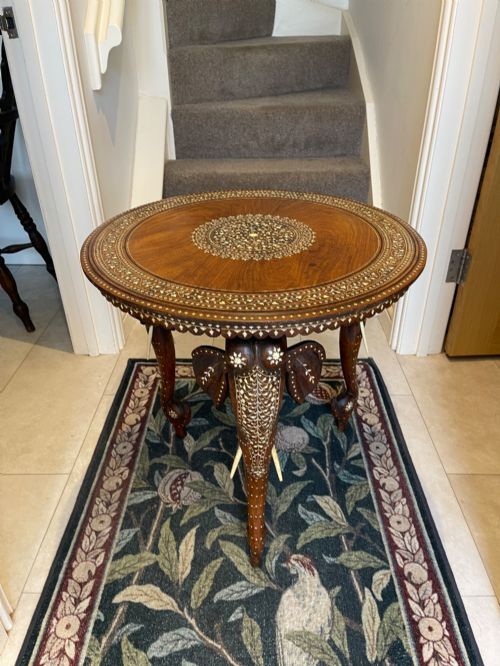
Alongside traditional chests, the broader inventory captures related furniture and clocks sharing similar period materials and decorative surfaces, though storage chests remain the primary focus of the search.
Materials and Construction Techniques
The construction relies on solid timbers such as mahogany, rosewood, oak, and camphor wood, providing a stable foundation for intricate surface decoration. Cabinetmakers utilised dovetail joints and sturdy framing to ensure these storage pieces endured decades of daily use.
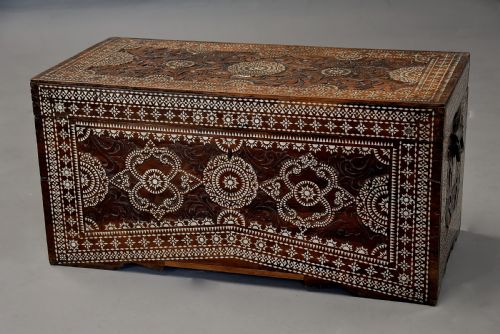
Inlay work incorporates contrasting elements like mother-of-pearl, brass, and lighter wood veneers to create geometric or figurative patterns across the lids and panels. Some regional workshops also applied lacquer finishes or intricate carved details alongside the core wood structure.
Inlaid Wood Trunk Retail Price Guide 2026
Typical asking prices for inlaid wood trunk among the pieces listed under this phrase on Sellingantiques today, from the lower quarter to the upper quarter. They describe what is for sale here now, not the wider market.
Camphor wood trunks carry a lingering, medicinal scent across oceans and centuries, proving that furniture can whisper of distant trade winds.
Assessing Craftsmanship and Detail
Quality separates through the precision of the inlay work and the harmonious integration of contrasting materials into the host timber. Finer examples display tight, seamless fitting of mother-of-pearl or metal inserts without excessive gaps or crude filler.
The integrity of the internal structure and the retention of original hardware, such as hinges and locks, dictate the standing of a trunk. Superior pieces maintain their structural balance while showcasing crisp carving and well-preserved surface patination.
The Inlaid Wood Trunk Glossary
- Inlay
- A technique where pieces of a contrasting material are embedded into a recessed surface to form a decorative design. This method defines the primary aesthetic of the search.
- Mother-of-pearl
- An iridescent inner layer of mollusc shell frequently used in thin sections to create luminous highlights in geometric or floral trunk decorations.
- Coffer
- A heavy wooden chest traditionally used for storing valuables, linens, or documents. These form the sturdier, earlier examples found within storage categories.
- Camphor wood
- An aromatic timber frequently utilised in maritime and Asian storage chests to deter insects and impart a distinct scent to stored textiles.
- Marquetry
- The art of applying decorative veneer pieces to a structure to form detailed pictures or symmetrical patterns.
Inlaid Wood Trunk: Frequently Asked Questions
What were inlaid wood trunks used for historically?
These chests served primarily for storing heavy textiles, dowry items, valuables, and personal belongings across various households and global trade routes.
Their robust construction and secure locking mechanisms ensured that precious goods remained protected during transport and daily domestic use.
How do I care for an antique inlaid trunk?
Keep the wood conditioned using appropriate natural waxes and avoid placing the chest in direct sunlight or near sudden heat sources.
Gentle dusting with a soft cloth preserves the delicate mother-of-pearl and veneer inlays without risking loosening or surface abrasion.
How can I tell different regional styles apart?
Examine the choice of base timber combined with the specific motifs used in the mother-of-pearl or metal inlay work.
Middle Eastern and Syrian trunks often feature dense geometric banding, while Chinese pieces frequently utilise camphor wood and distinctive brass hardware.
Are these trunks suitable for modern living spaces?
They provide functional storage for blankets and household items while serving as substantial focal points in hallways, bedrooms, or living rooms.
Their varied historical origins allow them to anchor both traditional period interiors and more contemporary eclectic schemes.