



Inlaid Wood Tray Table
An inlaid wood tray table brings refined surface decoration and a removable top together for practical daily service.
Inlaid Wood Tray Table
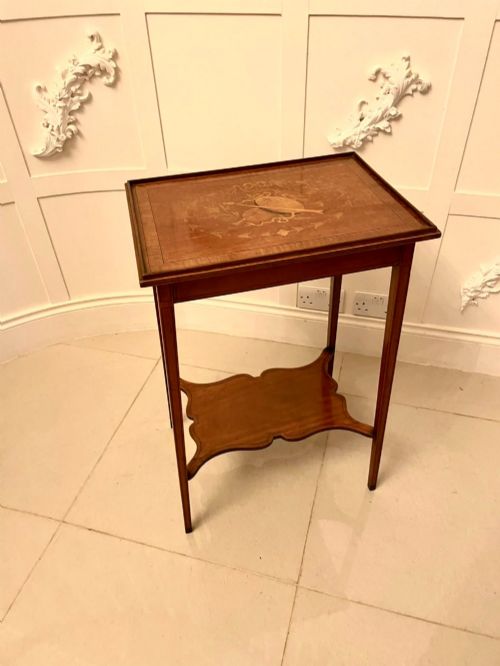
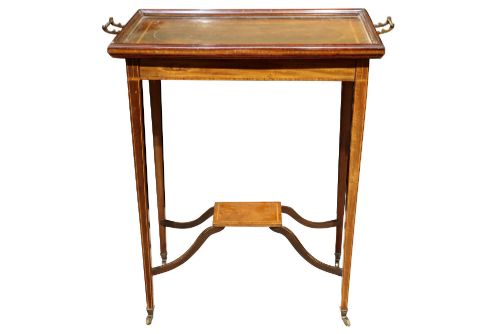
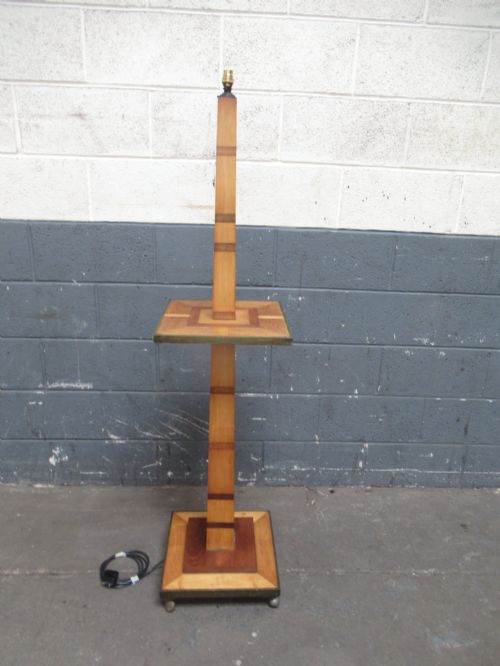
An inlaid wood tray table combines a stable support frame with a removable or lipped upper tray designed for serving or display. These pieces appear in forms ranging from compact occasional tables and bedside stands to multi-tiered etageres.
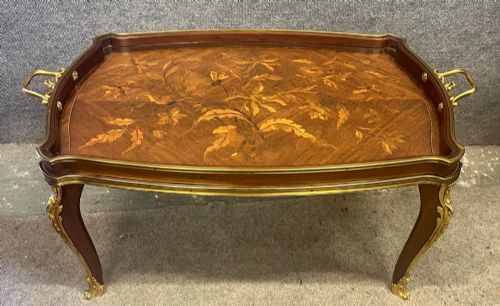
The material record spans Edwardian, Georgian, and 19th Century eras, alongside Louis XV Revival and Sheraton Revival aesthetic influences. Most examples rely on versatile occasional table and etagere formats suited to drawing rooms or sitting areas.
How they were made
Cabinet makers utilised foundational timbers such as mahogany, walnut, and oak to provide structural integrity for the frames. Decorative surfaces frequently integrated contrasting veneers like satinwood, kingwood, and burr wood.
Detailing often incorporated intricate marquetry and parquetry patterns, sometimes finished with brass handles or ormolu mounts to accent the edges and joints.
Inlaid Wood Tray Table Retail Price Guide 2026
Typical asking prices for inlaid wood tray table among the pieces listed under this phrase on Sellingantiques today, from the lower quarter to the upper quarter. They describe what is for sale here now, not the wider market.
What varies in quality
The refinement of the surface decoration sets finer examples apart, particularly the precision of the contrasting timber marquetry and the crispness of the grain across the top. Stronger pieces maintain structural rigidity in the tray surround and legs without excess bulk.
The choice of secondary timbers and the quality of the brass or ormolu mounts indicate the original workshop tier, distinguishing standard utility pieces from high-status commissions.
The Inlaid Wood Tray Table Glossary
- Etagere
- A set of open shelves for displaying small objects. These tiered stands often incorporate a tray top on the upper level.
- Marquetry
- Decorative woodwork where pieces of veneer are fitted into a ground material to form pictures or geometric patterns. This technique defines the visual character of the surfaces.
- Parquetry
- Geometric mosaic woodwork used for floors or furniture tops. It creates repeating patterns using contrasting wood blocks.
- Ormolu
- Gilded bronze mounts applied to furniture for decoration. These metal details appear on revival pieces.
- Satinwood
- A durable hardwood with a lustrous yellowish grain. Makers used it extensively for contrasting inlay work.
Inlaid Wood Tray Table: Frequently Asked Questions
What is an inlaid wood tray table used for?
These pieces function as flexible surface furniture, serving drinks or displaying small decorative objects. The removable tray element allows items to be carried directly from room to room.
In daily living, they act as compact occasional tables beside seating or as decorative accent pieces in reception spaces.
How do I date an inlaid wood tray table?
Dating relies on identifying the underlying timber choices, construction methods, and stylistic revival markers like Edwardian Sheraton Revival or Louis XV forms. Secondary wood types and finish characteristics help narrow the period.
Comparing the specific marquetry style against known nineteenth and early twentieth-century design books provides further chronological context.
Where should I place an inlaid wood tray table?
These tables fit well beside armchairs or sofas where the removable surface can support books or tea service. Their compact proportions suit smaller corners and landings.
Keeping them away from direct sunlight protects delicate satinwood and mahogany veneers from fading over time.
How do I care for inlaid wood surfaces?
Routine maintenance involves dusting with a soft, dry cloth to prevent particulate accumulation on the veneer. Avoid chemical polishes that can lift delicate marquetry work.
Maintaining stable room humidity prevents the timber foundation and inlaid veneers from expanding or cracking.