

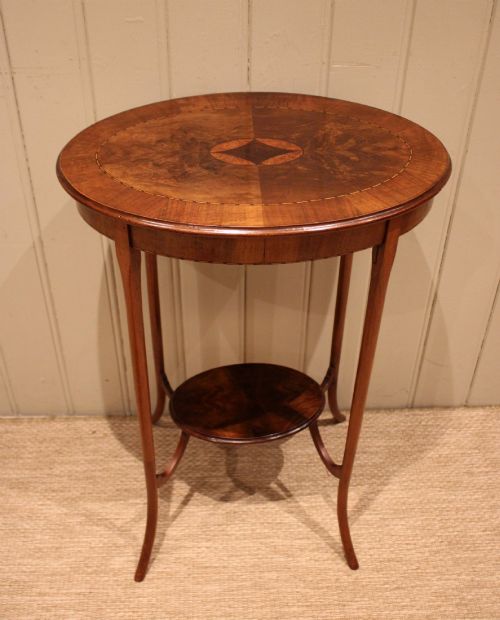
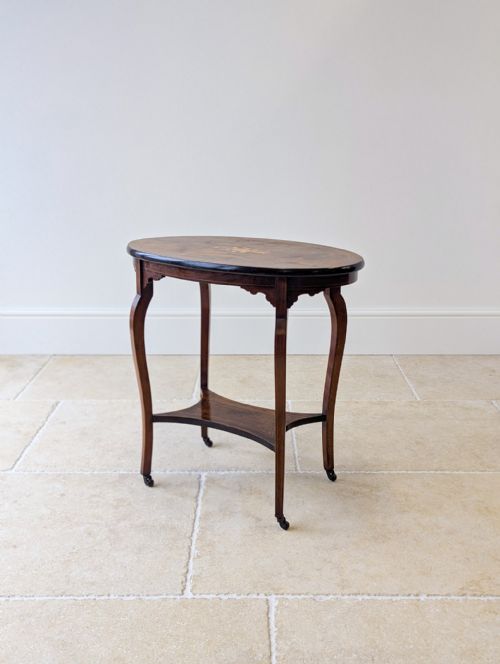
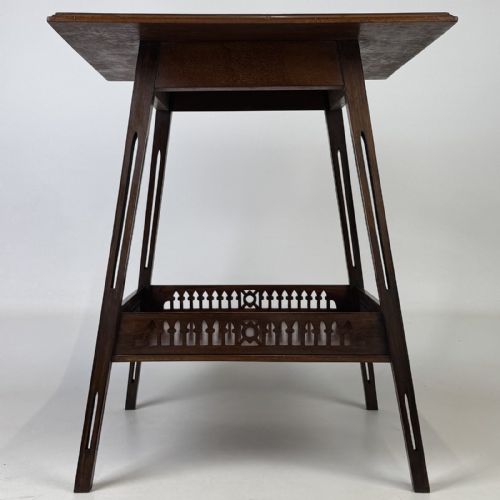
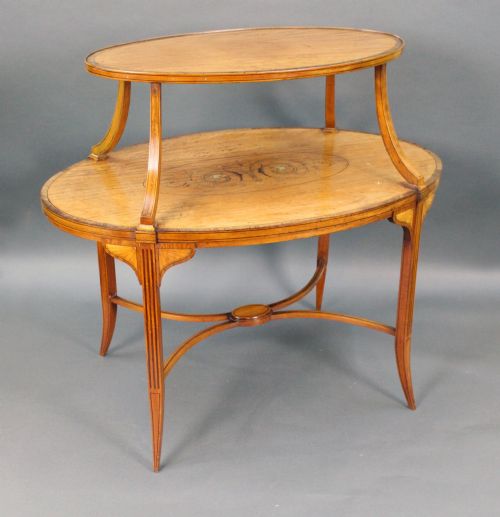
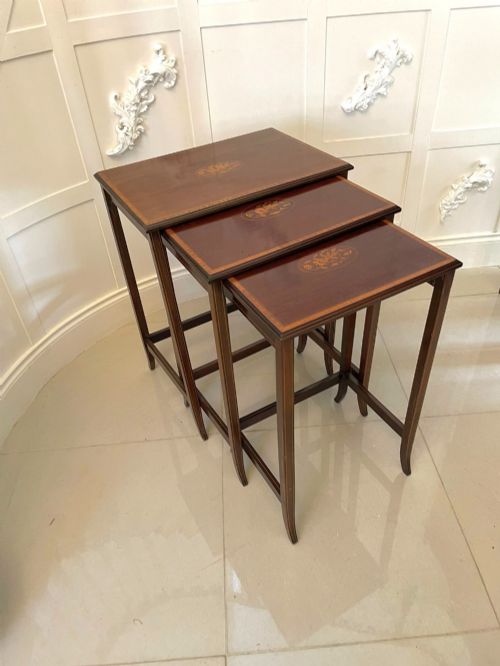
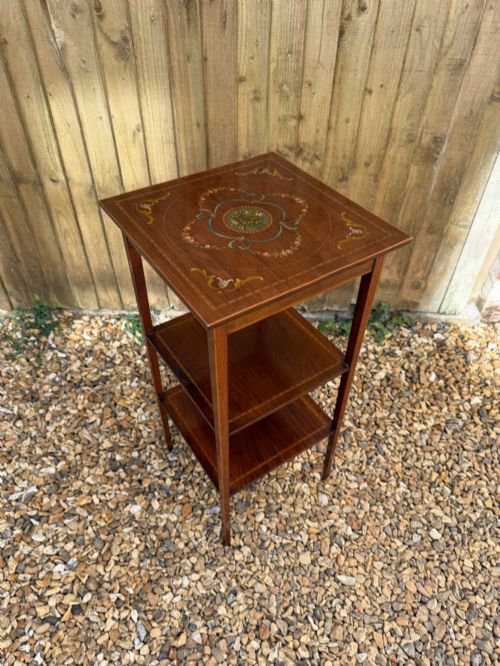
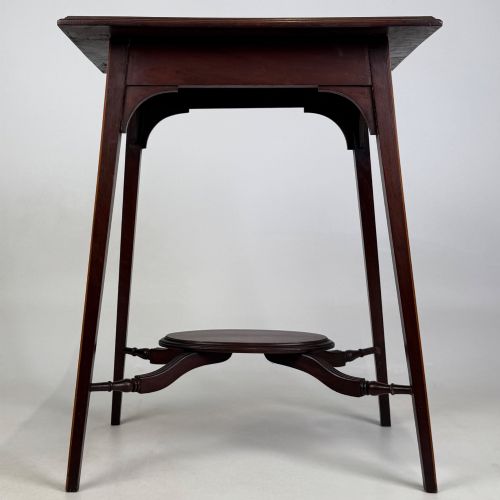
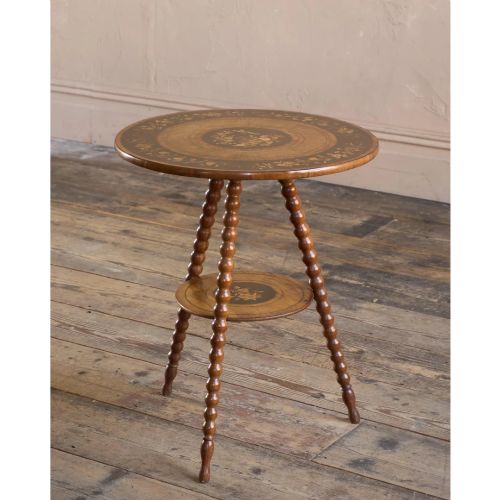


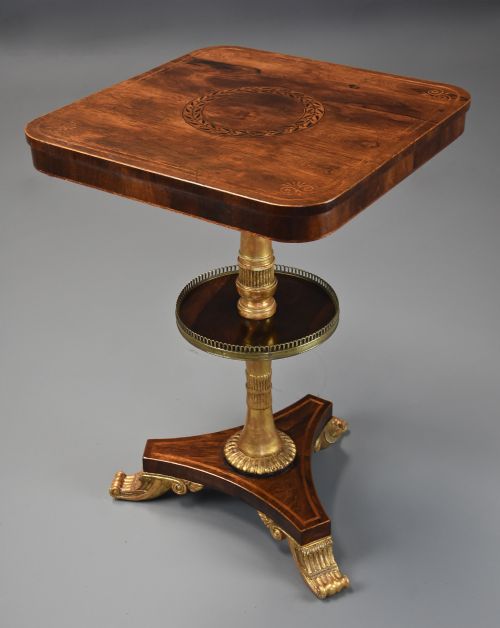
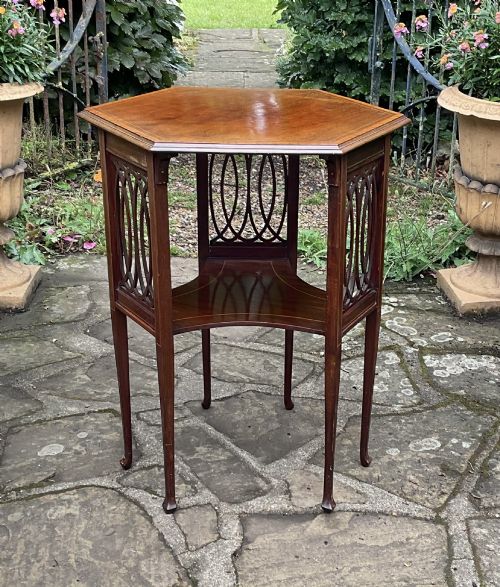
Inlaid Wood Tier Table
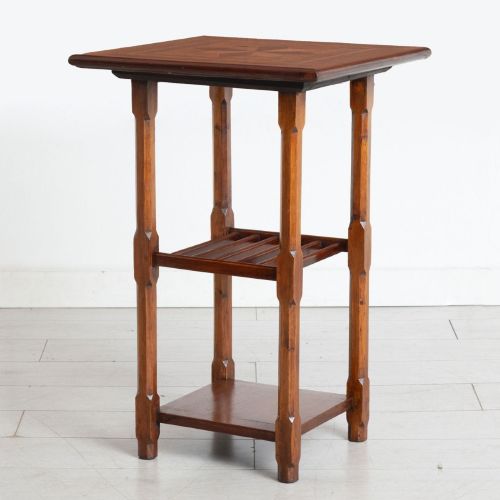
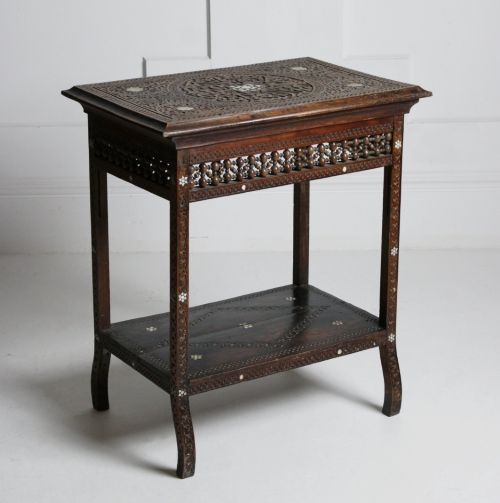
An inlaid wood tier table brings layered surface space and delicate craftsmanship into a room.
Inlaid Wood Tier Table
When you search for an inlaid wood tier table, you encounter multi-level surfaces designed for display or utility, most frequently appearing as Edwardian or late nineteenth-century occasional pieces.
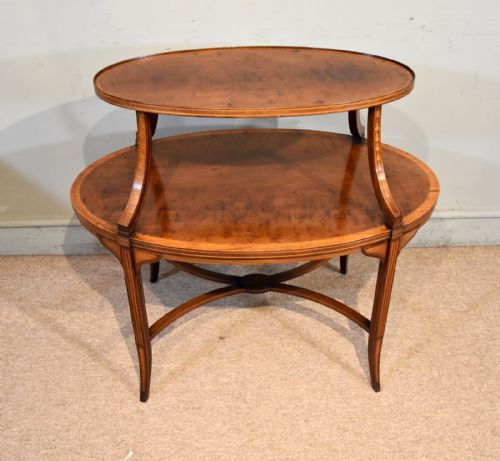
The material record shows a strong presence of mahogany, rosewood, and walnut structures finished with contrasting satinwood or boxwood inlay across multiple platforms.
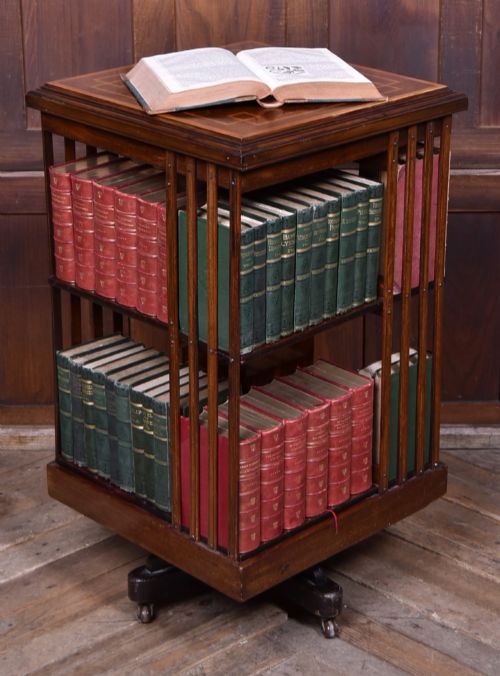
These multi-decked formats span side tables, etageres, and revolving bookcases, offering varied vertical arrangements built for compact placement in sitting rooms.
How they were made
Cabinetmakers constructed these frames primarily in mahogany, rosewood, and walnut, frequently applying fine veneers to stability timbers to achieve smooth flat surfaces.
Decoration relied on precise boxwood and satinwood stringing or pictorial marquetry inlaid directly into the top surfaces and secondary tiers.
Structural joints often incorporated brass mounts, galleried edges, or turned supports to stabilise the multiple tiers.
Inlaid Wood Tier Table Retail Price Guide 2026
Typical asking prices for inlaid wood tier table among the pieces listed under this phrase on Sellingantiques today, from the lower quarter to the upper quarter. They describe what is for sale here now, not the wider market.
Several designs include revolving bookstands to ensure your reading material remains accessible from every angle of the room.
What varies in quality
Quality rests in the precision of the timber selection and the crispness of the inlay work, where sharp joints and dense grain patterns distinguish superior workshops.
The complexity of the tier architecture and secondary detailing, such as finely turned legs or cast brass galleries, separates standard commercial production from exhibition-grade execution.
Edwards & Roberts·Collingson & Lock·Majorelle
The Inlaid Wood Tier Table Glossary
- Etagere
- A piece of furniture consisting of a set of open shelves or tiers for displaying small objects. These multi-decked tables appear frequently in nineteenth-century and Edwardian forms.
- Marquetry
- Decorative inlay using thin slices of wood and other materials to form pictorial patterns on a solid ground. This technique defines the ornamented tops of many tables in the evidence.
- Parquetry
- Geometric mosaic woodwork used for floors or furniture tops. This patterning provides patterned surfaces across several walnut and kingswood listings.
- Satinwood
- A durable, lustrous yellow-brown timber native to Ceylon and India used extensively for contrasting inlay and stringing. It forms the bright decorative borders seen on Edwardian pieces.
Inlaid Wood Tier Table: Frequently Asked Questions
What is an inlaid wood tier table used for?
These multi-level surfaces served historically for holding lamps, books, tea services, and decorative ornaments within polite reception rooms.
The stacked tiers maximised display capacity without demanding a larger floor footprint in domestic interiors.
How do I date an inlaid wood tier table?
Dating relies on identifying stylistic markers, timber choices, and construction methods associated with specific decades such as the Edwardian era or the late nineteenth century.
Familiarity with period-specific motifs like Sheraton Revival satinwood patterns or heavier Victorian rosewood frames helps establish the chronology.
Where were tier tables placed in a home?
Makers designed these tiered forms for flexible placement beside seating groups, against drawing room walls, or as central freestanding display surfaces.
Their compact scale allowed them to occupy corners and smaller interstitial spaces in nineteenth and early twentieth-century houses.
What is the difference between an etagere and a tier table?
An etagere specifically emphasises multiple open display shelves or trays arranged vertically, often incorporating delicate galleries and slender supports.
While sharing a multi-decked format, standard tier tables can lean towards utilitarian occasional or bedside use depending on their primary surface size.