





Inlaid Wood Serving Tray
These inlaid wood serving trays combine fine cabinet-making with practical hosting, offering both decorative warmth and genuine utility for the table.
Inlaid Wood Serving Tray
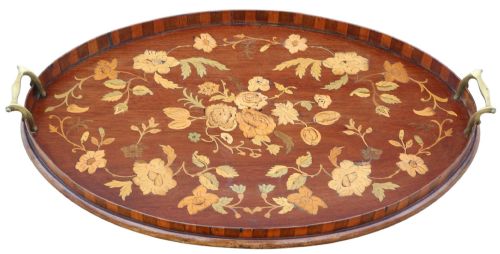
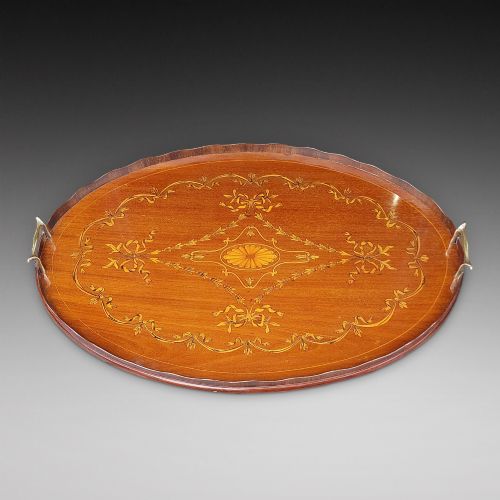
An inlaid wood serving tray brings together functional hosting accessories and decorative woodworking across several historical periods, notably the Georgian, Victorian, and Edwardian eras. These pieces function both as portable servers for tea and glassware and as display items for side tables and cabinets.
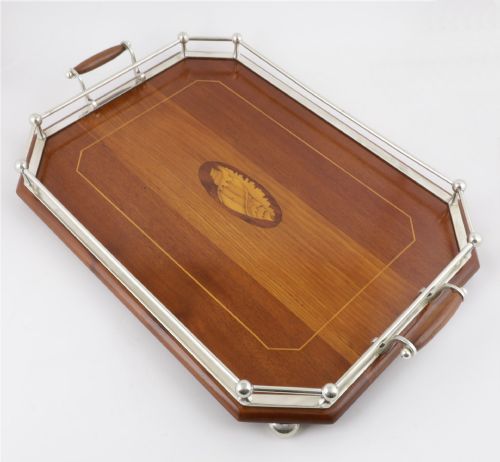
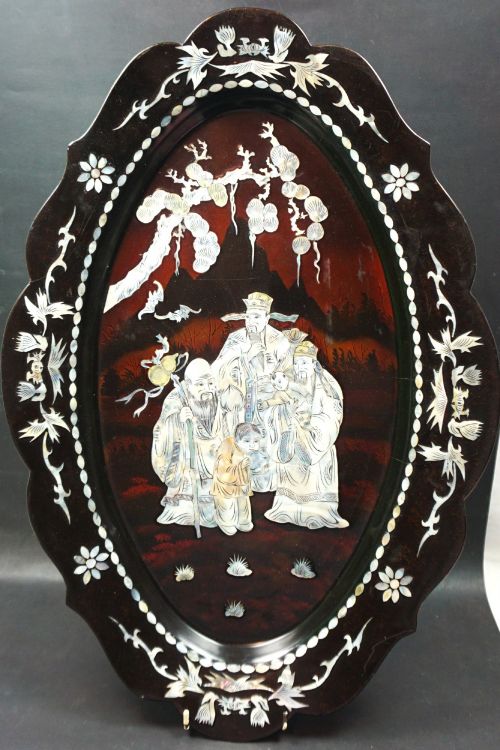
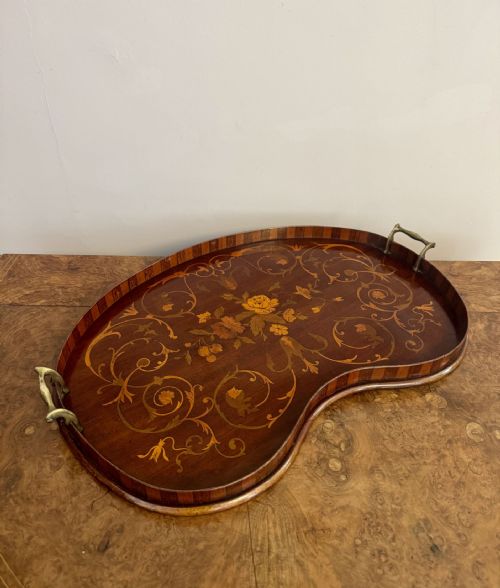
The selection ranges from classic mahogany tea trays with marquetry decoration to octagonal gallery designs and kidney-shaped serving pieces. Materials extend beyond standard British timbers to include satinwood, walnut, and specialised regional work featuring bone, shell, and mother of pearl.
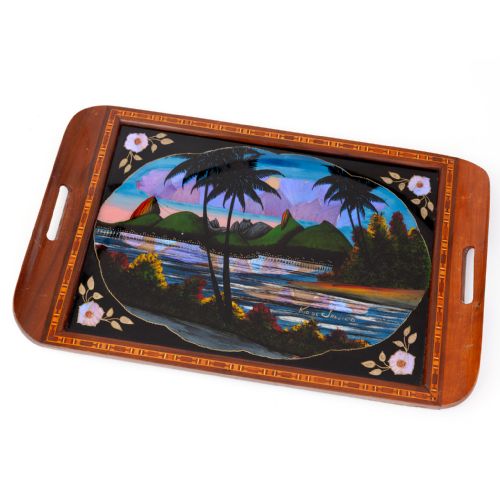
Origins span standard domestic British cabinet-making alongside international examples such as Kashmiri and Chinese Qing Dynasty pieces, plus mid-century Brazilian butterfly tray novelties. Forms vary from traditional oval and rectangular shapes to unusual miniature formats and convertible side table etageres.
Materials and construction methods
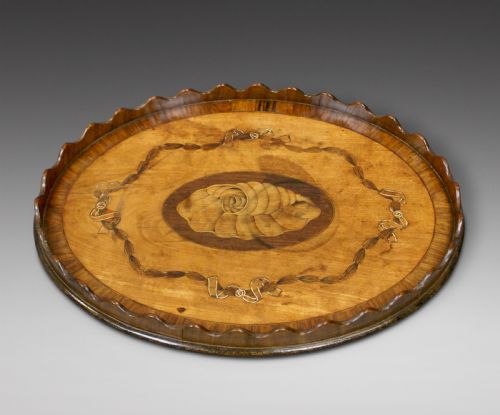
Makers primarily utilised mahogany and satinwood as foundation timbers for these serving trays, applying intricate marquetry inlay to create contrasting geometric or floral patterns. Walnut also appears across various periods, providing dense grain and rich natural colour.
Metal elements such as brass galleries and silver plate work frequently integrate with the timber structures to form raised edges for security during transit. Specialised regional pieces incorporate organic materials like bone, shell, and mother of pearl directly into the wooden surfaces.
Inlaid Wood Serving Tray Retail Price Guide 2026
Typical asking prices for inlaid wood serving tray among the pieces listed under this phrase on Sellingantiques today, from the lower quarter to the upper quarter. They describe what is for sale here now, not the wider market.
Materials recorded across the inventory include mahogany, satinwood, walnut, brass, silver plate, bone inlay, and mother of pearl.
Distinctions in quality and execution
The standard of craftsmanship shows most clearly in the precision of the marquetry inlay and the tight fit of the timber joints. Superior examples maintain structural rigidity and smooth surface planes despite the natural movement of wood over time.
Refined pieces demonstrate careful attention to handles and edge details, whether carved directly into the mahogany or fitted with substantial brass galleries. The depth of the timber finish and the clarity of the contrasting inlay work set finer items apart from standard production.
The Inlaid Wood Serving Tray Glossary
- Marquetry inlay
- Decorative woodwork technique where small pieces of contrasting veneer are fitted into a timber ground to form pictorial or geometric designs. This method defines the primary visual surface of many Edwardian and Victorian examples.
- Gallery tray
- A serving tray featuring a raised border around its perimeter, often constructed from pierced brass or shaped wood. This edge prevents items from sliding off during transport.
- Satinwood
- A light-yellow timber with a natural sheen, frequently utilised in fine 19th-century cabinet-making for contrasting borders and central medallions. It offers a bright contrast against darker woods like mahogany.
- Kidney-shaped tray
- A serving tray curved inward on one long side to sit comfortably against the handler's body. This ergonomic form appears commonly in Edwardian production.
- Etagere
- A piece of furniture consisting of a set of open shelves for displaying small objects, sometimes incorporating a removable serving tray top. It bridges the gap between portable servingware and static display furniture.
Inlaid Wood Serving Tray: Frequently Asked Questions
How do I clean an antique wood tray?
Dust the surface regularly with a soft, dry cloth to prevent dirt accumulation in the recessed inlay lines.
Avoid using water or chemical polishes, as excess moisture can lift the delicate veneer and damage organic elements like bone or mother of pearl.
Can I still use these trays for serving?
Most solid mahogany and satinwood trays remain structurally capable of light serving duties such as holding teacups or glasses.
Consider placing a protective cloth liner on the surface if you carry liquids to prevent ring marks on the antique polish.
What is a brass gallery?
A brass gallery is a raised decorative railing fitted around the outer edge of a serving tray.
This metal boundary keeps glassware and decanters secure while the tray is lifted and moved across a room.
How do I date an inlaid tray?
Dating relies on identifying the primary timber, the style of the marquetry, and the overall construction methods used by the cabinet-maker.
Georgian and Victorian pieces typically feature heavier mahogany structures, while Edwardian items often display lighter satinwood and distinct kidney-shaped profiles.