





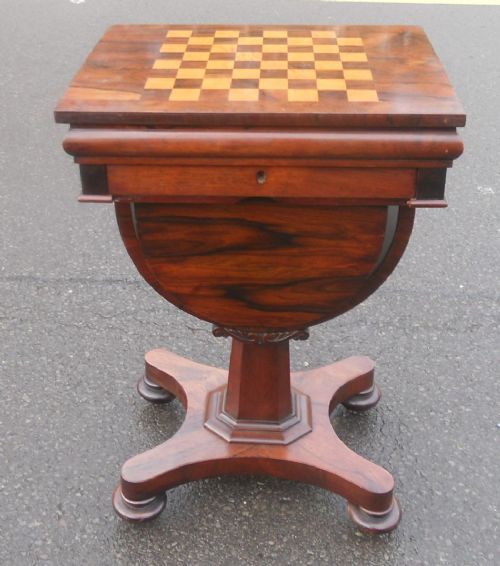
Inlaid Wood Game Board
An inlaid wood game board combines utility and display, offering a surface for play crafted from contrasting timbers.
Inlaid Wood Game Board
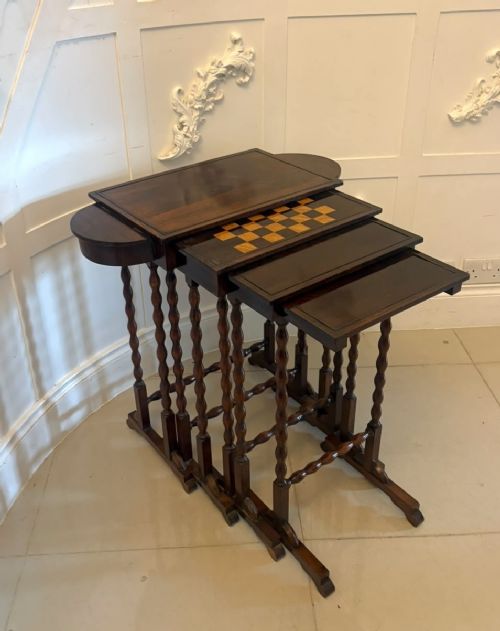
An inlaid wood game board appears across several forms on this page, ranging from folding travel sets and compendiums to occasional tables and nests of four tables. These pieces date principally from the Georgian, Regency, and Victorian periods, reflecting the high popularity of tabletop pastimes during the nineteenth century.
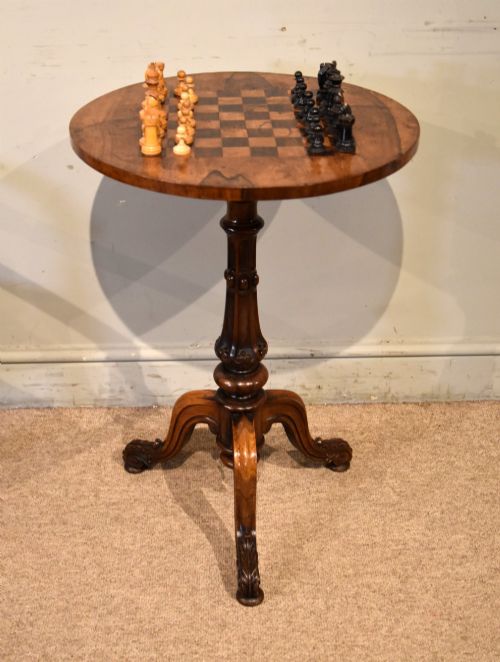
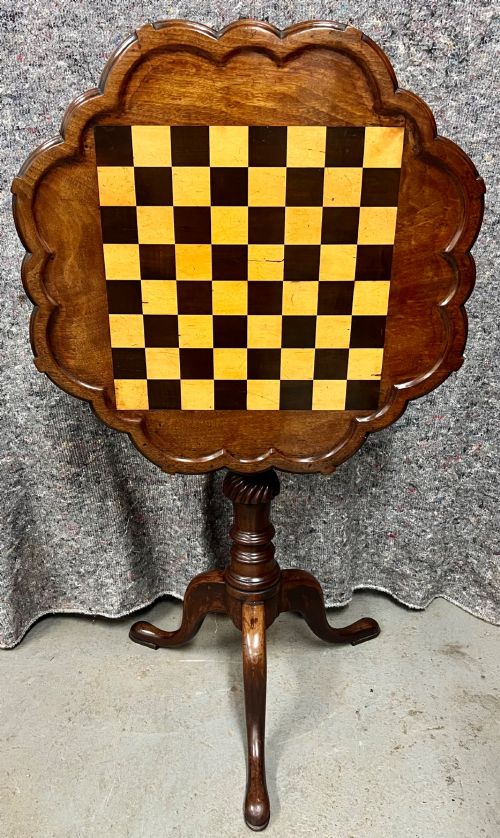
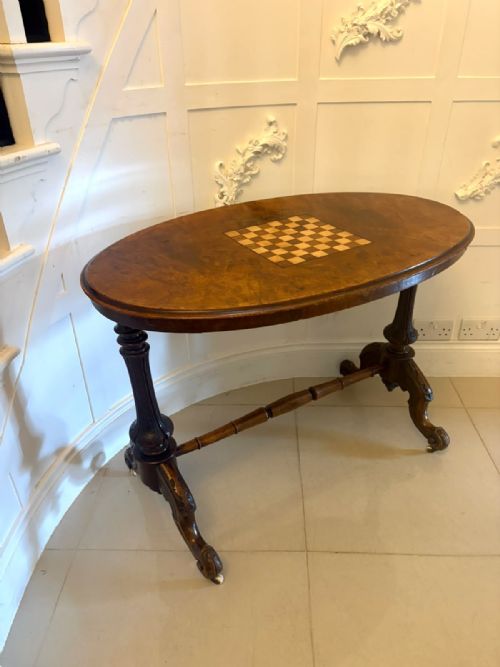
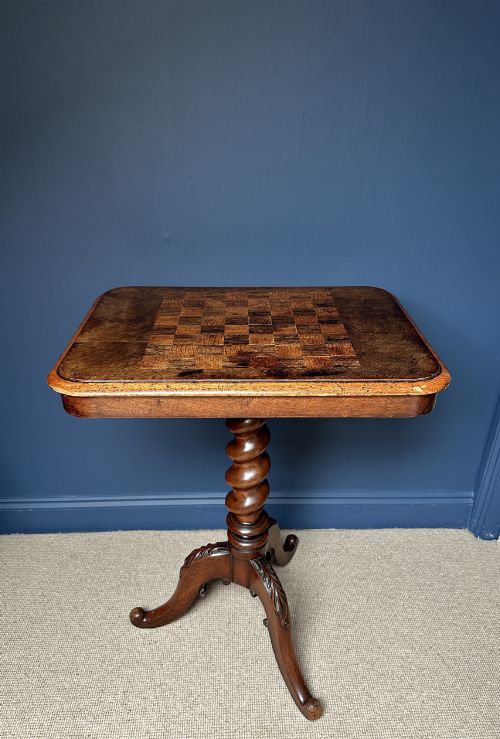
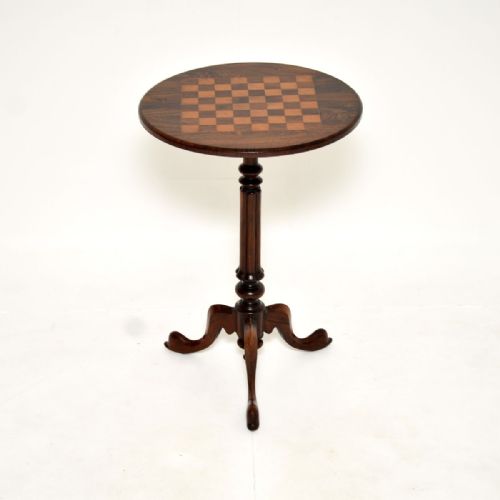
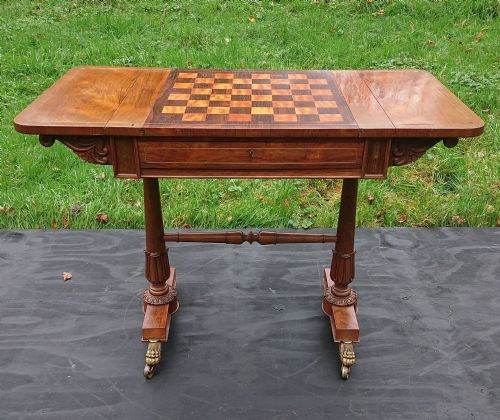
The most frequent examples integrate the playing grid directly into the top of a freestanding table or a portable box. Makers incorporated chess, checkers, and backgammon layouts using precision joinery and timber contrast rather than surface paint.
Occasional tables with chess tops serve dual purposes as standard furniture when not in use for gaming. More elaborate iterations include compartments for pieces, cribbage tracks, and removable boards.
Materials and technique
Cabinetmakers utilised dense hardwoods such as rosewood, mahogany, walnut, and burr walnut for the primary structure and framing of the boards and tables. These woods provided a stable base that resisted warping over decades of use.
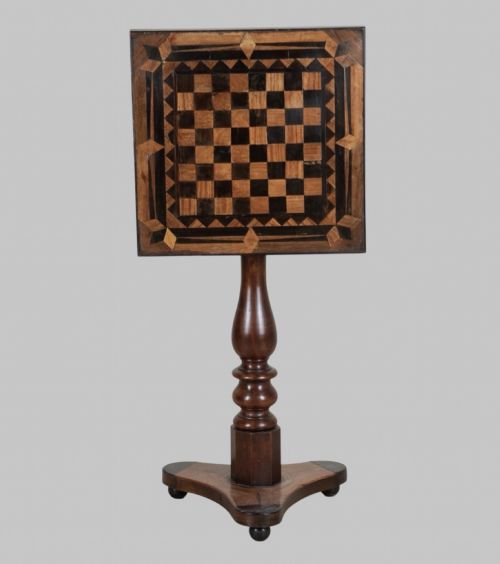
Contrasting light and dark squares were achieved through precise wood inlay using boxwood and satinwood alongside darker species. Tunbridge ware examples demonstrate meticulous micro-mosaic techniques using numerous tiny wood blocks to form geometric patterns and scenes.
Inlaid Wood Game Board Retail Price Guide 2026
Typical asking prices for inlaid wood game board among the pieces listed under this phrase on Sellingantiques today, from the lower quarter to the upper quarter. They describe what is for sale here now, not the wider market.
Nineteenth-century travellers could enjoy a game on the move using portable boards equipped with peg-in holes to keep pieces steady against carriage jolts.
Assessing quality
The refinement of the timber selection dictates the visual impact of an inlaid wood game board. Superior examples display carefully matched burr veneers or finely figured grains that frame the playing squares without distraction.
Precision in the geometric inlay work separates standard production from exceptional craftsmanship. Tighter joints between individual light and dark squares demonstrate superior workshop skill and prevent gaps from opening as the wood ages.
Gillows·A British Chess Company
The Inlaid Wood Game Board Glossary
- Inlay
- A decorative technique where pieces of contrasting material are fitted into a recess in a solid wood base to form a flush surface. This method creates permanent patterns that resist wear.
- Burr Walnut
- Wood taken from the abnormal growth of a walnut tree, producing swirling, highly decorative grain patterns. Cabinetmakers prized this timber for high-status table tops.
- Tunbridge Ware
- Woodware decorated with tiny mosaic tiles assembled from different coloured woods to create pictorial or geometric designs. Named after the English town where the craft flourished.
- Cribbage Box
- A small container designed to hold playing cards and pegs used for scoring the game of cribbage. These often feature sliding lids with inlaid scoring tracks.
- Compendium
- A multi-game box or cabinet containing equipment for several different pastimes such as chess, backgammon, and draughts. They represent the Victorian appetite for diverse domestic entertainment.
Inlaid Wood Game Board: Frequently Asked Questions
What games were played on these boards?
Most surfaces on this page accommodate chess and draughts through standard alternating dark and light squares. Many tables and boxes also incorporate backgammon layouts or sliding cribbage tracks.
These multi-use formats allowed households to enjoy several different pastimes using a single piece of furniture or portable compendium.
How do I date a game table?
Dating relies on observing the prevailing furniture styles, leg forms, and timber choices of the period. Regency and Georgian examples often feature pillar and claw bases or tapered legs, while Victorian pieces display heavier carved ornamentation.
Construction methods and secondary woods inside drawers or compartments also offer clues to the era of manufacture.
Are the playing pieces usually included?
Many listings focus primarily on the board or table itself rather than a complete set of matching gaming pieces. When boxes or compendiums are present, they may retain their original turned wooden or bone pieces.
Buyers often source period-appropriate chessmen or counters separately if a table or box is sold empty.
How should I care for a wood game surface?
Preserving the timber requires keeping the piece away from direct sunlight and sudden changes in temperature or humidity. These precautions prevent the delicate veneers and small inlay squares from shrinking or lifting.
Applying a traditional beeswax polish helps maintain the lustre of the wood without building up a heavy artificial film.