



Inlaid Wood Dressing Chest
An inlaid wood dressing chest brings rich cabinet work and functional compartment storage into the bedroom or boudoir.
Inlaid Wood Dressing Chest
When you search for an inlaid wood dressing chest, you encounter a selection of Victorian and Edwardian dressing tables, alongside smaller travelling vanity pieces and jewellery boxes featuring contrasting wood details.
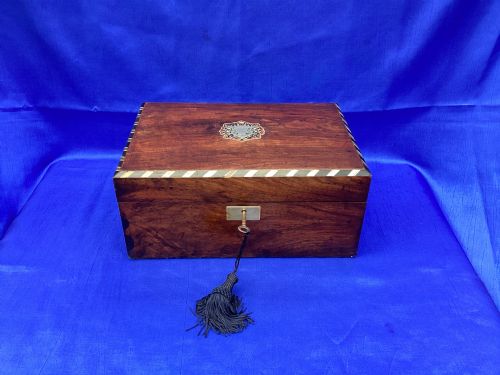
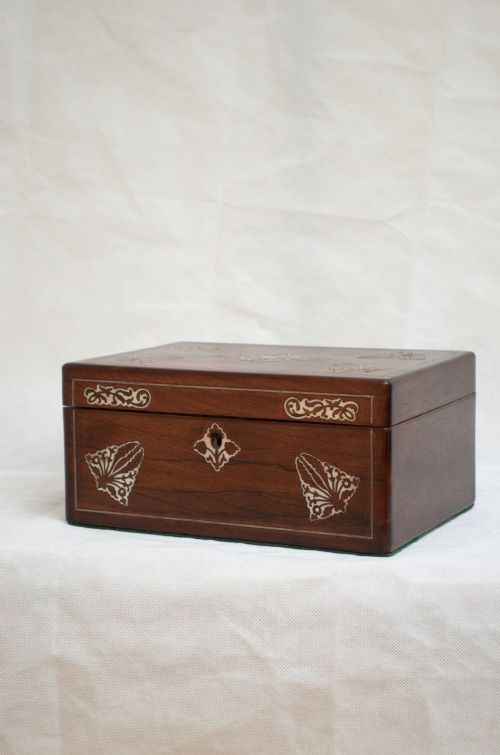
The larger forms include Edwardian mahogany dressing table chests of drawers, while the smaller examples span Victorian rosewood and French satinwood table boxes with fitted interiors.
Most pieces date from the nineteenth century, drawing upon Regency, Victorian, and Edwardian aesthetic traditions.
Construction and materials
Cabinet makers utilised dense hardwoods such as rosewood and mahogany for the primary carcases, providing a dark, stable foundation for decorative elements.
Satinwood inlay and delicate mother-of-pearl embellishments were set directly into the timber surfaces to create geometric or floral patterns.
Interiors often incorporated mirror glass, glass containers, and fitted trays lined to protect jewellery and personal items.
Inlaid Wood Dressing Chest Retail Price Guide 2026
Typical asking prices for inlaid wood dressing chest among the pieces listed under this phrase on Sellingantiques today, from the lower quarter to the upper quarter. They describe what is for sale here now, not the wider market.
The listings span the Victorian, Edwardian, and Regency periods, featuring rosewood, mahogany, and satinwood.
Distinctions in quality
Quality rests upon the precision of the cabinet work, particularly the snugness of the joints and the crispness of the satinwood inlay against the darker ground timber.
The sophistication of the internal fittings, such as removable trays, integrated mirrors, and original brass hardware, elevates certain pieces above standard utility items.
Edwards & Roberts
The Inlaid Wood Dressing Chest Glossary
- Inlay
- A technique where pieces of contrasting wood or shell are inserted into depressions carved into the primary wood surface to form a flat decorative pattern.
- Marquetry
- Elaborate wood veneers arranged in pictorial or ornamental designs across the surface of a piece of furniture.
- Rosewood
- A heavy, durable timber with a dark reddish-brown hue and pronounced grain, frequently utilised in nineteenth-century box and cabinet making.
- Satinwood
- A light-yellow timber with a lustrous sheen, often employed for contrasting stringing and decorative inlay work.
- Vanity box
- A portable container fitted with compartments and sometimes mirror glass for holding cosmetics, jewellery, and grooming tools.
Inlaid Wood Dressing Chest: Frequently Asked Questions
What periods do these pieces date from?
The pieces span the nineteenth and early twentieth centuries, encompassing Regency, Victorian, and Edwardian eras. Most items date specifically from the Victorian period through to the Edwardian years.
Cabinet styles shifted slightly across these decades, moving from heavy rosewood and mother-of-pearl ornamentation towards lighter mahogany dressing table forms.
How were dressing chests used?
Larger dressing tables and chests provided surfaces and drawers for personal grooming and garment storage in the bedroom. Smaller table boxes and travelling vanity chests served to secure jewellery, trinkets, and cosmetics.
Many of these smaller boxes featured fitted internal trays and compartments designed for safekeeping during travel or on a dressing surface.
How do I care for rosewood furniture?
Keep wooden pieces away from direct sunlight and severe changes in temperature to prevent timber splitting. Dust regularly with a dry, soft cloth and avoid chemical polishes that might damage historic finishes.
Internal linings benefit from gentle cleaning appropriate to their specific textile or paper composition.
What is satinwood inlay?
Satinwood inlay involves setting pale, lustrous satinwood into channels cut within a darker primary wood such as mahogany or rosewood. This technique creates high-contrast decorative borders and motifs.
Craftsmen used this method to delineate panels and drawer fronts on tables and decorative boxes.