





Inlaid Whatnot
These inlaid whatnot selections bring tiered display shelving into a room, offering practical surface space combined with decorative marquetry or boxwood detail.
Inlaid Whatnot
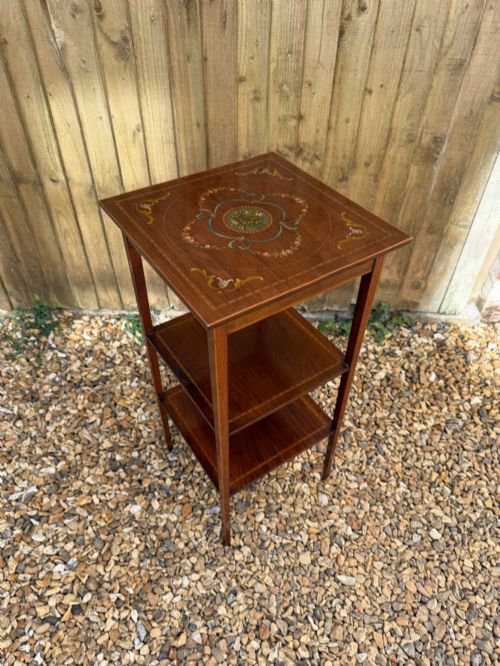
An inlaid whatnot serves as an open tiered shelf unit designed for displaying small objects, ornaments and books in principal rooms. These pieces appear frequently in walnut, burr walnut and mahogany from the Victorian and Edwardian periods.
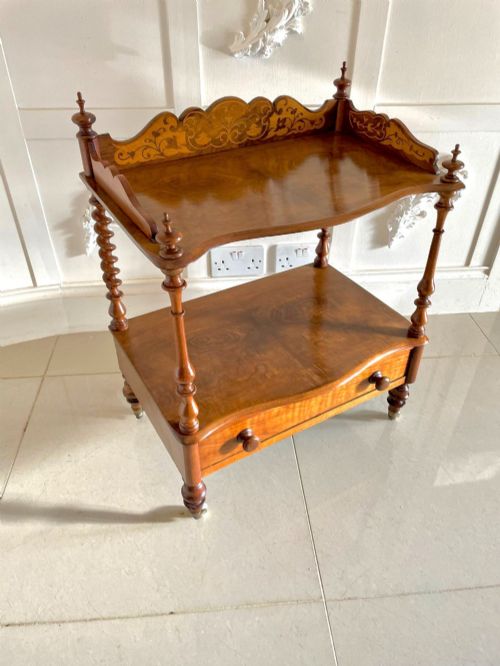
The form ranges from standard multi-tier standing shelves to corner models and combinations featuring integrated tables, canterburys or cupboards. Victorian examples dominate the selection, often incorporating marquetry or boxwood inlay across multiple open levels.
Materials and construction
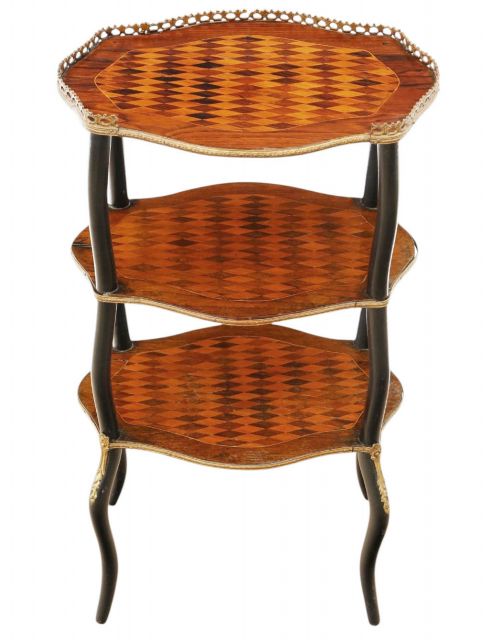
Cabinet makers utilised walnut, burr walnut and mahogany as the primary timber foundations for these pieces, occasionally applying ebonised finishes or brass mountings. Surfaces received decorative enrichment through boxwood inlay and marquetry patterns set into the wood.
Structures typically consist of upright supports holding three or four graduated tiers, sometimes incorporating turned columns or glazed compartments. Construction methods reflect the prevailing Victorian and Edwardian joinery standards seen in multi-tier etageres and corner stands.
Inlaid Whatnot Retail Price Guide 2026
Typical asking prices for inlaid whatnot among the pieces listed under this phrase on Sellingantiques today, from the lower quarter to the upper quarter. They describe what is for sale here now, not the wider market.
The selection spans Victorian and Edwardian periods, encompassing Sheraton Revival and French Napoleon III styles.
Assessing quality and finish
Quality depends upon the choice of timber veneer, particularly the figured depth of burr walnut and the precision of the marquetry or boxwood inlay. Finer pieces demonstrate crisp turning on upright supports and tight joints where the shelves meet the frame.
Makers achieved distinction through balanced proportions across three or four tiers and the integration of functional elements such as drawers or canterbury sections. The crispness of the decorative surface work distinguishes standard utilitarian shelving from finer decorative examples.
The Inlaid Whatnot Glossary
- Whatnot
- An open set of tiered shelves designed for displaying ornaments, bric-a-brac and small books. The form developed in the late eighteenth century and remained popular through the Victorian era.
- Etagere
- A piece of furniture consisting of a set of open shelves for displaying small objects. French examples often incorporate marquetry and ormolu mounts.
- Marquetry
- Decorative woodwork where pieces of veneer are fitted into a ground to form geometric patterns or pictorial designs. This technique appears frequently on Victorian walnut furniture.
- Canterbury
- A low frame with partitions for holding sheet music or books, frequently incorporated into the base of a whatnot. These compartments add functional utility to the multi-tier display.
- Burr walnut
- Timber taken from a walnut tree growth, yielding highly figured and swirling grain patterns. Cabinet makers prized this wood for veneering prominent surfaces.
Inlaid Whatnot: Frequently Asked Questions
What is an inlaid whatnot used for?
These pieces provide open shelving to display ornaments, small clocks and porcelain within a sitting room or drawing room. They allow collectors to exhibit decorative objects across several graduated tiers without taking up substantial floor space.
Some variants combine the standard shelving with specialised compartments, functioning simultaneously as music cabinets, small writing desks or storage tables for periodicals.
How do I date an inlaid whatnot?
Dating relies on identifying the prevailing timber choices, decorative styles and construction methods associated with specific decades. Victorian pieces frequently employ burr walnut with boxwood inlay, while later Edwardian versions utilise lighter mahogany or walnut frameworks.
Turned supports and marquetry motifs also shift from the heavier geometric forms of the mid-nineteenth century towards lighter Sheraton Revival influences near the turn of the twentieth century.
Where should I place a corner whatnot?
Corner whatnot designs fit directly into unused room angles, making them practical for smaller spaces or rooms with limited wall area. They utilise vertical height rather than floor perimeter.
Positioning them away from direct heat sources protects the timber veneers and prevents the boxwood inlay from drying out or lifting over time.
What is the difference between a whatnot and an etagere?
The terms often overlap in nineteenth-century cabinet making, though etagere frequently denotes pieces influenced by French design styles. These often feature ormolu mounts alongside marquetry.
Standard whatnot designs tend to describe British multi-tier shelving units, including corner models and pieces integrated with canterburys or small display cabinets.