



Inlaid Walnut Shelf Unit
An inlaid walnut shelf unit brings rich timber grain and precise marquetry into a room, offering display space with quiet Victorian and Edwardian elegance.
Inlaid Walnut Shelf Unit
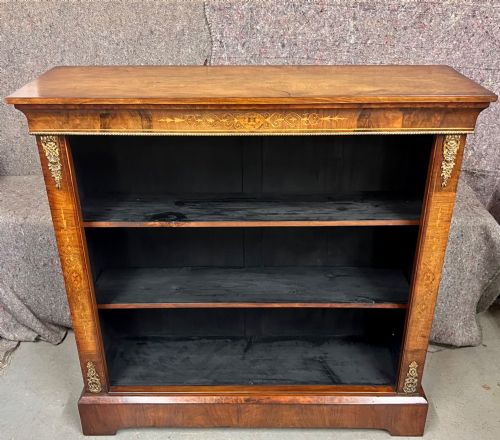
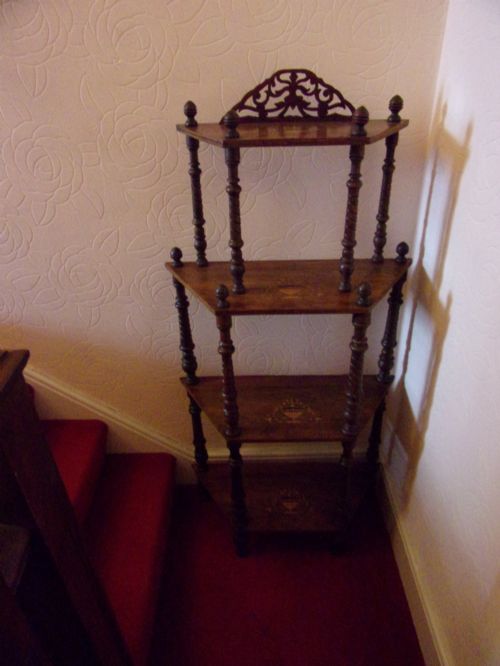
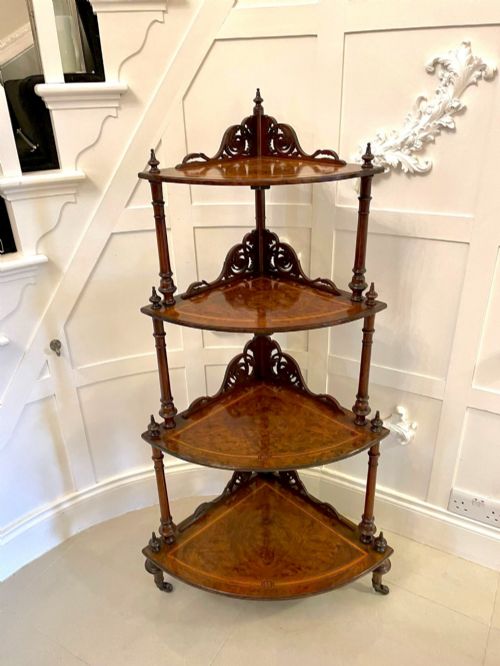
An inlaid walnut shelf unit typically takes the form of a tiered whatnot, corner whatnot stand, or open bookcase designed for displaying decorative objects. These pieces bring vertical storage and display surface into domestic spaces without dominating the floor plan.
The selections available here span the nineteenth century and the Edwardian period, encompassing walnut, burr walnut, and ebonised wood. French Napoleon III styling also appears alongside classic Victorian and Edwardian British designs.
The four-tier standing whatnot and the corner whatnot stand represent the most common configurations found in this category. Marquetry inlay frequently decorates the tiers and panels, contrasting with the dark background of the timber.
How they were made
Cabinet makers utilised figured walnut and highly decorative burr walnut veneers for the primary visible surfaces, often supported by solid walnut or ebonised wood structures. Satinwood and mixed timbers formed the intricate marquetry inlay patterns set into the tops and tiers.
Brass fittings and supports occasionally appeared on stands and étagères, providing structural rigidity and subtle metallic contrast. Joinery methods of the Victorian and Edwardian eras ensured the multi-tiered upright structures remained stable under weight.
Inlaid Walnut Shelf Unit Retail Price Guide 2026
Typical asking prices for inlaid walnut shelf unit among the pieces listed under this phrase on Sellingantiques today, from the lower quarter to the upper quarter. They describe what is for sale here now, not the wider market.
Materials across this selection include walnut, burr walnut, satinwood, mahogany, and ebonised wood alongside brass and marquetry inlay.
What varies in quality
The refinement of the marquetry inlay separates standard production from superior pieces, with tighter botanical and geometric motifs showing greater artisan control. The choice between plain walnut and heavily figured burr walnut alters the visual depth of the tiers.
The architectural complexity of the piece, such as a four-tier structure with turned supports versus a simpler corner shelf, dictates the level of craftsmanship involved. Preservation of the original ebonised highlights and timber polish preserves the intended aesthetic balance.
The Inlaid Walnut Shelf Unit Glossary
- Whatnot
- A piece of furniture consisting of multiple open shelves for displaying small objects or books. This form became popular in the nineteenth century for drawing rooms and parlours.
- Marquetry
- Decorative woodwork where pieces of contrasting timber, shell, or ivory are fitted into a veneer panel to form pictures or geometric patterns. It differs from inlay by covering the entire surface design.
- Burr Walnut
- Walnut timber taken from a tree growth or burl, yielding a highly swirled and mottled grain pattern. Cabinet makers prized this wood for high-status table tops and cabinet fronts.
- Ebonised Wood
- Timber treated with chemical stains or dark finishes to imitate ebony. This technique provided sharp black contrasts against lighter walnut and marquetry work.
- Étagère
- A French term for a piece of furniture with a series of open shelves for display. These pieces often feature slender uprights and delicate proportions.
Inlaid Walnut Shelf Unit: Frequently Asked Questions
What is an inlaid walnut shelf unit used for?
These pieces served historically in Victorian and Edwardian homes for displaying porcelain, small sculptures, and bound volumes in principal reception rooms.
Today, they function well in contemporary interiors for holding plants, books, and decorative objects while utilising vertical wall space.
How do I date an inlaid walnut shelf unit?
Dating relies on examining the timber preparation, the style of the turning on the upright supports, and the complexity of the marquetry motifs.
Victorian pieces often display heavier burr walnut veneers and robust four-tier structures, whereas Edwardian examples tend toward lighter frames and refined detailing.
Are corner whatnot stands stable?
Corner whatnot stands utilise ninety-degree angles designed to fit snugly into room corners, naturally distributing weight back toward the walls.
Their multi-tiered construction ties the vertical uprights together, though heavier objects find their safest placement on the lowest shelves.
How do I care for antique walnut furniture?
Preserving walnut furniture involves keeping pieces away from direct sunlight and maintaining stable room humidity to prevent veneer lifting or timber splitting.
Routine dusting with a soft, dry cloth maintains the polished surface without the need for heavy chemical waxes.