

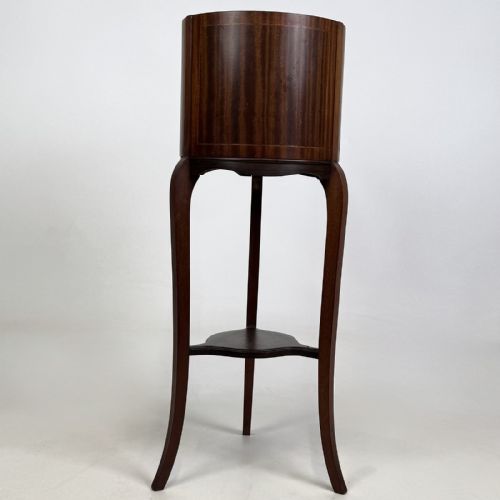
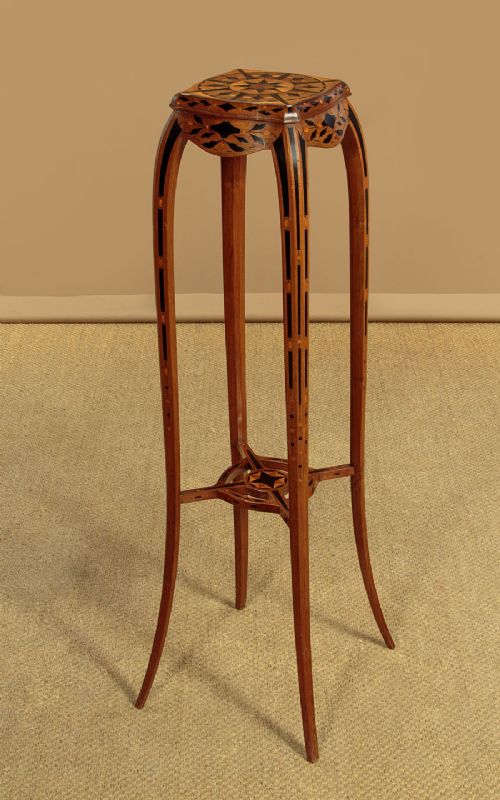
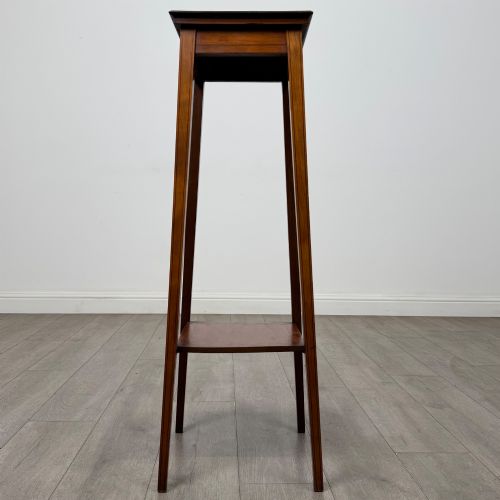
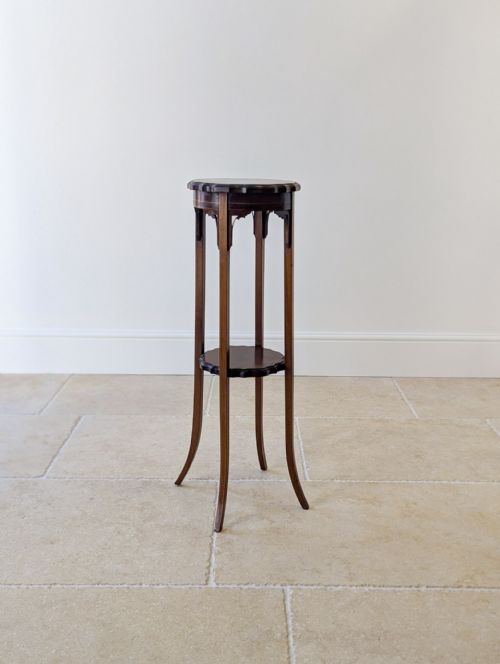


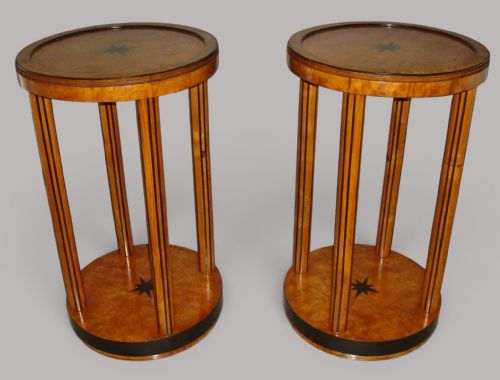
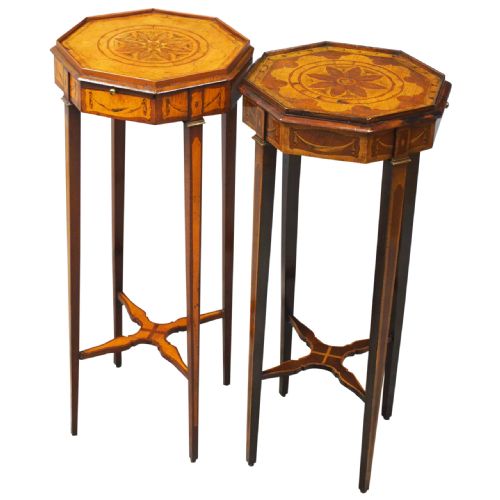

Inlaid Torchere Stand
These inlaid torchere stand pieces are slender display pillars and plant holders designed to elevate objects in a room.
Inlaid Torchere Stand
An inlaid torchere stand is a tall, slender piece of furniture designed to elevate plants, lamps, or decorative objects. The forms on this page include plant stands, candle stands, side tables, and urn stands.
Most examples you will encounter date from the Edwardian period or around nineteen hundred, alongside Georgian, nineteenth century, and nineteen-twenty pieces.
Makers produced these stands in various shapes, functioning as occasional tables, pedestals, and torcheres to utilise corner spaces effectively.
How they were made
The construction relies heavily on timbers such as mahogany, walnut, burr elm, and fruitwood, paired with contrasting details in satinwood and ebony.
Craftsmen applied intricate marquetry and satinwood inlay to enrich the timber surfaces, creating floral and geometric patterns across the tops and legs.
Inlaid Torchere Stand Retail Price Guide 2026
Typical asking prices for inlaid torchere stand among the pieces listed under this phrase on Sellingantiques today, from the lower quarter to the upper quarter. They describe what is for sale here now, not the wider market.
Some stands wear their floral marquetry like a permanent garden on the tabletop.
What varies in quality
Quality rests on the crispness of the marquetry and the choice of timbers, with finely figured mahogany and burr elm elevating the piece.
The refinement of the legs, such as well-proportioned cabriole supports or straight tapered designs, distinguishes standard utility pieces from finer decorative examples.
The Inlaid Torchere Stand Glossary
- Torchere
- A tall, slender stand originally intended to carry a torch or candle, later adapted for lamps and plants. These pieces typically feature a small circular or square top supported by a central pillar or tall legs.
- Marquetry
- Decorative veneer applied to furniture in patterns involving different woods, shells, or ivory. Fruitwood marquetry creates pictorial or floral motifs on the surface.
- Cabriole leg
- A furniture leg that bends out in a convex curve and tapers inward to a concave curve, ending in a pad or foot. This form derives from classical design and appears frequently on Edwardian stands.
- Specimen wood
- Furniture constructed from a variety of different decorative timbers, often showcased for their natural colours and grain patterns. These woods create contrasting borders and geometric panels.
Inlaid Torchere Stand: Frequently Asked Questions
What is an inlaid torchere stand used for?
These stands serve primarily to elevate items like potted plants, table lamps, or decorative urns within a room. Their narrow footprint allows them to occupy awkward corners or tight spaces where larger tables cannot fit.
Historically, similar tall stands held candles or lighting devices before electricity became common. Today, they function as versatile display furniture that draws the eye upward and breaks up flat horizontal lines in interior schemes.
How do I date an Edwardian torchere?
Edwardian stands usually date from nineteen hundred to nineteen ten, drawing heavily on earlier Georgian Revival motifs while employing lighter timbers. Look for Edwardian or circa nineteen hundred markers in the construction and style.
Examination of the secondary woods underneath and the style of the inlay helps confirm this era. The presence of satinwood inlay alongside mahogany often points directly to Edwardian workshops.
Where should I place a plant stand?
Plant stands and torcheres suit corners, hallways, and spaces beside seating where they can display trailing foliage or decorative objects without blocking movement. Their slender proportions mean they integrate easily into various room layouts.
Ensure the stand rests on a level surface, especially when supporting heavy ceramic pots or delicate urns. Positioning them away from direct heat sources protects the polished timber and marquetry.
What woods were used for these stands?
Cabinetmakers utilised a range of timbers including mahogany, walnut, burr elm, and fruitwood for the main structure. These woods provided durable foundations with attractive natural grain patterns.
Decorative contrast came from satinwood, ebony, and specialised specimen woods applied as inlay or marquetry borders. This combination of dark and light materials defines the aesthetic of these pieces.