


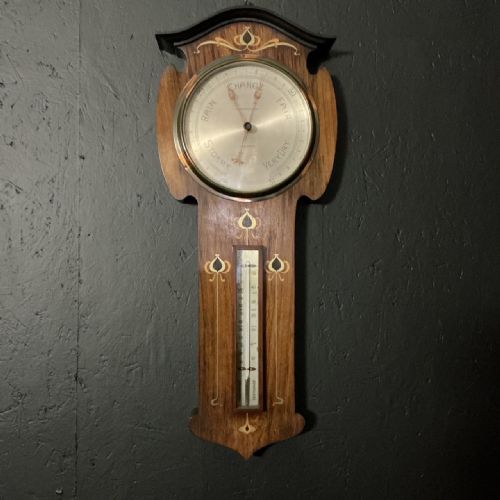

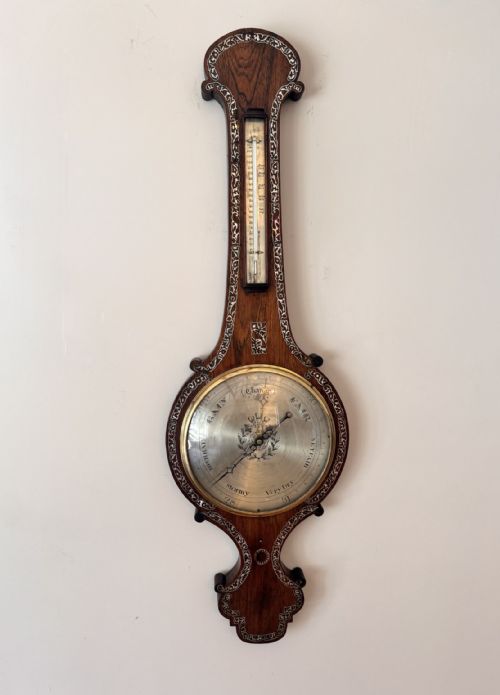


Inlaid Thermometer
An inlaid thermometer measures temperature housed within decorated timber cases from the Georgian, Victorian, and Edwardian eras, combining scientific utility with fine cabinetmaking.
Inlaid Thermometer
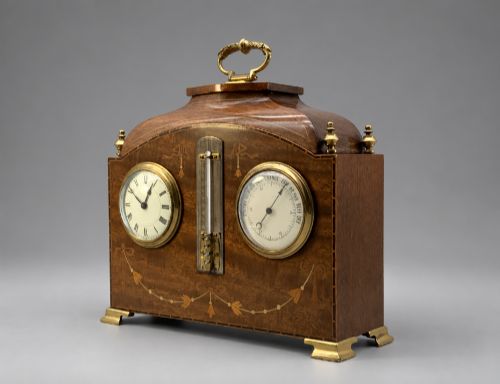
An inlaid thermometer typically appears as part of a larger Banjo barometer, wheel barometer, mantel clock, or desk clock rather than as a standalone instrument. These pieces date from the Georgian, Regency, Victorian, and Edwardian periods, stretching from the late eighteenth century into the early twentieth century.
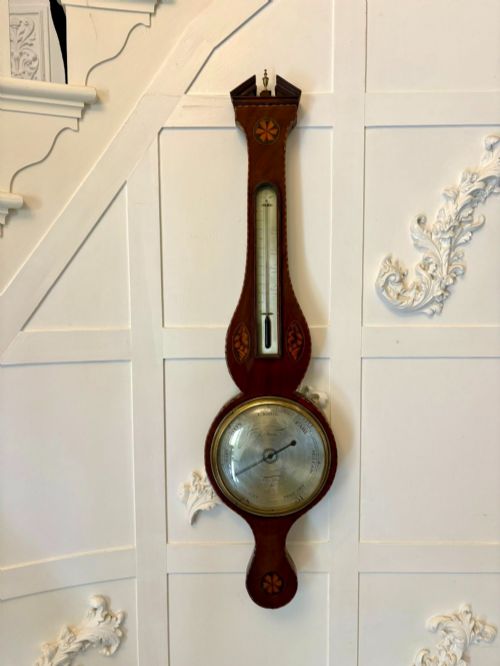
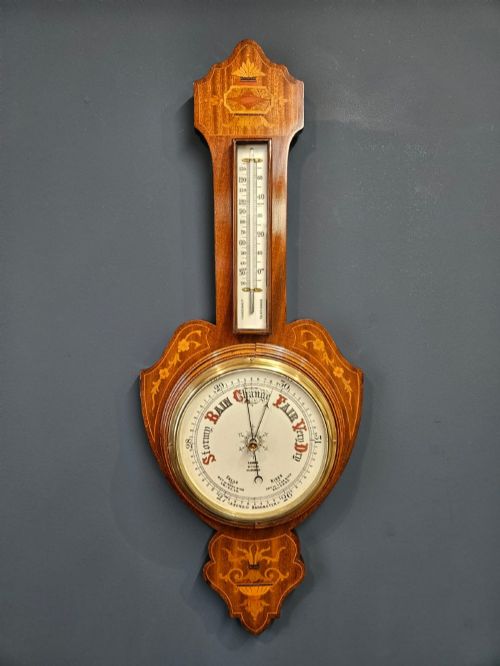
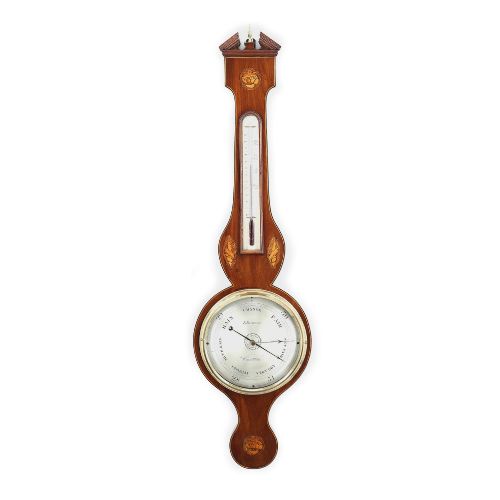
The version most commonly met on this page is the mahogany or rosewood banjo barometer, where the thermometer tube sits centrally on the long trunk beneath the dial. Cabinetmakers also integrated thermometers into decorative obelisks, desk clocks, and French mantel pieces during the nineteenth century.
Makers housed these instruments in architectural wooden cases, often utilising domestic and exotic timbers enriched with boxwood inlay, marquetry, shell motifs, or mother-of-pearl accents. The styles span Neo-Classical, Arts and Crafts, and Art Deco designs, reflecting the prevailing aesthetic tastes of each manufacturing decade.
How they were made
Cabinetmakers constructed the main bodies of these pieces using solid and veneered timbers such as mahogany, rosewood, and satinwood. Carpenters shaped these woods into curved banjo profiles, rectangular clock cases, and obelisk forms before applying protective polishes.
Decoration relied on precise woodworking techniques, incorporating boxwood inlay, wood marquetry, and shell motifs into the wooden surfaces. Artisans also embedded mother-of-pearl panels into the timber to create contrasting visual highlights against the dark grain of the rosewood or mahogany.
Inlaid Thermometer Retail Price Guide 2026
Typical asking prices for inlaid thermometer among the pieces listed under this phrase on Sellingantiques today, from the lower quarter to the upper quarter. They describe what is for sale here now, not the wider market.
The listings show mahogany and rosewood as the primary framing timbers, frequently enhanced with boxwood inlay, marquetry, and mother-of-pearl.
What varies in quality
Quality rests in the crispness of the cabinetwork and the finesse of the timber selection. Finer examples display tightly figured mahogany or rosewood paired with intricate, precisely fitted boxwood inlay and shell motifs rather than simple painted decoration.
The sophistication of the maker elevates a piece, distinguished by engraved brass dials and well-proportioned mercury or aneroid mechanism housings. Regional makers and London firms varied in their execution, with superior workshops investing greater time in the harmonious alignment of wood grain and marquetry.
B Besozzi of Weymouth·Prada of High Wycombe·Molton of Norwich·Luisetti of London·Giana Shrewsbury·Savory and Fils A Paris·Vecchio and Co of Shaftsbury·J Groce York·Dominic Gatty·Schiavi of Chesham
The Inlaid Thermometer Glossary
- Banjo barometer
- A wall barometer shaped like a banjo, featuring a circular dial at the top and an elongated trunk containing the thermometer below. This form dominated British hallways throughout the Georgian and Victorian eras.
- Marquetry
- An elaborate form of wood inlay where small pieces of various coloured veneers are assembled to form pictorial or geometric patterns on the case front. It appears frequently on Neo-Classical and Edwardian pieces.
- Aneroid barometer
- A barometer that measures atmospheric pressure using a small, flexible metal box called an aneroid cell, without the use of liquid mercury. This mechanism allowed makers to build more compact and varied clock and thermometer combinations.
- Shell inlay
- A decorative motif depicting a shell, constructed from contrasting light and dark woods or mother-of-pearl embedded into the main timber case. It is a hallmark of eighteenth and nineteenth century cabinetmaking.
- Wheel barometer
- A barometer design utilising a glass siphon tube and a float connected to a pulley wheel that turns the pointer on a dial face. These large wall instruments often incorporated both thermometers and hygrometers.
Inlaid Thermometer: Frequently Asked Questions
Where were these thermometers placed in a home?
These instruments hung principally in entrance halls and reception rooms where guests and residents could check both the weather and ambient temperature before heading outdoors.
Desk clocks and mantel pieces placed the thermometer closer to living spaces, combining timekeeping with atmospheric reading on tables and mantelpieces.
How do I identify a Georgian piece from a Victorian one?
Georgian pieces often display restrained mahogany cases with delicate shell inlay and understated swan-neck pediments typical of the late eighteenth and early nineteenth centuries.
Victorian versions frequently adopt heavier rosewood construction, mother-of-pearl accents, or more robust architectural proportions as manufacturing methods evolved through the nineteenth century.
What is the difference between a barometer and a thermometer here?
The barometer measures atmospheric pressure to forecast weather changes, using either a large circular dial or a tall exposed tube.
The thermometer measures current temperature on a smaller graduated scale mounted directly onto the wooden trunk or beside the clock face.
Are these mercury tubes safe to live with?
The mercury remains safely sealed inside thick glass tubes behind protective bezels or glass doors during normal domestic display.
Owners simply hang or place the wooden case securely on a wall or flat surface, avoiding areas subject to heavy vibration.