



Inlaid Sewing Box
An inlaid sewing box offers a refined place for needlework tools, spanning portable tabletop caskets to substantial pedestal work tables.
Inlaid Sewing Box
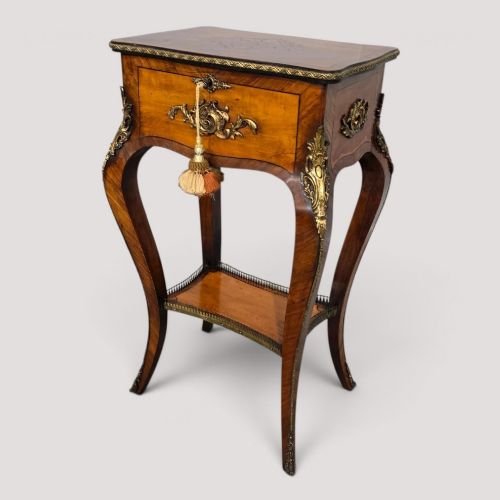
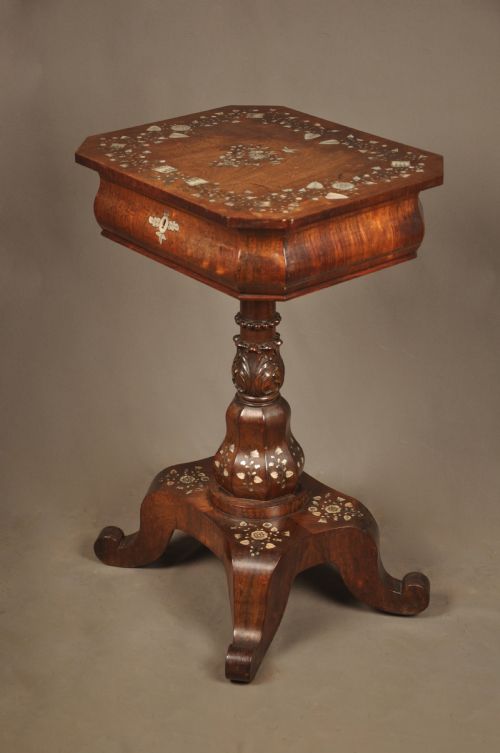
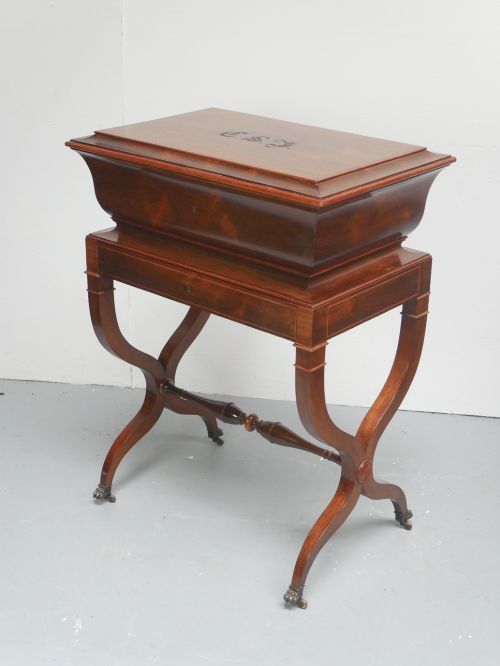
When you search for an inlaid sewing box, you encounter items designed for needlework and small treasures, ranging from portable tabletop caskets to substantial pedestal tables. The most common examples on this page date from the nineteenth century, including Victorian burr walnut and rosewood pieces alongside Regency and Edwardian variations.
These objects frequently combine multiple functions, appearing as games tables, writing slopes, and occasional tables fitted with interior compartments for cottons, needles, and silk baskets. Woods such as mahogany, satinwood, and coromandel provide the foundation for intricate decorative surfaces.
How they were made
Cabinet makers utilised dense exotic timbers like rosewood and burr walnut as the primary carcase materials, often applying contrasting veneers of satinwood, boxwood, and various fruitwoods for decorative embellishment. Specialised techniques such as Tunbridge Ware micro-mosaic inlay and marquetry created detailed geometric and floral motifs across lids and tabletops.
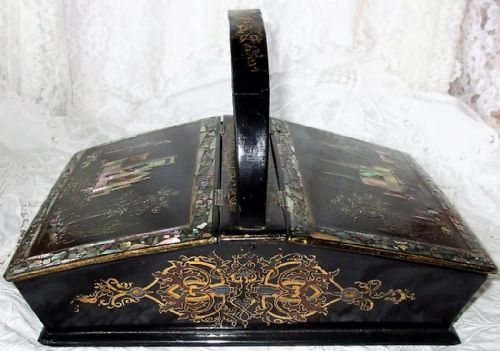
Interiors were constructed with precision to house fitted compartments, removable trays, and lidded sections designed specifically for sewing implements. Mother-of-pearl inlay and brass stringing frequently accented the exterior surfaces, while papier-mâché formed the base for specific moulded needlework caskets.
Inlaid Sewing Box Retail Price Guide 2026
Typical asking prices for inlaid sewing box among the pieces listed under this phrase on Sellingantiques today, from the lower quarter to the upper quarter. They describe what is for sale here now, not the wider market.
What varies in quality
The sophistication of the timber selection and the complexity of the veneer work largely determine the standing of a piece, with figured burr walnut and fine marquetry panels commanding greater attention than simpler geometric bandings. The crispness of the Tunbridge Ware mosaic patterns and the inclusion of original internal fittings, such as carved ivory or bone needle tools, elevate certain examples.
Construction methods also separate standard production from superior workshops, visible in the careful mitring of box corners, the integration of secret drawers, and the retention of working locks with original keys. The harmony between the structural joinery and the decorative surface inlay indicates the original maker's skill.
Gillows of Lancaster·Waring & Gillow·Lesage
The Inlaid Sewing Box Glossary
- Tunbridge Ware
- A form of decorative woodwork originating from Kent, characterised by tiny coloured wood blocks assembled to create detailed pictorial mosaics.
- Work Table
- A freestanding piece of furniture featuring a compartment or suspended fabric bag beneath the top for holding sewing materials.
- Marquetry
- Decorative veneer work arranged in pictorial or geometric patterns using various tinted woods and shell.
- Papier-mâché
- A composite material made from paper pulp mixed with glue and oil, pressed into moulds and lacquered to form durable boxes and caskets.
- Stringing
- Thin lines of contrasting wood inlaid into the surface of furniture to create a linear border.
Inlaid Sewing Box: Frequently Asked Questions
What is inside an inlaid sewing box?
These boxes typically contain fitted wooden trays divided into small compartments for reels, thimbles, and bodkins, sometimes accompanied by lidded sections and pin cushions.
Many examples retain their original velvet or silk linings, while larger work tables incorporate suspended silk baskets or fabric bags underneath to hold ongoing needlework projects.
How do I date a Victorian sewing box?
Dating relies on identifying the prevailing timber choices, hardware styles, and decorative techniques characteristic of the period between eighteen thirty and nineteen hundred.
Victorian pieces frequently utilise burr walnut and rosewood paired with mother-of-pearl inlay or Tunbridge Ware panels, whereas earlier Regency examples favour simpler brass stringing and mahogany.
Were these boxes only used for sewing?
While primarily designed for needlework, many multi-functional pieces served broader domestic roles as jewellery caskets, writing slopes, and games tables.
Reversible or sliding lids often incorporated chessboard or backgammon layouts on the reverse side, allowing the furniture to transition between craft storage and parlour entertainment.
Where should I place a work table?
Freestanding sewing tables suit placement beside armchairs or sofas as functional occasional tables that provide concealed storage for small household items.
Smaller tabletop boxes sit comfortably on desks, chests of drawers, or side tables, serving as decorative display pieces while keeping small accessories organised.