



Inlaid Secretaire Abattant
These inlaid secretaire abattant pieces combine refined writing surfaces with concealed compartments, offering elegance and practical storage for any room.
Inlaid Secretaire Abattant
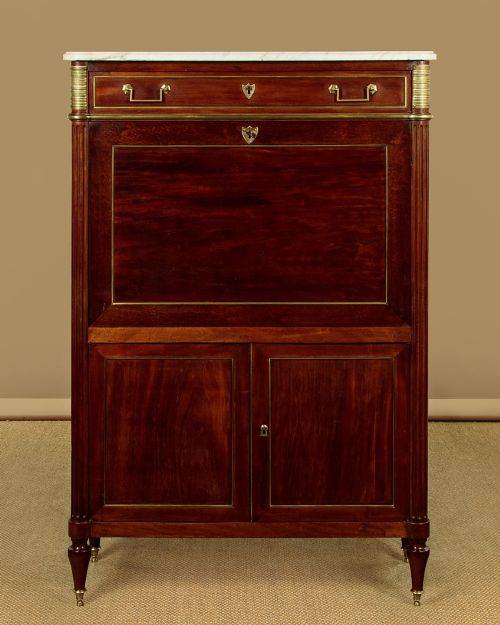
An inlaid secretaire abattant functions as a tall cabinet featuring a hinged drop-front writing surface that conceals fitted interior drawers and pigeonholes. When the fall front closes, the piece presents a clean architectural facade suited to formal reception rooms.
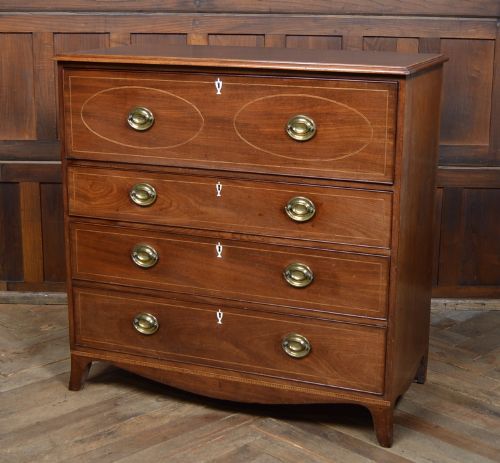
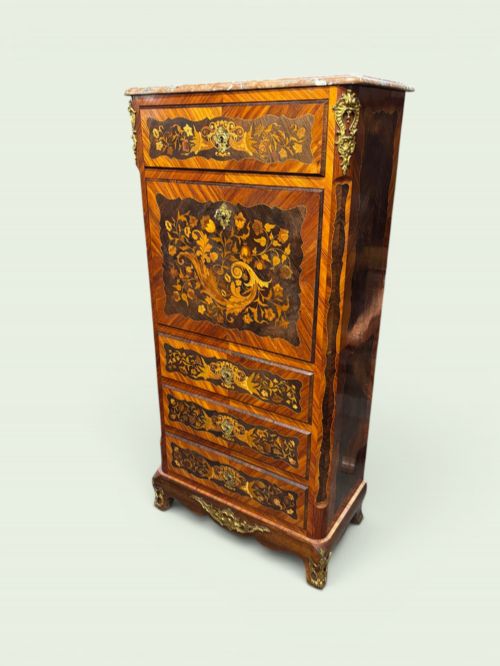
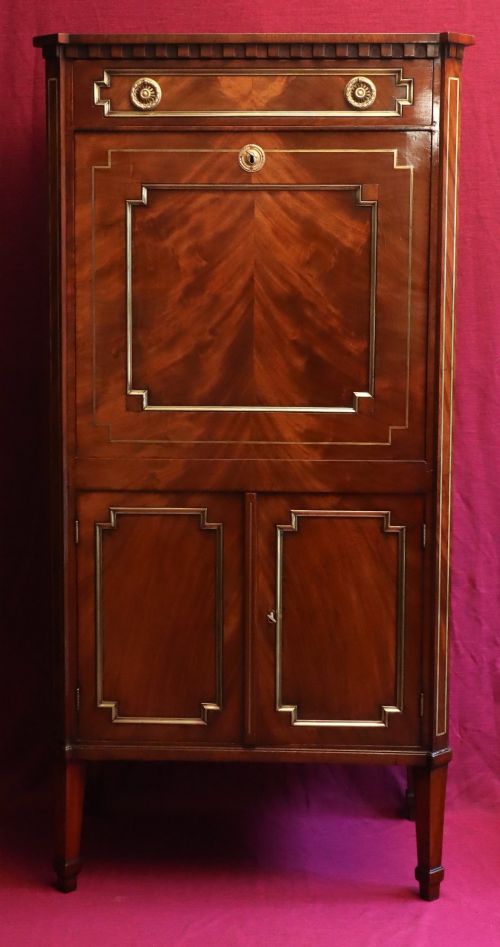
The pieces appearing on this page span several stylistic traditions, notably French revival models alongside Regency mahogany examples and Dutch floral marquetry designs. Nineteenth-century interpretations dominate the selection, incorporating various regional cabinet-making techniques from 1750 to 1890.
Buyers encounter forms described variously as escritoires or secretaire cabinets, reflecting international variations in nomenclature. Walnut, mahogany, and rosewood serve as primary carcase timbers across these distinct geographical styles.
Materials and construction methods
Cabinet makers utilised dense hardwoods such as mahogany, walnut, and rosewood for the main structure, often applying decorative veneers over secondary foundations. Marquetry decoration employed contrasting fruitwoods and bone to create elaborate geometric or floral motifs.
Mounts in cast or chased ormolu provided decorative accents to corners and drawer surrounds, while marble tops added durability and weight to specific French models. Brass inlay work occasionally highlighted linear elements within the Regency examples.
Inlaid Secretaire Abattant Retail Price Guide 2026
Typical asking prices for inlaid secretaire abattant among the pieces listed under this phrase on Sellingantiques today, from the lower quarter to the upper quarter. They describe what is for sale here now, not the wider market.
Hidden drawers inside these secretaires often required secret release buttons disguised as ordinary pigeonhole dividers.
Distinctions in craftsmanship
Quality rests primarily in the precision of the marquetry work and the stability of the carcase construction over time. Finer examples display seamless alignment in the wood grain and sophisticated interior compartment layouts.
The integration of metal mounts, such as ormolu highlights and brass stringing, dictates the level of finish achieved by the workshop. Superior pieces maintain crisp carving and intact original veneers without excessive restoration.
Adriano Brambilla
The Inlaid Secretaire Abattant Glossary
- Secretaire abattant
- A tall writing cabinet featuring a vertical drop front that opens to reveal an interior workspace. This form conceals paperwork while maintaining a compact footprint.
- Marquetry
- The art of applying pieces of veneer to a structure to form decorative patterns. Craftsmen utilised various coloured woods, fruitwoods, and bone to achieve pictorial detail.
- Ormolu
- Gilt bronze mounts applied as decorative ornaments to furniture pieces. Workshops cast and chased these metal elements to complement the surrounding wood.
- Escritoire
- An alternative term for a writing desk or cabinet. The designation covers various formats equipped with writing surfaces and storage compartments.
- Fall front
- The hinged panel that lowers to serve as a writing surface on a secretaire. Internal stays or hinges support the weight during use.
Inlaid Secretaire Abattant: Frequently Asked Questions
How do I use a drop front desk?
The front panel unlocks and lowers into a horizontal position, supported by internal mechanisms or hinges to create a writing surface. Inside, small drawers and pigeonholes organise stationery and letters.
When writing is complete, documents return to the interior compartments, and the panel lifts and locks shut to hide the workspace entirely.
How are different periods identified?
Period identification relies upon wood choices, inlay styles, and hardware details such as ormolu mounts or brass stringing. Regency pieces often showcase mahogany and brass, while French models from the nineteenth century frequently employ marquetry and marble tops.
Dutch examples tend to feature extensive floral marquetry spanning the entire facade and sides of the cabinet carcase.
Where should I place this cabinet?
These tall cabinets require adequate vertical wall space and clearance in front for the drop-front panel to lower fully. They function effectively as statement pieces in living areas or as functional desks in home offices.
Positioning them away from direct sunlight and heat sources protects the antique wood veneers and marquetry inlay from drying and cracking.