

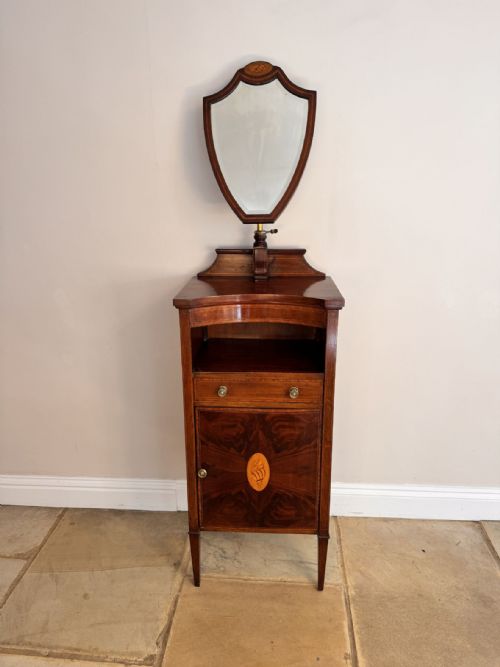


Inlaid Satinwood Table Mirror
These inlaid satinwood table mirror pieces bring refined timber tones and bright glass to a dressing space, offering a traditional surface for daily grooming.
Inlaid Satinwood Table Mirror
An inlaid satinwood table mirror serves as a functional desktop or dressing chest accessory, designed to reflect light and assist with personal grooming in bedrooms and dressing rooms. Buyers searching for an inlaid satinwood table mirror typically encounter pieces originating from the Edwardian era, Victorian period, and Georgian times, though forms span dressing tables and dressing stands as well.
The objects listed on this page encompass various configurations, including compact toilet mirrors meant for chests of drawers alongside larger dressing table mirrors resting on their own small stands. Craftsmanship ranges from Sheraton Revival interpretations to George III items, reflecting the enduring popularity of fine timber work across successive centuries.
Materials and construction methods
Cabinet makers utilised satinwood, mahogany, harewood, and walnut as primary and secondary timbers, often building sturdy carcases that supported pivoting mirror frames. Inlay work frequently incorporated contrasting woods to create geometric borders or floral motifs across the surface.
Mirror glass was set into profiled wooden frames, supported by upright columns or scroll brackets fitted with brass pivot screws for angle adjustment. Joinery techniques relied on traditional dovetails and mortise joints, ensuring stability for the pivoting glass.
Inlaid Satinwood Table Mirror Retail Price Guide 2026
Typical asking prices for inlaid satinwood table mirror among the pieces listed under this phrase on Sellingantiques today, from the lower quarter to the upper quarter. They describe what is for sale here now, not the wider market.
Listings feature items spanning the Georgian period, Victorian era, and Edwardian years, showcasing satinwood, mahogany, and walnut timbers.
Factors determining quality
Superior examples display crispness in the inlaid borders and precise timber matching, whereas lesser pieces show simpler construction and heavier secondary woods. The intricacy of the woodwork and the proportion of the mirror frame relative to the stand dictate the visual balance.
Original brass fittings and clear, unblemished mirror glass contribute to a higher standard of preservation. The depth of colour in the satinwood and the finesse of the supporting scrollwork separate standard production from master craftsmanship.
Flashman & Co·Gillows
The Inlaid Satinwood Table Mirror Glossary
- Satinwood
- A lustrous tropical timber known for its pale golden yellow colour and reflective sheen. It was frequently used as a veneer or inlay element in fine cabinet making.
- Inlay
- A decorative technique where pieces of contrasting wood or other materials are inserted into recesses flush with the surface. This method creates geometric patterns or pictorial designs.
- Toilet mirror
- A small mirror mounted on a miniature frame or chest of drawers designed to sit on top of a table. These pieces were essential items in historic dressing rooms.
- Harewood
- Sycamore wood that has been stained grey, often utilised in eighteenth century marquetry and inlay work. It provides a subtle cool tone against warmer timbers.
Inlaid Satinwood Table Mirror: Frequently Asked Questions
What is an inlaid satinwood table mirror used for?
These mirrors were traditionally placed upon dressing tables, chests of drawers, or washstands to provide a reflective surface for personal grooming and styling. They allowed users to adjust the angle of the glass for better light.
Today, they serve a similar functional purpose in bedrooms or act as decorative accents on sideboards and desks, bringing period charm to interior spaces.
How do I date an inlaid satinwood table mirror?
Dating relies on examining the timber species, construction methods, and overall stylistic influences such as Sheraton Revival or George III design. Secondary woods behind the mirror plate and the style of the brass screw fixings offer further clues.
Earlier examples from the eighteenth century tend to feature hand-cut dovetails and distinct native timber choices, while Edwardian and late nineteenth century pieces often show lighter framing and machine-cut elements.
Where should I place a table mirror at home?
A table mirror sits securely on top of any flat chest of drawers, dressing table, or low sideboard where the height allows comfortable viewing. Placing it near a natural light source enhances its reflective quality.
Ensure the surface is stable and deep enough to support the footprint of the mirror stand without risk of tipping.
Are the mirror plates original on antique mirrors?
Many antique mirrors retain their original glass, which can exhibit light foxing, minor silvering loss, or subtle distortions characteristic of historical manufacturing methods. These signs of age confirm the authenticity of the piece.
Replacement mirror glass sometimes occurs if the original was damaged over centuries of use, so inspecting the silvering and backing boards helps determine its history.