





Inlaid Piano Stool
An inlaid piano stool brings both practical seating and refined cabinet work to a music room, combining polished timbers with delicate contrasting bands.
Inlaid Piano Stool
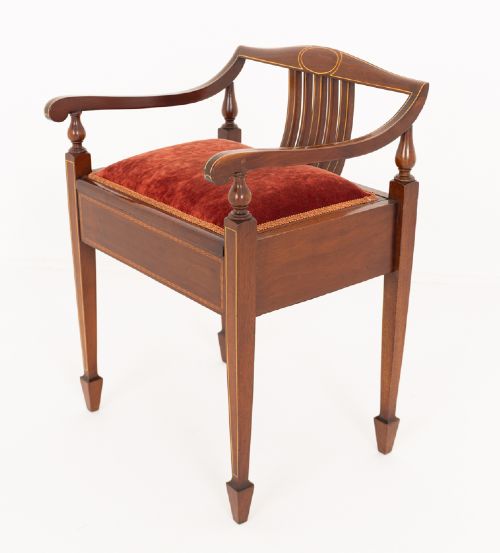
When you search for an inlaid piano stool, you encounter seating designed specifically for the keyboard, spanning the Regency, Victorian, and Edwardian eras. These pieces range from simple freestanding seats to sophisticated rise and fall mechanisms and revolving music chairs.
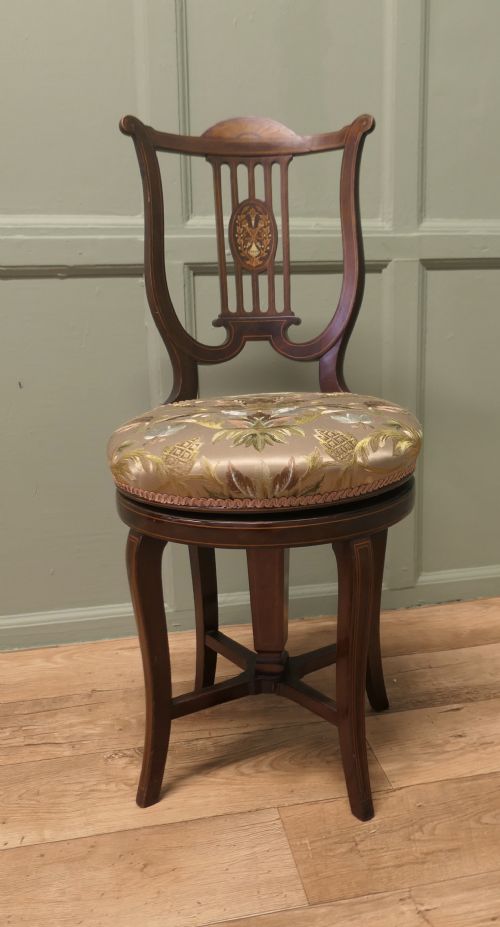
The most common examples on this page date from the Edwardian period and the year 1900, typically constructed from mahogany with decorative woodwork. Alongside these standard stool forms, you will find music chairs featuring lyre backs and X-framed designs.
Originating to serve the nineteenth and early twentieth-century parlour, these seats combine functional height adjustment or swivel action with decorative details like boxwood and satinwood inlay. Their survival reflects the enduring demand for dedicated keyboard seating in domestic spaces.
How they were made
Cabinet makers built these frames primarily in mahogany and rosewood, occasionally utilising simulated rosewood alongside solid timbers. These woods provided a stable foundation for both turning and flat panel construction.
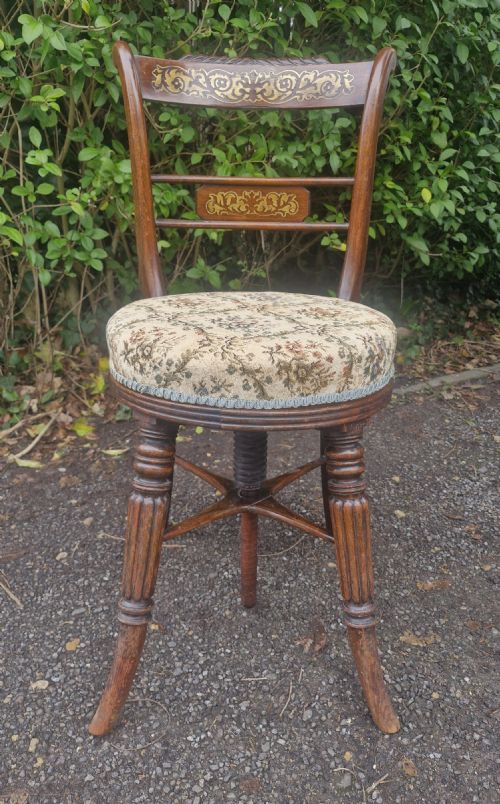
Decoration relied heavily on satinwood and boxwood inlay, creating sharp visual contrast against the darker ground of the primary timber. Brass inlay also appears, particularly on Regency examples where metal lines accent the rosewood surfaces.
Upholstery completed the design, incorporating fabrics and velvet to provide comfort during extended practice sessions. Mechanical elements were integrated into the frames of rise and fall models and revolving chairs to allow height and position adjustment.
Inlaid Piano Stool Retail Price Guide 2026
Typical asking prices for inlaid piano stool among the pieces listed under this phrase on Sellingantiques today, from the lower quarter to the upper quarter. They describe what is for sale here now, not the wider market.
Cellists and harpists required specialised revolving chairs so they could pivot gracefully toward their sheet music without dragging the legs.
What varies in quality
The refinement of the cabinet work largely determines the standing of a piece, particularly the precision and intricacy of the satinwood and boxwood inlay. Simpler Edwardian models offer straightforward proportions, whereas Regency and Sheraton Revival pieces display more ambitious joinery and material selection.
Mechanical complexity introduces another distinction, separating standard fixed-height stools from sophisticated rise and fall mechanisms or revolving harpist chairs. The integration of brass work and the quality of the original turning further elevate the status of individual examples.
The Inlaid Piano Stool Glossary
- Inlay
- A technique where pieces of contrasting timber or metal are inserted into recessed cavities of a base wood to form a decorative pattern. This method defines the surface decoration across Edwardian and Sheraton Revival examples.
- Rise and fall
- A mechanical adjustment system allowing the seat height to be altered by twisting or winding the top. This mechanism appears on Victorian examples designed for different players.
- X-framed
- A structural configuration where the legs cross in an X shape to support the seat. This form provides distinct stability and stylistic presence in nineteenth-century seating.
- Satinwood
- A durable, light-coloured tropical timber frequently utilised for contrasting stringing and decorative motifs. It provides the bright detail set against darker mahogany bodies.
Inlaid Piano Stool: Frequently Asked Questions
What is an inlaid piano stool?
An inlaid piano stool is a dedicated seat for keyboard players featuring decorative contrasting wood or metal work. These pieces date primarily from the nineteenth and early twentieth centuries.
They combine functional adjustments, such as swiveling or height mechanisms, with polished timbers like mahogany and rosewood.
How do I identify a Regency piano stool?
Regency piano stools often feature rosewood surfaces combined with precise brass inlay work. Their forms reflect classical revival aesthetics popular in the early nineteenth century.
These pieces typically display heavier turning and distinct metal accents compared to later Edwardian variations.
What is a rise and fall piano stool?
A rise and fall piano stool incorporates an internal wooden or metal screw mechanism that raises or lowers the seat platform. This allowed musicians to adjust their height relative to the keyboard.
Victorian makers favoured this practical addition for domestic music rooms.
How do Edwardian stools differ from Victorian ones?
Edwardian piano stools frequently utilise lighter mahogany frames with delicate satinwood and boxwood inlay in the Sheraton Revival style. They often present simpler freestanding forms.
Victorian equivalents lean towards heavier rosewood construction, complex rise and fall mechanics, and Arts and Crafts influences.
Where were music chairs used?
Music chairs and stools were placed beside pianos, harps, and cellos in domestic parlours and drawing rooms. They provided stable yet adaptable seating for musicians during practice and performance.
Revolving designs allowed players, particularly harpists and cellists, to shift position easily.