
Inlaid Glass Fronted Cabinet
An inlaid glass fronted cabinet brings polished timber and glazed display space together, offering a refined way to exhibit porcelain and small treasures.
Inlaid Glass Fronted Cabinet
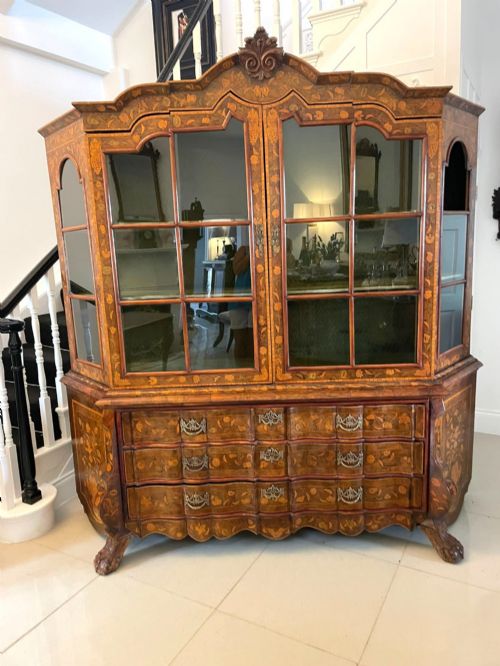
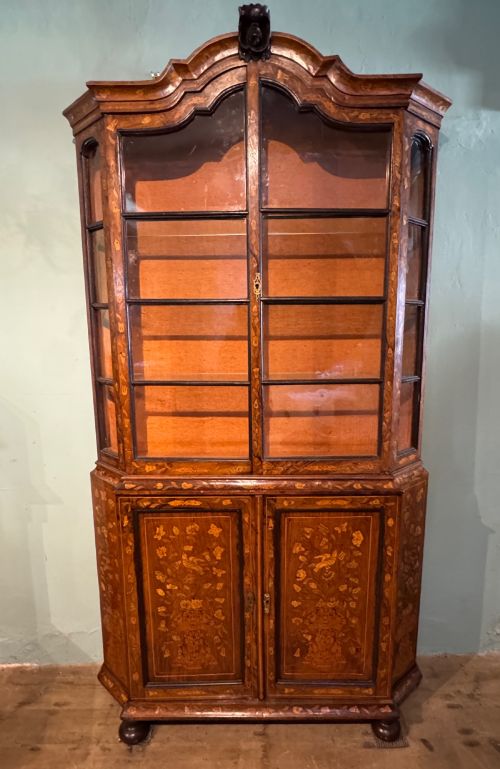
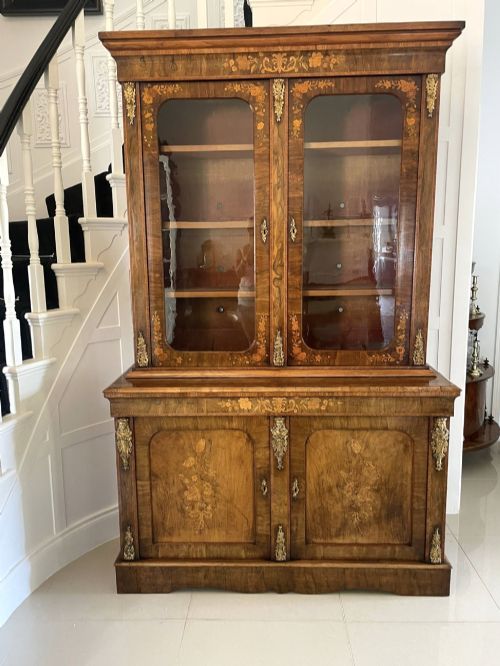
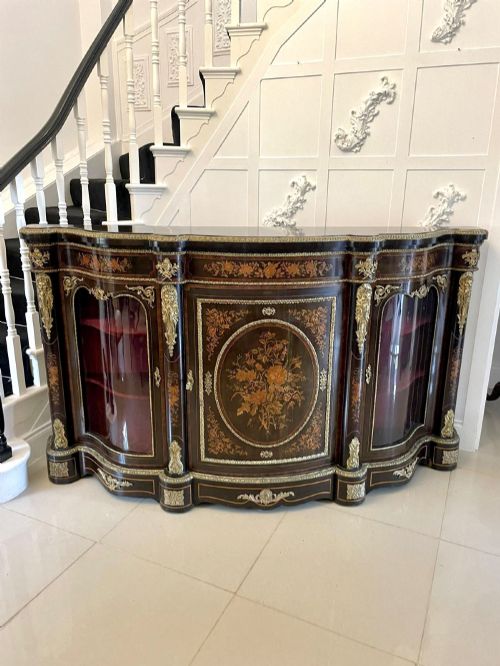
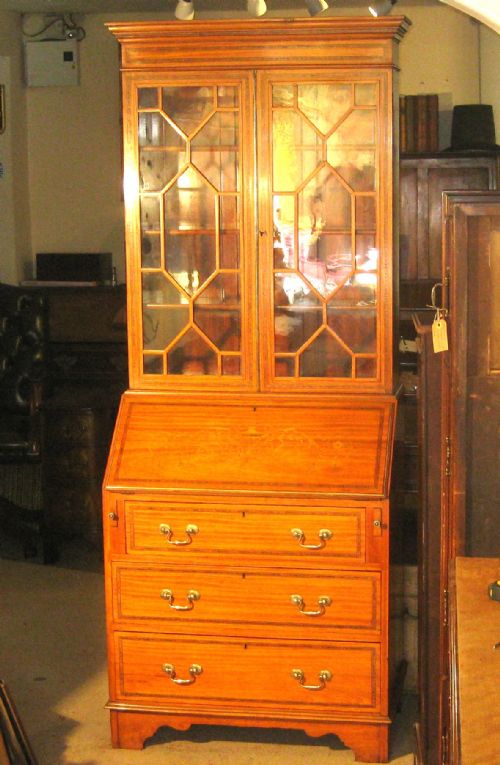
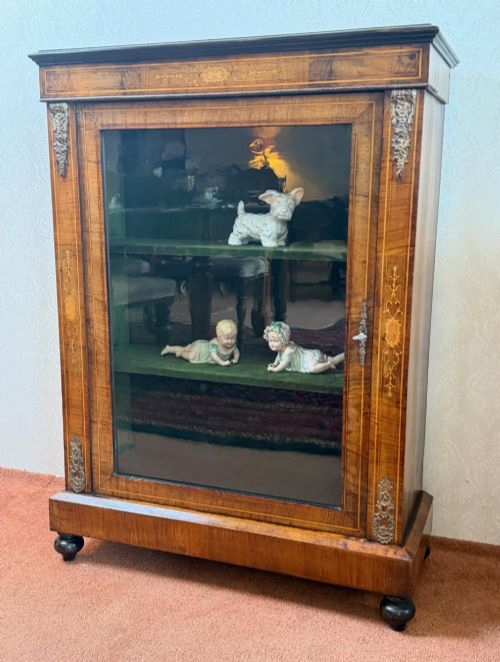
When you search for an inlaid glass fronted cabinet, you encounter display cabinets, credenzas, pier cabinets, and bookcases dating from the Victorian and Edwardian periods. These pieces originate primarily from the nineteenth and early twentieth centuries, spanning styles such as Sheraton Revival, Dutch Baroque, Art Nouveau, and French Louis XV.
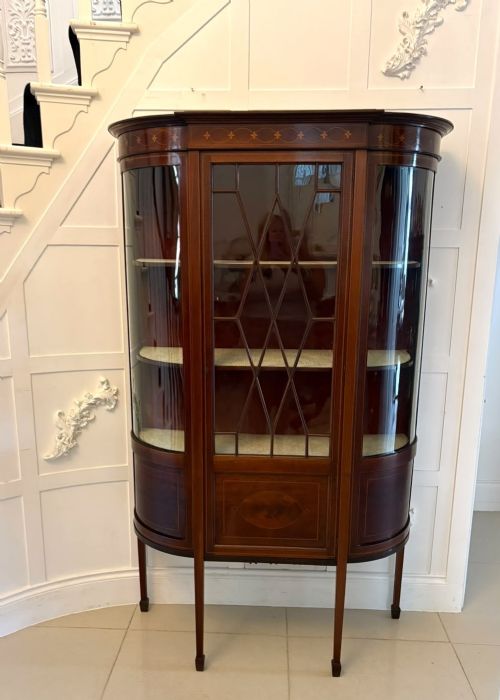
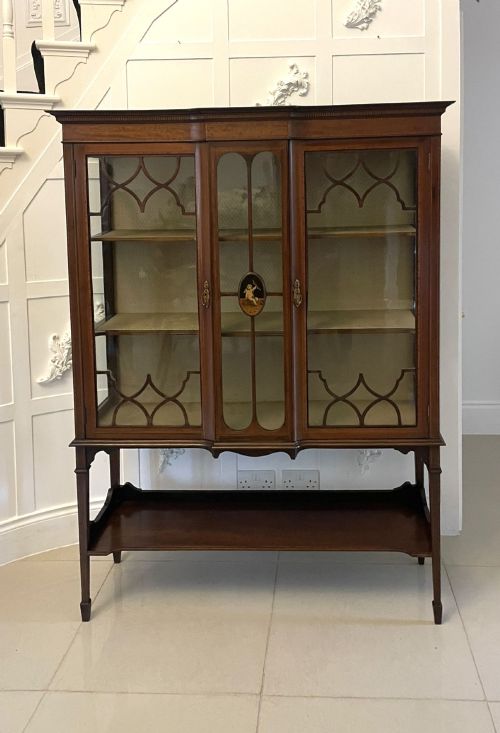
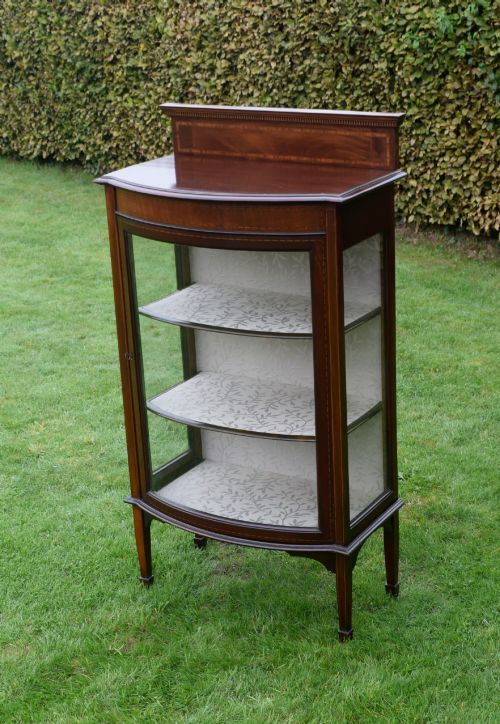
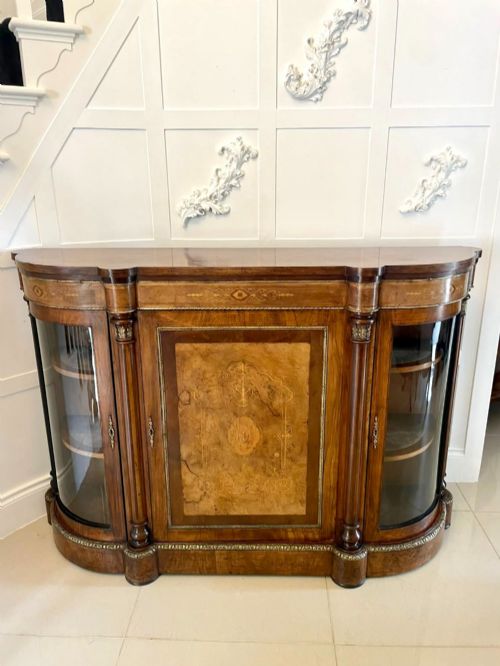
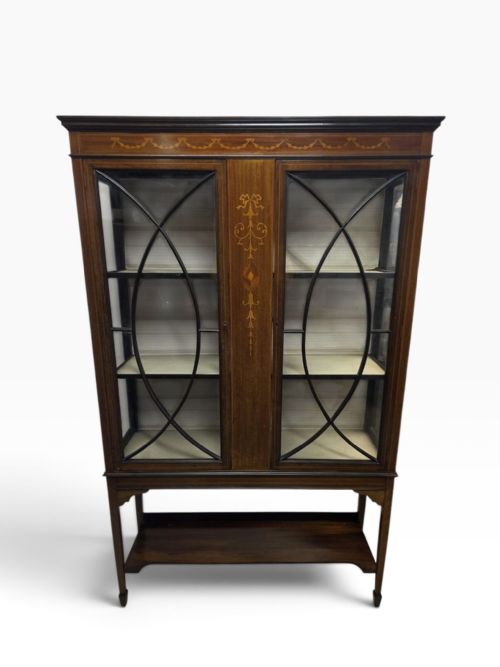
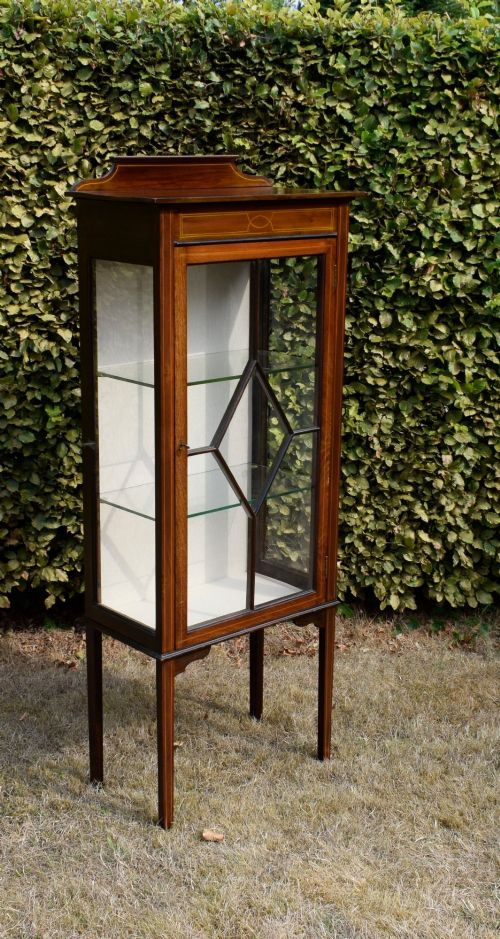
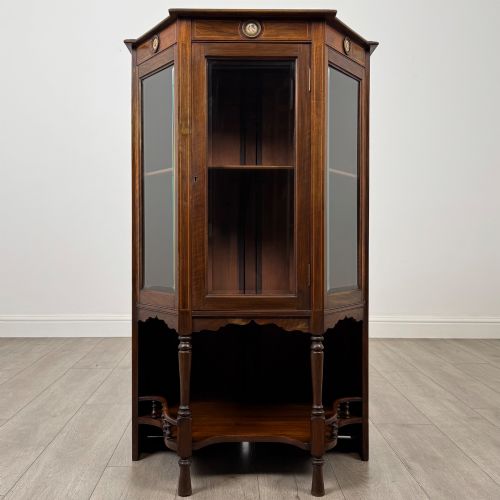
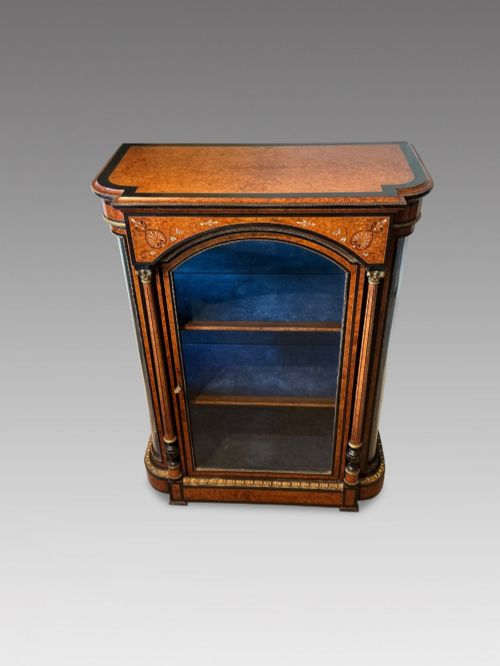
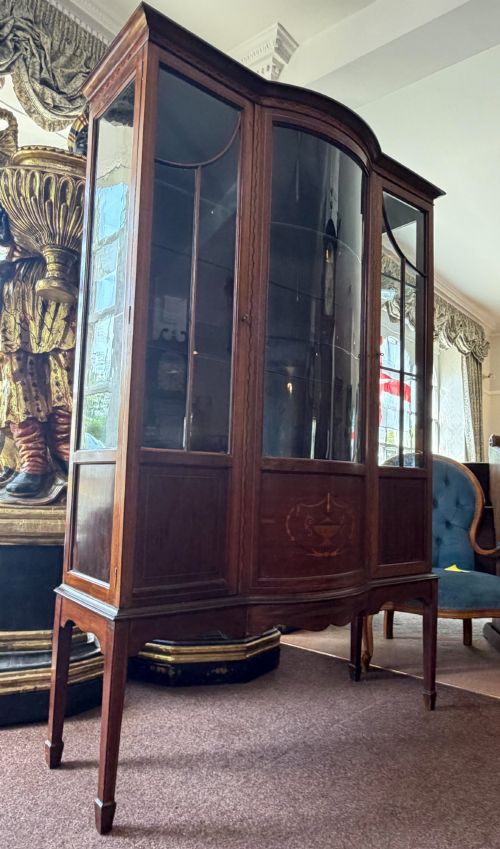
The version you meet most often on this page is the Edwardian mahogany or satinwood display cabinet, frequently featuring delicate floral or fruitwood inlay and a glazed door. Alongside these, Victorian burr walnut credenzas and pier cabinets appear regularly, incorporating curved glass and rich timber grains.
Materials and Technique
Cabinet makers utilised foundational hardwoods such as mahogany, walnut, and burr walnut, often pairing them with contrasting satinwood or fruitwood veneers for decorative marquetry. Glazed panels, whether flat, bowed, or astragal-glazed, form the primary front facing of these storage pieces.
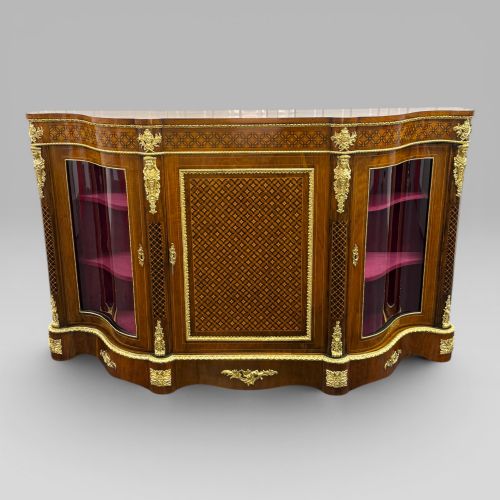
Metal components play a distinct structural and decorative role, with brass accents and cast ormolu mounts framing the timber doors and serpentine profiles. Fabric linings sometimes appear within the interior display spaces, complementing the exterior polish.
Some Edwardian display cabinets feature velvet-lined interior shelves designed to keep delicate porcelain from sliding about when doors open.
Craftsmanship and Proportion
The distinction between standard examples and the finest pieces rests upon the precision of the marquetry inlay and the selection of timber veneers, such as highly figured burr walnut. Finer items integrate cast ormolu mounts and serpentine or bow-fronted structures that require advanced joinery.
Makers known for exceptional retail output, such as Edwards & Roberts or Maple & Co., demonstrate superior timber selection and balanced proportions. The integration of glazed panels with smooth-operating doors marks the upper tier of production.
Edwards & Roberts·Maple & Co.·Maison Gagneau
The Inlaid Glass Fronted Cabinet Glossary
- Marquetry
- Decorative patterns formed by fitting small pieces of veneer into a backing material to create pictorial or floral designs. This technique defines the surface decoration on many Victorian credenzas and Edwardian display pieces.
- Ormolu
- Gilded bronze mounts applied to furniture for decorative effect. These metallic embellishments frequently accent the corners and borders of serpentine Victorian cabinets.
- Pier Cabinet
- A narrow upright cabinet designed to fit against the wall space between windows. These are commonly encountered in Victorian walnut variations.
- Credenza
- A low cabinet, often featuring curved ends and central glazed doors, originating from sideboard designs. They serve as substantial display and storage furniture.
- Astragal Glazed
- Glass panes divided by slender wooden mouldings or bars within a door frame. This method creates a grid pattern typical of Edwardian bookcases and display cases.
Inlaid Glass Fronted Cabinet: Frequently Asked Questions
What is an inlaid glass fronted cabinet used for?
These cabinets serve to display porcelain, glassware, and collected objects while protecting them from dust behind glass doors.
They function as decorative storage focal points in drawing rooms and reception spaces.
How do I date a glass fronted cabinet?
Dating relies on identifying stylistic markers, timber types, and construction methods associated with Victorian, Edwardian, or later nineteenth-century periods.
Cabinet proportions and inlay motifs provide additional clues to the exact decade of manufacture.
Where should I place a pier cabinet?
Pier cabinets fit neatly into narrow wall sections, particularly the wall space between two windows.
Their shallow depth allows them to sit comfortably in smaller rooms without blocking pathways.
What timber was used for Edwardian display cabinets?
Edwardian cabinet makers primarily selected mahogany and satinwood for their light colour and smooth grain.
Inlay work on these pieces frequently used fruitwood and darker veneers to create botanical patterns.
How do credenzas differ from standard display cabinets?
Credenzas are typically lower, wider storage pieces that feature a central cabinet flanked by curved glass side doors.
Standard display cabinets are taller upright structures designed primarily for eye-level viewing of collections.