
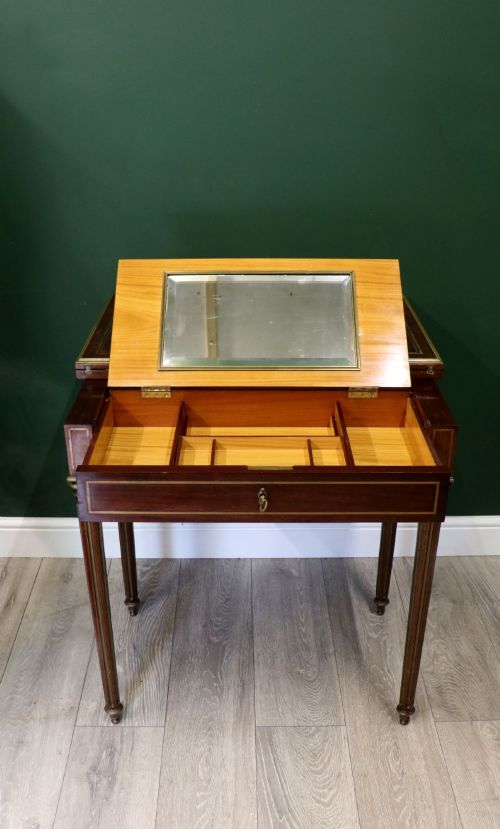
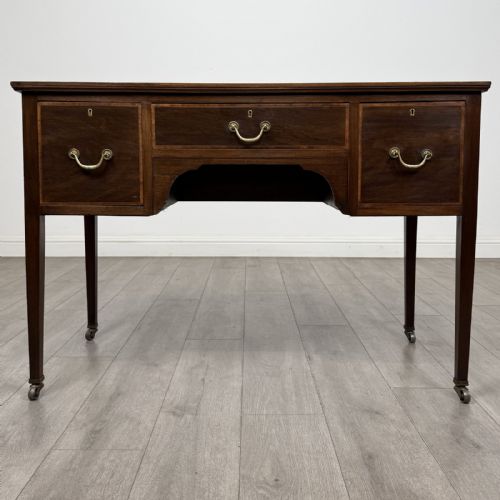
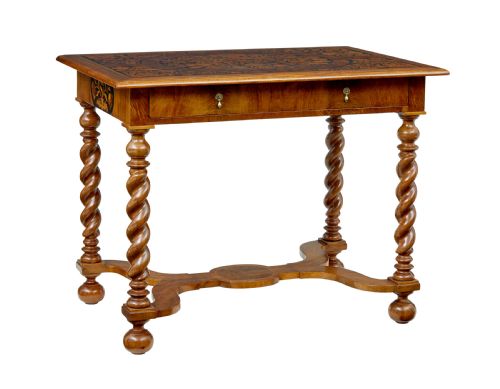
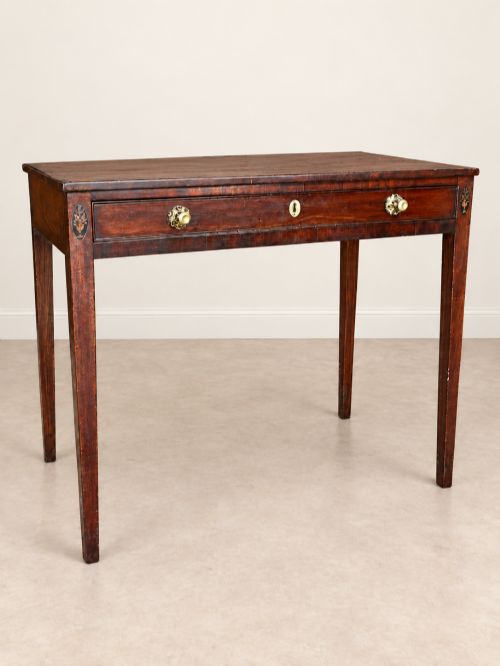
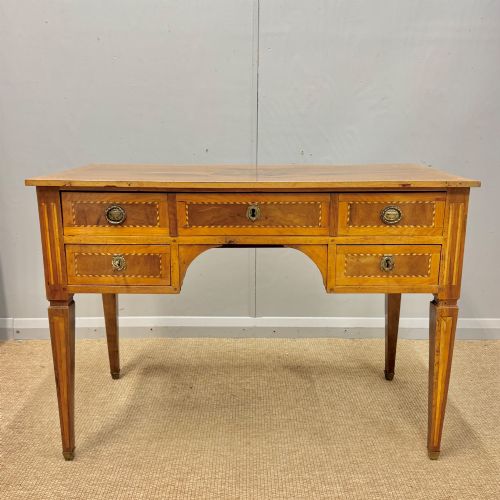
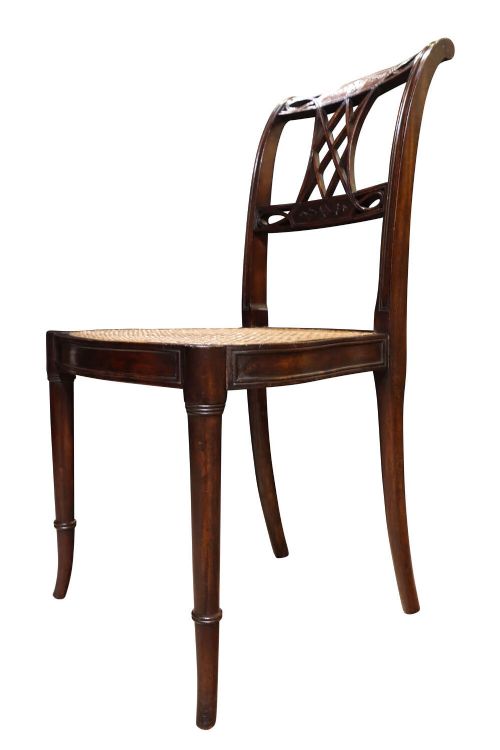
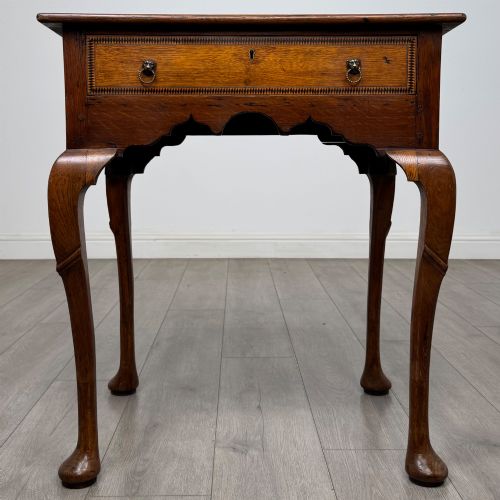
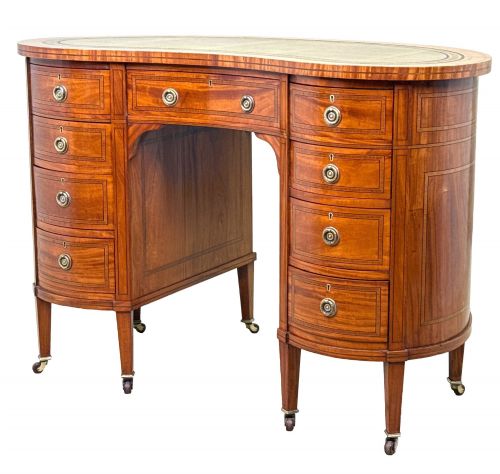

Inlaid Dressing Desk
An inlaid dressing desk brings refined woods and precise cabinetwork to the bedroom, offering a surface for writing and morning routines alike.
Inlaid Dressing Desk
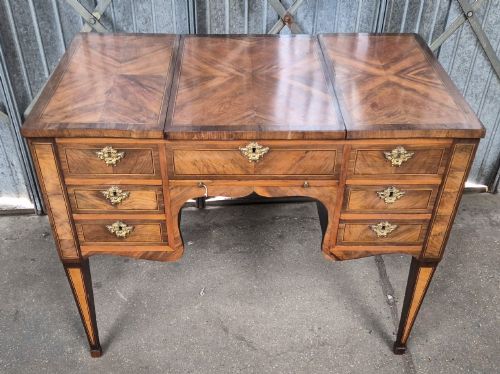
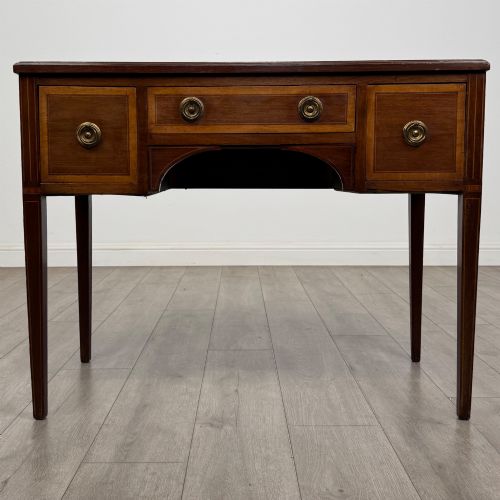
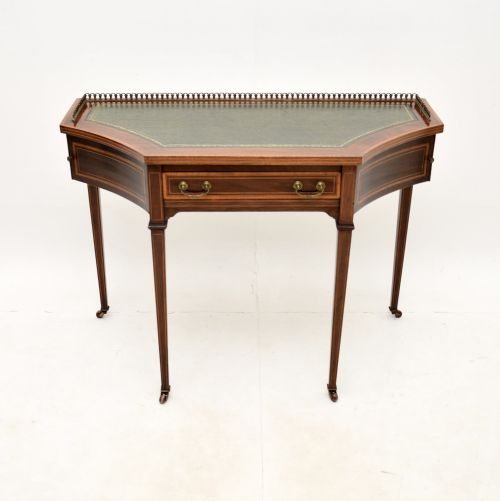
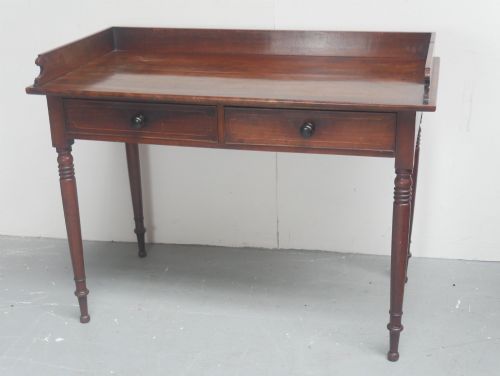
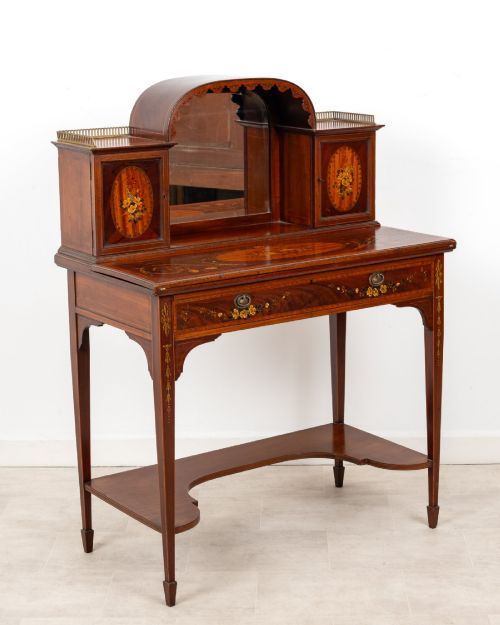
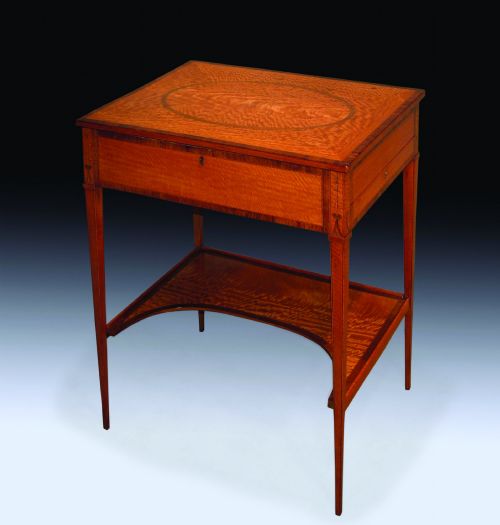
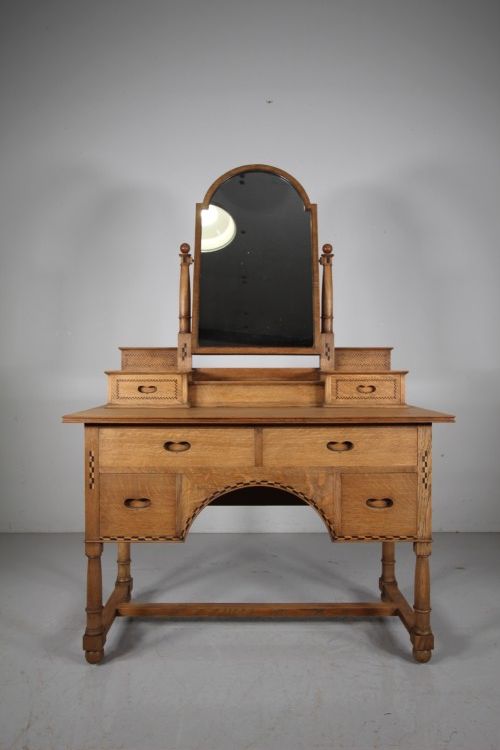
An inlaid dressing desk combines the practical compartments of a dressing table with the writing surface of a desk, often taking the form of kidney-shaped tables or pedestal designs. These pieces frequently emerge from Edwardian workshops and the 19th Century, drawing on earlier Georgian and Regency forms.
Buyers encounter variations ranging from Sheraton Revival satinwood pieces to French-influenced kingwood designs with serpentine fronts. Many incorporate mirrors, drawers, and leather inserts alongside decorative stringing and marquetry.
The combination of writing and dressing functions reflects a period habit of multi-purpose furniture in bedrooms and boudoirs. Mahogany forms the core structure for most examples found here, accented with contrasting timbers.
How they were made
Cabinetmakers constructed the frames primarily in mahogany, walnut, and kingwood, applying fine veneers of satinwood and rosewood to the exterior surfaces. Boxwood and brass provide linear stringing and edge details that define the geometric and floral marquetry.
Marquetry and inlay techniques involve cutting intricate patterns into the primary surface and fitting contrasting wood veneers or metal into the recesses. Hand-cut dovetails secure the drawer carcases, while brass hardware completes the fittings.
Some desks hide secret compartments designed for love letters and smuggled sweets.
What varies in quality
The finesse of the marquetry and the choice of cabinet timbers separate standard pieces from the finest work. Crispness in the floral or geometric inlay indicates skilled hand-cutting rather than mechanical production.
Subtlety in the proportions, such as kidney curves or serpentine fronts, combined with secondary woods like solid mahogany inside the drawers, marks superior workshop output.
Edwards & Roberts·James Shoolbred
The Inlaid Dressing Desk Glossary
- Marquetry
- Decorative veneer work forming pictures or patterns using various coloured woods. This technique requires precise jigsaw-like cutting to fit pieces into a ground veneer.
- Satinwood
- A durable, hard wood with a natural golden sheen used extensively in 18th Century and Sheraton Revival pieces. It takes a high polish and provides sharp contrast against darker timbers.
- Stringing
- Thin strips of contrasting wood or light-coloured inlay set into grooves on furniture surfaces. It outlines drawers, tops, and legs to create geometric borders.
- Lowboy
- A small side table with drawers, often standing on slender legs, dating from the 18th Century. These pieces frequently served as dressing or writing surfaces before dedicated desks evolved.
- Kidney-shaped
- A curved desk or table profile resembling a bean or kidney. This ergonomic shape allows the user to sit closer to the central drawers.
Inlaid Dressing Desk: Frequently Asked Questions
How do I date an inlaid dressing desk?
Dating relies on timber selection, construction methods, and stylistic cues such as Edwardian Sheraton Revival motifs or 19th-century French influences. Secondary woods inside drawers and the style of dovetailing provide further chronological clues.
Cabinet hardware and the presence of maker labels also help narrow the decade of manufacture, distinguishing Georgian origins from later revival periods.
Were these desks used for writing or dressing?
Many examples served both purposes, functioning as combination desks and dressing tables with integrated compartments and mirrors. The dual role suited late 19th and early 20th-century domestic habits.
Drawers designed for cosmetics and stationery accommodated the daily routines of writing letters and grooming in the bedroom.
How do I care for satinwood and mahogany surfaces?
Maintenance involves regular dusting with a dry, soft cloth and avoiding direct sunlight to prevent veneer fading. Natural wax applied sparingly preserves the sheen of the polished wood.
Harsh chemical cleaners and excessive moisture damage antique polishes, so keeping the room at a stable humidity protects the delicate marquetry inlay.
What distinguishes Sheraton Revival from original Georgian work?
Sheraton Revival pieces date from the late 19th and early 20th centuries, reinterpreting the lighter forms and satinwood veneers of the 18th Century. They often display machine-assisted precision alongside hand inlay.
Original Georgian pieces show period-specific hand-cut joinery and aged patination on the primary timbers that later revivals attempt to emulate.