



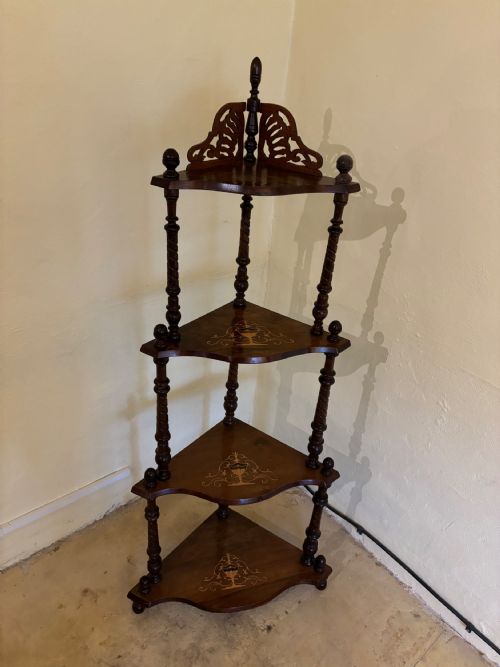


Inlaid Corner Shelf
An inlaid corner shelf tucks neatly into a neglected angle, offering tiered display space shaped in walnut, mahogany, or olive wood.
Inlaid Corner Shelf
An inlaid corner shelf serves to utilise awkward wall junctions by providing stacked tiers for small ornaments and books. The pieces matching this search phrase include corner whatnots, etageres, open bookcases, and display stands originating from the Victorian, Edwardian, and nineteenth-century periods.
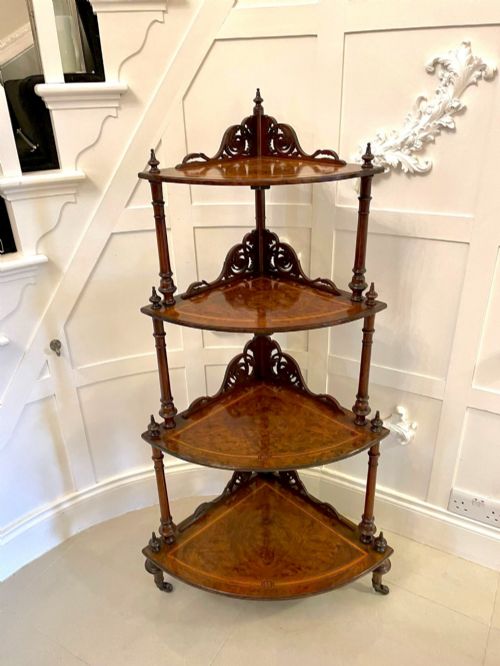
The version most commonly met on this page is the four-tier walnut or mahogany corner whatnot featuring delicate marquetry or boxwood inlay. These multi-level units transform empty room angles into decorative focal points while maintaining a compact footprint.
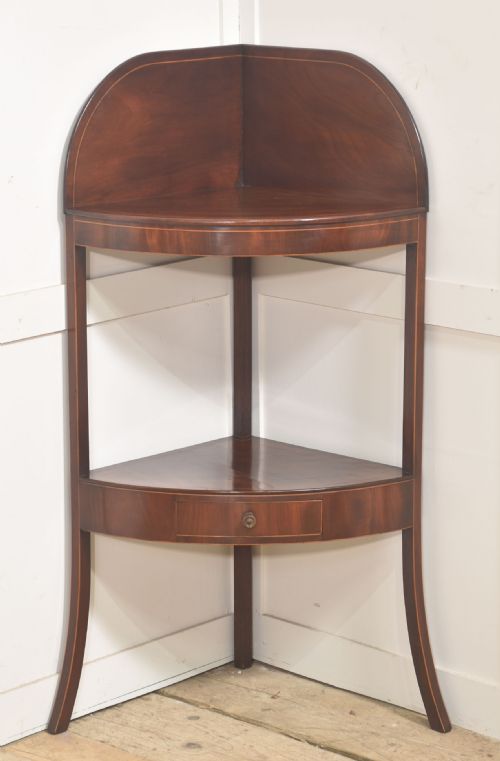
Makers designed these tiered structures in styles ranging from Georgian revival and French influence to Victorian Sorrento production. They function as both practical storage surfaces and decorative expressions of period craftsmanship.
How they were made
Cabinet makers built these tiered stands using solid timbers like mahogany, walnut, and rosewood for the structural uprights and shelves. Secondary woods provided hidden stability beneath the decorative exterior surfaces.
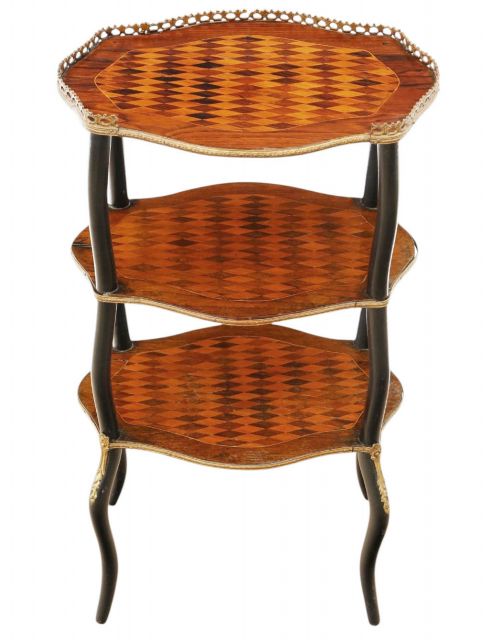
Marquetry and boxwood inlay were meticulously hand-cut and fitted into recessed channels on the timber shelves to form intricate floral or geometric patterns. Ebonised finishes and brass fittings occasionally augmented the primary wood grain.
Multi-tiered corner whatnots relied on turned columns, slender spindles, or shaped brackets to support each successive platform securely. Individual tiers graduate in depth from top to bottom to maintain balance and proportion.
Inlaid Corner Shelf Retail Price Guide 2026
Typical asking prices for inlaid corner shelf among the pieces listed under this phrase on Sellingantiques today, from the lower quarter to the upper quarter. They describe what is for sale here now, not the wider market.
Victorian collectors used corner whatnots to display their most curious shells, small bronzes, and ceramic trinkets where guests could admire them from every angle.
What varies in quality
The standard of the timber selection dictates the visual depth of the piece, with burr walnut and figured mahogany representing the finer tier of production. Plain secondary woods lack the rich grain movement found in superior examples.
Precision in the marquetry inlay separates standard workshop output from exceptional cabinet work. Cleanly fitted boxwood lines and tightly registered botanical motifs require considerable patience compared to stamped or painted substitutes.
Structural integrity in the turned supports and the junction of the shelves determines how firmly the stand holds its shape over decades of use. Solidly pinned joints outlast rushed assembly methods.
The Inlaid Corner Shelf Glossary
- Whatnot
- A piece of furniture consisting of a set of open shelves for displaying small objects. These tiered stands gained popularity during the Victorian era for exhibition in parlours.
- Etagere
- A piece of furniture with a number of open shelves for displaying ornaments. The term often describes French-influenced stands featuring delicate upright supports.
- Marquetry Inlay
- Decorative woodwork in which thin slices of various woods are fitted into a veneer ground to form pictures or patterns. It defines the surface decoration on many Victorian corner stands.
- Boxwood Inlay
- Contrasting pale wood inserted into darker timber to create sharp linear borders. It provides the fine geometric stringing seen on Edwardian and Victorian shelves.
- Sorrento Ware
- Decorative woodwork produced in the Italian town of Sorrento featuring characteristic olive wood and intricate mosaic inlay. Pieces from this tradition often include specialised corner shelves.
Inlaid Corner Shelf: Frequently Asked Questions
Where should I place an inlaid corner shelf in a room?
These pieces suit empty wall angles in drawing rooms, hallways, or studies where floor space is limited. Their triangular footprint allows them to nestle snugly into corners without obstructing walkways.
Position them away from direct sunlight and heat sources to protect the delicate walnut veneer and boxwood inlay from drying out.
How do I distinguish a Victorian corner whatnot from an Edwardian one?
Victorian examples frequently employ rich walnut, heavy turning, and dense marquetry inlay with darker, more formal finishes. Edwardian pieces often lean towards lighter mahogany or satinwood with simpler, airier proportions.
Cabinet makers of the later Edwardian period favoured restraint, whereas Victorian makers embraced elaborate tiers and decorative spindle galleries.
How should I clean and maintain antique inlaid wood?
Dust the tiers regularly with a soft, dry cloth to prevent dirt from settling into the grain and inlay channels. Avoid chemical polishes that can lift the delicate boxwood stringing over time.
Applying a traditional beeswax occasionally nourishes the timber and maintains a soft sheen without building up harmful residue on the surface.