





Inlaid Coffee Table Set
An inlaid coffee table set offers graduated surfaces of polished timber that tuck neatly away when floor space matters.
Inlaid Coffee Table Set
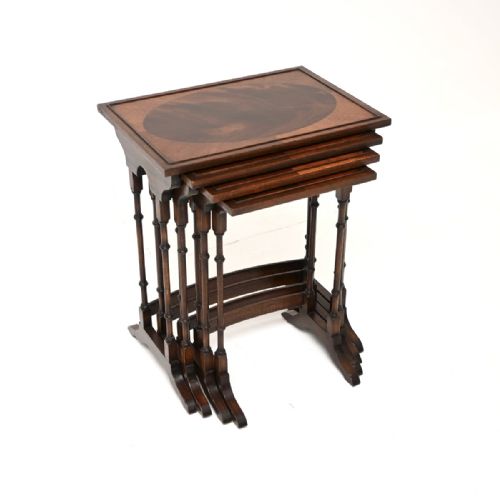
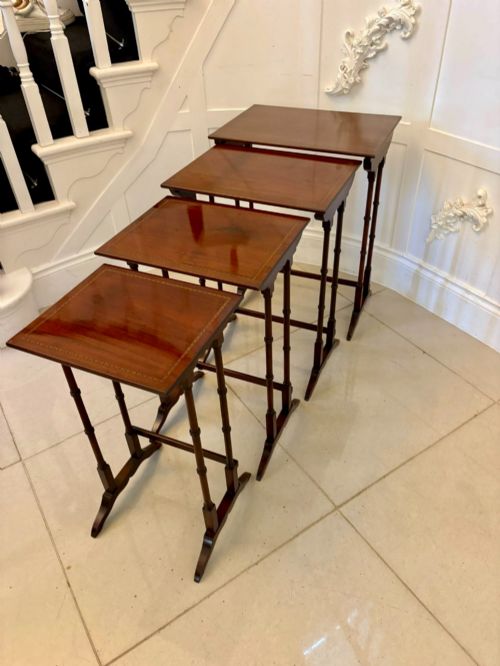
When you search for an inlaid coffee table set, you are looking at nesting furniture designed to slide one beneath another to save space in a drawing room or parlour. These suites appear primarily in forms like the quartetto, a Victorian and Edwardian arrangement of four graduated tables supported by slender pillars or trestles.
You will most frequently meet Edwardian examples built from mahogany, though older Regency designs and Georgian style interpretations also surface alongside French walnut and Chinese hardwood pieces. The decorative schemes rely on contrasting timbers and fine stringing to form geometric borders or floral motifs across the top surface.
The layout generally consists of a master table with three smaller companions sliding directly underneath, though versions with three tables appear with similar frequency. These groupings served originally for serving tea, holding lamps, or displaying ornamental items without cluttering the centre of the room.
Construction and Materials
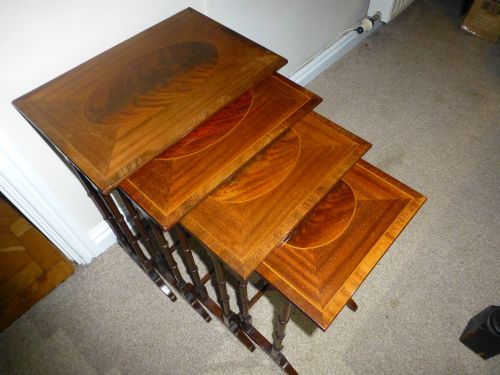
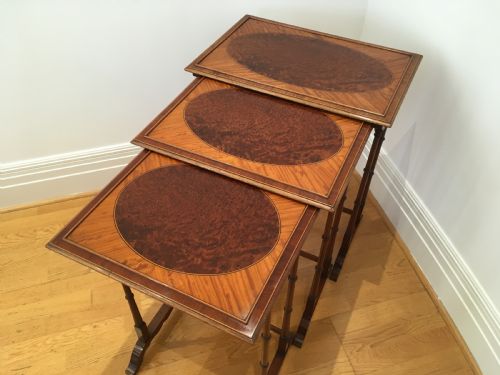
Cabinet makers constructed these nests using solid foundational timbers such as mahogany and walnut, applying delicate veneers to the main top surfaces to create a stable yet decorative ground. Satinwood, amboyna, and boxwood provided the contrasting lighter tones required for the intricate borders and central paterae.
The decorative inlay relies on precise cutting of small timber segments fitted into channels routed directly into the primary wood, often enhanced with dark stringing lines to frame the composition. Turned or reeded uprights provide the structural support, connected by low stretchers to ensure rigidity while keeping the nesting clearance exact.
Inlaid Coffee Table Set Retail Price Guide 2026
Typical asking prices for inlaid coffee table set among the pieces listed under this phrase on Sellingantiques today, from the lower quarter to the upper quarter. They describe what is for sale here now, not the wider market.
Listings span several decades from the late Victorian era through the Edwardian period into the nineteen thirties, featuring mahogany, walnut, and exotic veneers.
Judging Quality and Craftsmanship
The standard of the timber selection and the precision of the veneer work separate the finer suites from standard production pieces. Finer makers selected richly figured mahogany and laid contrasting satinwood and boxwood veneers with microscopic joint gaps, ensuring the pattern remains flush and stable over decades of use.
Structural integrity in the smallest table dictates the overall merit of the nest, as sliding these surfaces repeatedly demands tight joinery in the legs and stretcher rails. Superior examples maintain exact tolerances so that each table glides smoothly into position without scraping its neighbours.
Gillows
The Inlaid Coffee Table Set Glossary
- Quartetto
- A matched set of four graduating tables designed to slide one beneath another. This traditional configuration was especially popular during the Victorian and Edwardian periods.
- Stringing
- Thin lines of contrasting timber inlaid into channels around the edge of a tabletop. This technique outlines the perimeter and frames the central wood grain.
- Patera
- A circular or oval decorative ornament inlaid into furniture surfaces, often carved or rendered in contrasting veneers. It frequently mimics classical motifs found in ancient architecture.
- Parquetry
- Geometric mosaic woodwork formed by small pieces of timber fitted together to create tiled patterns. It appears frequently on French walnut tables.
- Amboyna
- A highly prized exotic burl timber exhibiting rich mottled figuring and warm reddish-brown tones. Cabinet makers reserved this material for premium accent panels.
Inlaid Coffee Table Set: Frequently Asked Questions
What is a quartetto nest?
A quartetto nest consists of four graduated tables designed to slide neatly underneath one another into the footprint of the largest single piece. This configuration maximises surface area when entertaining while occupying minimal floor space.
Cabinet makers developed these suites during the nineteenth century as versatile occasional furniture for drawing rooms and parlours where flexibility remained paramount.
How do I care for inlaid wood?
Maintain inlaid timber surfaces by keeping them away from direct sunlight and sudden humidity changes that might cause the delicate veneers to lift or crack. Regular dusting with a soft, dry cloth preserves the polished finish.
Avoid using silicone-based polishes or wet cloths, opting instead for occasional applications of traditional beeswax to nourish the aged wood and highlight the contrasting stringing.
How can I date an Edwardian nest?
Edwardian nests typically display lighter mahogany framing combined with satinwood stringing and subtle boxwood inlay, reflecting the revival styles popular around nineteen hundred. Look for machine-sawn backing timbers and standardised construction methods common to the period.
The absence of heavy Victorian mouldings combined with slender turned supports points directly toward the early twentieth century manufacturing aesthetic.
Where were these tables used?
These nesting suites served primarily in reception rooms and drawing rooms to hold tea cups, reading materials, or portable lighting during evening gatherings. Servants or hosts could easily separate the tables around the room and return them to a single stack afterward.
Their compact nature allowed households to furnish smaller spaces without sacrificing functional surface area for daily domestic activities.