






Inlaid Cellarette
An inlaid cellarette keeps wine chilled and ready, bringing period craftsmanship and rich timber into a dining room.
Inlaid Cellarette
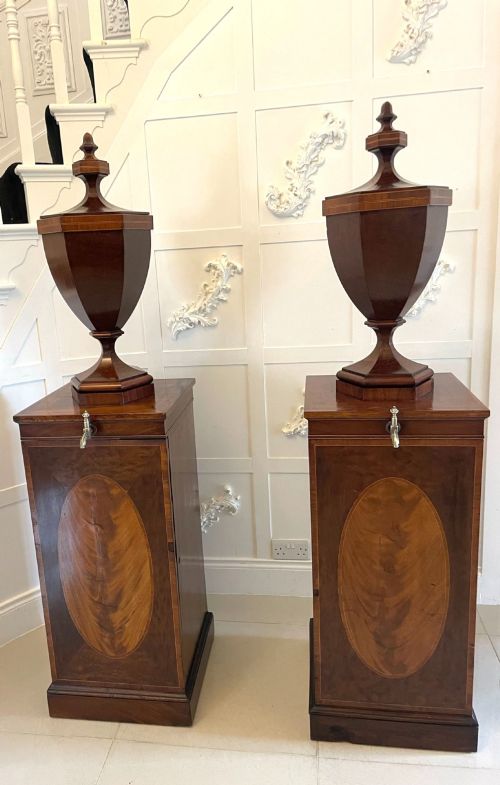
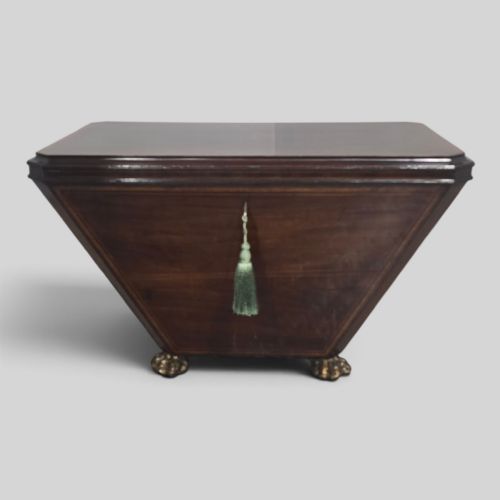
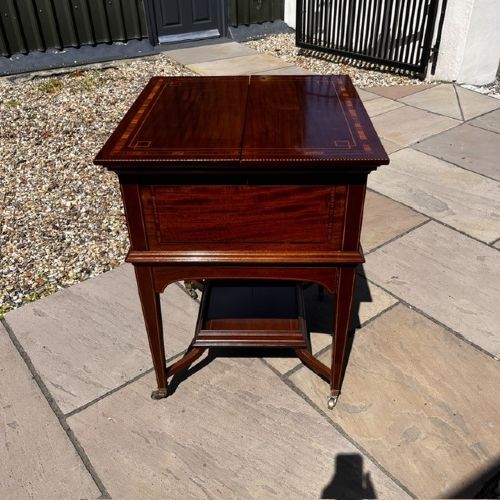
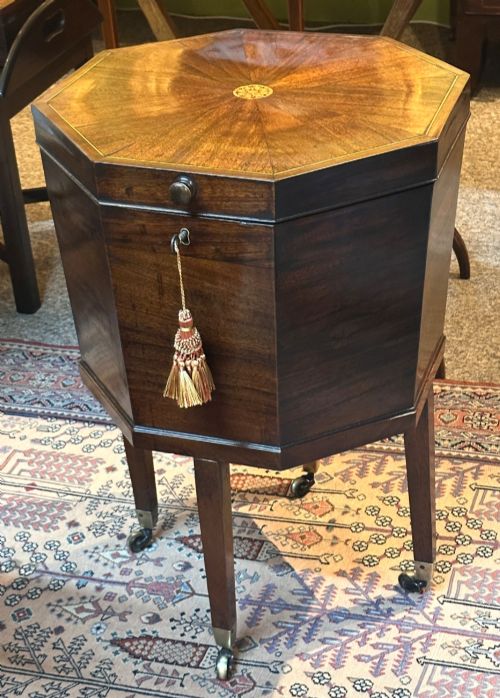
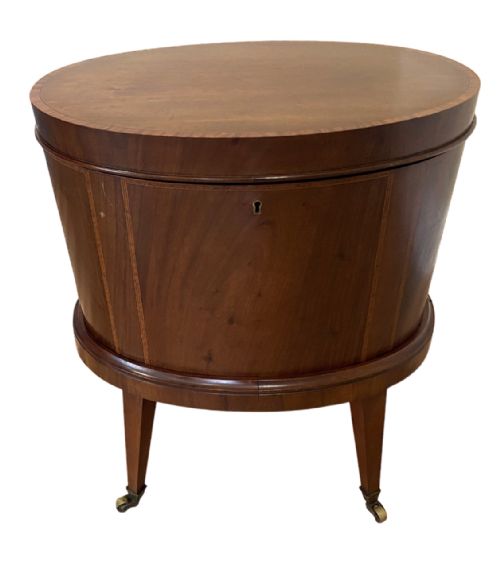
An inlaid cellarette is a dedicated storage vessel for wine, appearing across the Georgian, Regency, Victorian, and Edwardian eras. These pieces range from oval and octagonal floor-standing coolers to table stands and drinks cabinets.
Mahogany forms the primary body of most examples here, often enriched with satinwood, boxwood, and rosewood bandings. Buyers encounter both freestanding vessels and cellarettes integrated into sideboards.
Cabinetmakers of the eighteenth and nineteenth centuries built these to hold bottles securely while displaying decorative wood figure and precise geometric or floral ornamentation in domestic entertaining spaces.
Materials and construction
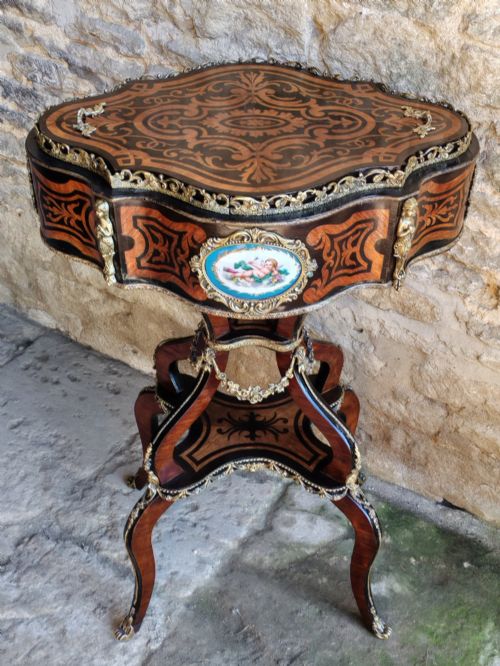
Craftsmen selected dense timbers such as mahogany, walnut, and satinwood, frequently cutting them to expose dramatic flame or burr grains. Surfaces received intricate lines of boxwood and rosewood inlay, creating sharp contrasts along borders and panels.
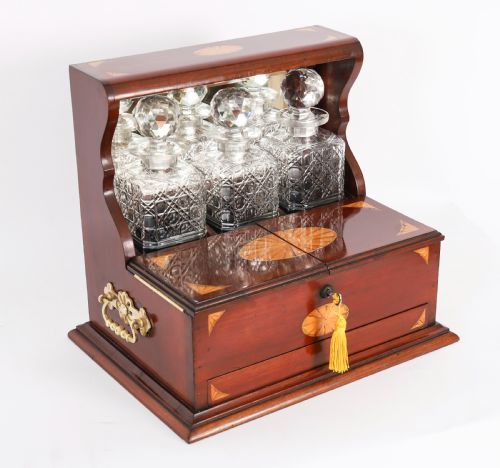
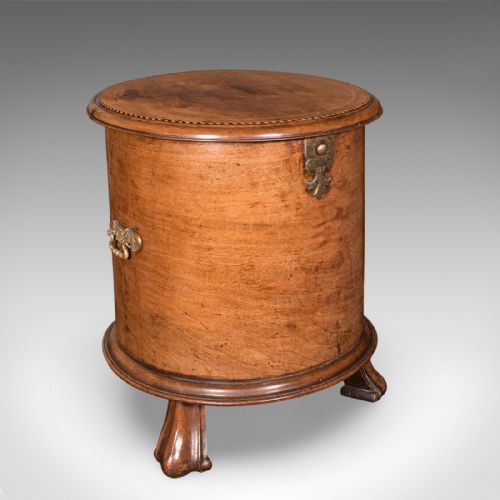
Metal accents, including brass carrying handles, castors, and ormolu mounts, provided functional strength and decorative contrast against the polished wood. Interior compartments were fitted to hold glass bottles and decanters safely during service.
Inlaid Cellarette Retail Price Guide 2026
Typical asking prices for inlaid cellarette among the pieces listed under this phrase on Sellingantiques today, from the lower quarter to the upper quarter. They describe what is for sale here now, not the wider market.
Some nineteenth-century makers doubled their cellarettes as game tables, concealing tantalus sets and crystal decanters beneath secretive lockable lids.
Assessing quality in execution
Superior examples demonstrate meticulous precision in the contrasting wood inlays, where lines remain crisp and symmetrical without visible gaps. The selection of timber grain, particularly matched flame mahogany or burr walnut panels, marks the distinction between standard workshops and premier cabinetmakers.
The sophistication of the internal fittings and the retention of original brass hardware elevate an individual piece. Strong proportions and clean structural joins indicate master construction rather than later commercial replication.
Edwards and Roberts·Gillows·Freemans of Norwich·Whytock and Reid
The Inlaid Cellarette Glossary
- Cellarette
- A lockable container or cabinet specifically designed to hold wine bottles and decanters near the dining table. They frequently incorporate lead-lined interiors for chilling.
- Inlay
- A decorative technique where contrasting pieces of wood, metal, or shell are inserted into recessed cavities of a timber surface to form patterns.
- Satinwood
- A durable, yellowish timber prized for its smooth texture and reflective sheen, frequently utilised for contrasting banding and marquetry panels in eighteenth and nineteenth-century furniture.
- Marquetry
- Elaborate veneer work arranged in pictorial or geometric patterns across furniture surfaces using various tinted woods and other materials.
- Serpentine
- A furniture front or edge shaped with a central convex curve flanked by two concave curves, creating an undulating outline seen on finer Georgian case pieces.
Inlaid Cellarette: Frequently Asked Questions
How do I identify a Georgian cellarette?
Georgian examples typically feature rich mahogany construction with restrained satinwood or boxwood stringing, following architectural proportions.
They often appear as octagonal or oval vessels supported on robust legs or original pedestals rather than later revival elaborations.
Were these pieces lined with metal?
Many period wine coolers contained lead or zinc linings to hold ice safely alongside the wine bottles.
This practical feature protected the surrounding wooden structure from moisture and temperature damage during dining.
How do I care for antique mahogany wood?
Maintain the timber by keeping it away from direct heat sources and sudden humidity shifts that cause wood movement.
Apply traditional wax sparingly to nourish the grain and preserve the natural lustre of the polished surface.