





Inlaid Book Trough
An inlaid book trough organises your library with timber and fine stringing.
Inlaid Book Trough
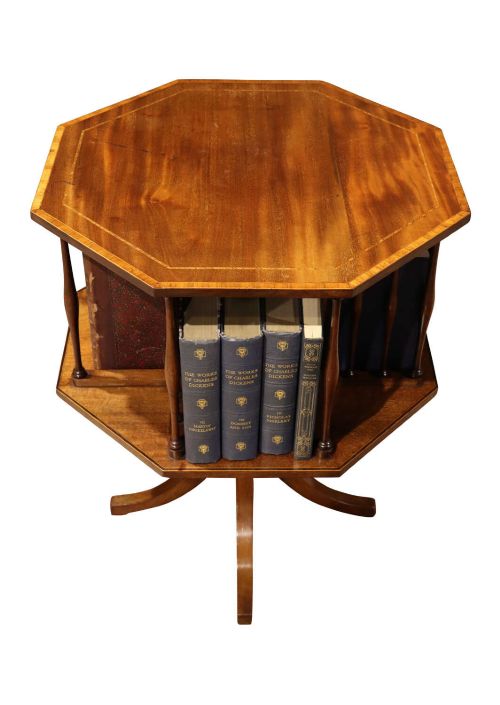
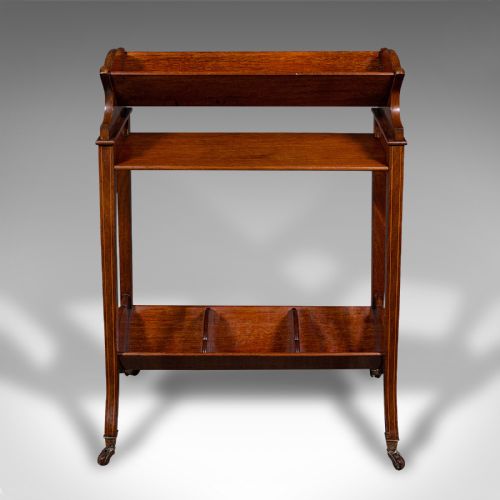
An inlaid book trough sits upon a desk or table to keep volumes upright and within reach. The form appears most frequently in Edwardian mahogany, often accented with satinwood stringing or fan motifs.
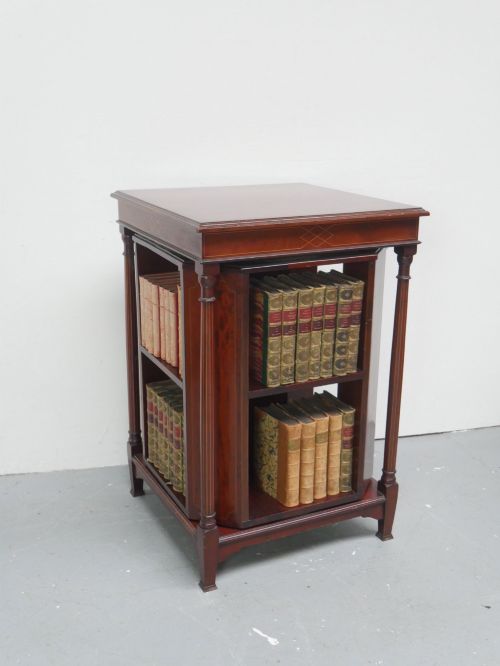
The archive shows this domestic desk accessory spanning the nineteenth century and the Edwardian period. Alongside troughs, you encounter related reading appliances such as expanding book slides, revolving bookcases, and double book racks.
Materials and construction
Cabinetmakers built these pieces primarily in solid mahogany and walnut, occasionally selecting rosewood or coromandel for distinct luxury. Surfaces received decorative veneers and contrasting satinwood inlays to frame the grain.
Detailing often incorporated brass mounts, bone elements, or intricate Tunbridge ware mosaics. Folding mechanisms and sliding partitions required precise carpentry to function smoothly over decades of daily use.
Inlaid Book Trough Retail Price Guide 2026
Typical asking prices for inlaid book trough among the pieces listed under this phrase on Sellingantiques today, from the lower quarter to the upper quarter. They describe what is for sale here now, not the wider market.
The site's records show mahogany paired with satinwood inlay as the dominant combination for Edwardian book troughs.
Distinctions in quality
The grade of an inlaid book trough depends upon the crispness of the cabinetwork and the delicacy of the inlay. Pieces displaying subtle fan motifs or Prince of Wales feathers reflect superior craftsmanship compared to plain iterations.
Heavier secondary timbers and solid brass mounts separate workshop standards. The integrity of the mitres and the alignment of the base boards reveal the maker's underlying skill.
The Inlaid Book Trough Glossary
- Stringing
- A narrow inlay of contrasting wood used to form delicate lines around the edges of a panel.
- Tunbridge ware
- Small mosaic woodwork produced in Kent using thousands of tinted wood blocks to create pictorial scenes or geometric bands.
- Book slide
- An extending desk accessory with hinged or sliding ends designed to hold a varying number of volumes.
- Coromandel
- A dense, heavy tropical timber displaying rich dark brown coloration with contrasting black streaks.
Inlaid Book Trough: Frequently Asked Questions
What is an inlaid book trough used for?
An inlaid book trough holds a small selection of books upright on a desktop or table for easy daily access.
Victorian and Edwardian readers placed these compact stands near writing desks to organise reference volumes and periodicals.
How do I date an inlaid book trough?
Dating relies upon timber selection, hardware, and specific decorative motifs found across the piece. Edwardian examples often pair mahogany with satinwood inlay, while earlier Regency pieces utilise denser exotic woods.
Construction methods also provide clues, as machine-cut elements indicate twentieth-century production rather than hand-joined nineteenth-century work.
Where should I place a book trough at home?
A book trough sits comfortably on top of a mahogany desk, an occasional table, or a low sideboard. Ensure the surface is stable and protected from direct sunlight to preserve the polished timber finish.
They function best when holding a curated handful of frequently consulted volumes rather than bearing heavy loads.
How do I care for antique wood finishes?
Maintain the timber by dusting regularly with a soft, dry cloth and applying natural beeswax polish sparingly. Avoid placing wooden accessories near heat sources or in damp rooms to prevent veneer lifting.
Gentle care preserves the original patina and protects the delicate inlaid stringing over time.