



Inlaid Bijouterie Table
An inlaid bijouterie table is a glass-topped showcase built for small treasures, combining fine cabinet-making with intimate display.
Inlaid Bijouterie Table
When you search for an inlaid bijouterie table, you encounter specialist display furniture designed to elevate small collectibles, medals, and jewellery into plain view. The form typically stands on slender legs supporting a glazed top and sides, allowing light to fall upon the objects stored inside. Most examples on this page date from the Edwardian period and the late nineteenth century, though earlier Georgian and Victorian roots appear in specific forms.
Makers produced these pieces in several distinct shapes, including kidney, oval, octagonal, and rectangular formats. These variations dictated how the cabinet sat within a drawing room or boudoir, often positioned near a window or fireplace where guests could inspect the contents. The integration of glazed lids and velvet or fabric linings protects delicate items while keeping them visible.
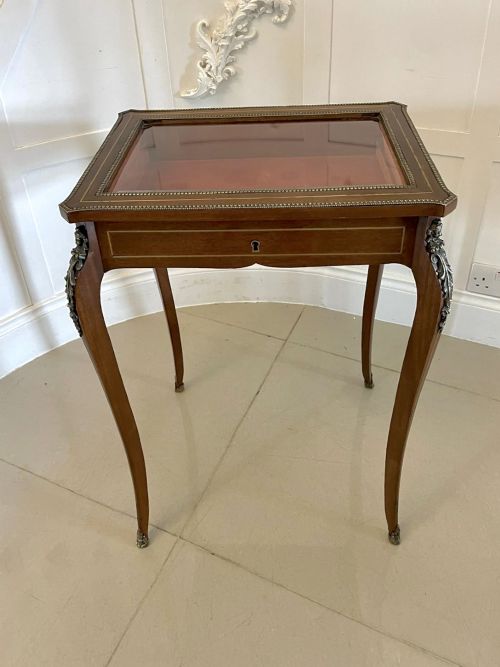
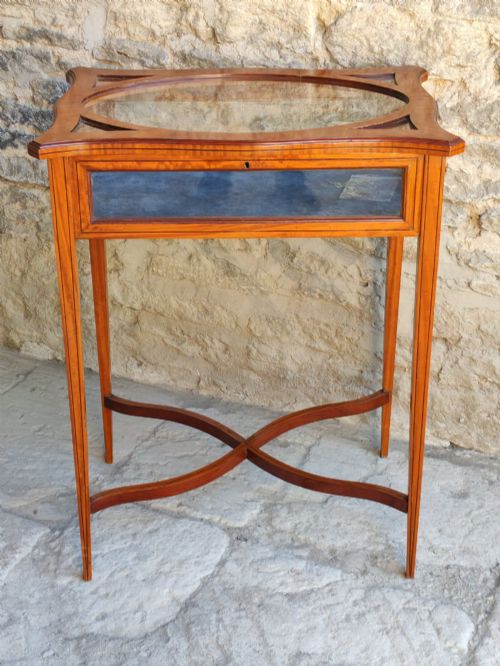
Styles range from Sheraton Revival satinwood models to French Louis XV Revival curves and Arts & Crafts interpretations. Edwardian mahogany versions with delicate stringing and marquetry dominate the current selection, reflecting a sustained domestic appetite for refined, light-scaled display pieces.
Materials and construction
Makers constructed the primary carcase of an inlaid bijouterie table using timbers such as mahogany, satinwood, rosewood, and walnut. These woods provided stable foundations for intricate boxwood and brass stringing, as well as elaborate marquetry panels. The selection of cabinet timbers determined the overall tone of the piece, ranging from deep reddish browns to pale, golden hues.
Glazing techniques required careful joinery to support glass panels securely within hinged or fixed frames without obscuring the interior. Brass mounts, hinges, and locks added structural definition and functional security to the opening lids and vitrine doors. Interiors were typically lined with velvet or padded fabric to cushion the collector's pieces against the wooden base.
Inlay work relied on contrasting veneers and fine stringing lines set flush into the primary timber surfaces. Artisans cut motifs such as urns, ribbons, and floral scrolls from boxwood or fruitwood, embedding them precisely to create crisp decorative borders.
Inlaid Bijouterie Table Retail Price Guide 2026
Typical asking prices for inlaid bijouterie table among the pieces listed under this phrase on Sellingantiques today, from the lower quarter to the upper quarter. They describe what is for sale here now, not the wider market.
Some kidney-shaped tables feature subtly curved glass lids that required specialist glassmakers to bend the material without distortion.
Judging quality in these tables
Quality in an inlaid bijouterie table rests upon the crispness of the timber selection and the precision of the marquetry. Superior examples display tightly figured satinwood or rich mahogany paired with hand-cut inlay that sits completely flush with the surrounding surface. Lesser pieces rely on printed or stamped decoration rather than genuine inlaid veneers.
The sophistication of the internal lining and the weight of the brass mounts also distinguish finer cabinets. Well-made specimens feature substantial cast brass fittings and secure, original glass frames that operate smoothly without sagging at the hinges.
The Inlaid Bijouterie Table Glossary
- Bijouterie table
- A glazed display table designed specifically for holding small valuable items, medals, and jewellery. It combines the height and leg structure of a side table with a shallow vitrine compartment.
- Vitrine
- A glass-fronted or glass-topped cabinet used for displaying objects. In this context, it refers to the glazed display section of the table.
- Marquetry
- Decorative woodwork where pieces of veneer are fitted into a ground material to form geometric or pictorial designs. It frequently ornaments the tops and aprons of these tables.
- Stringing
- Thin lines of contrasting timber inlaid into grooves on furniture surfaces. This technique defines borders and outlines panels on Edwardian and Sheraton Revival pieces.
- Satinwood
- A lustrous, yellowish timber valued for its fine grain and bright appearance. It serves as a primary wood or a contrasting veneer in late nineteenth-century cabinet-making.
Inlaid Bijouterie Table: Frequently Asked Questions
What were bijouterie tables used for?
These tables served as domestic display cases where hosts exhibited portrait miniatures, fans, pocket watches, and visiting cards to visiting guests. The glass top kept delicate possessions free from dust while allowing social conversation to centre on the owner's collections.
In the drawing room, they functioned as both decorative furniture and personal museums, reflecting the collector's taste and travels through curated arrangements.
How do I care for the fabric lining?
Original velvet or fabric linings require gentle maintenance to avoid disturbing fragile historic fibres. Vacuuming should be avoided in favour of very light surface dusting with a soft, clean brush.
Keep the table away from direct sunlight to prevent the textile colours and underlying wood finishes from fading unevenly over time.
How do I tell Edwardian from Victorian tables?
Edwardian examples generally feature lighter timbers such as satinwood, simpler tapered legs, and refined Sheraton Revival stringing. They tend to look airier and less massive than their Victorian predecessors.
Victorian and late nineteenth-century pieces often utilise heavier timbers like rosewood or dark mahogany, sometimes incorporating bolder French revival curves or heavier brass mounts.
Can I place these tables on heated floors?
Underfloor heating poses a risk of drying out historic timbers, which can cause veneers to warp or inlay to lift. It is best to place these tables away from direct heat sources.
Maintaining a stable room temperature and moderate humidity protects the dry antique glues and delicate wooden joints from stress.