





Industrial Workbench Table
An industrial workbench table brings honest utility to a room, combining robust metals and aged timber with a working past.
Industrial Workbench Table
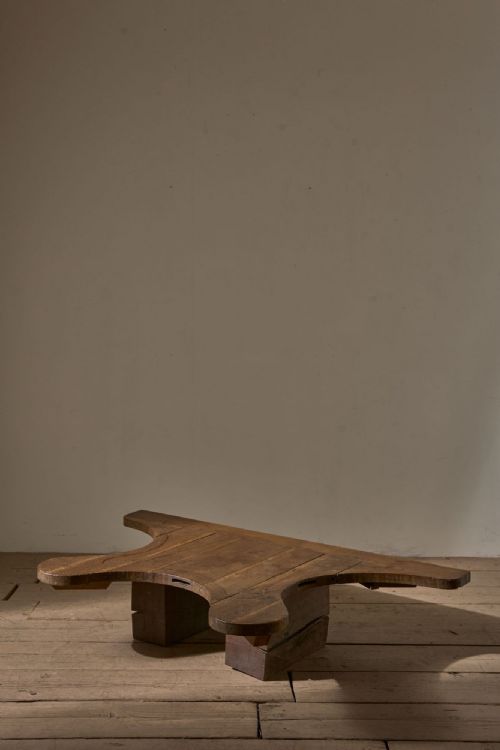
An industrial workbench table draws its form from nineteenth century and early twentieth century utilitarian settings, including artisan workshops, sorting offices, and factories. These pieces function today as substantial dining tables, console tables, coffee tables, and kitchen islands.
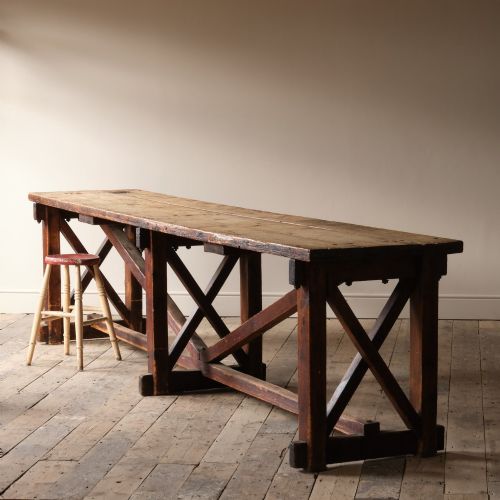
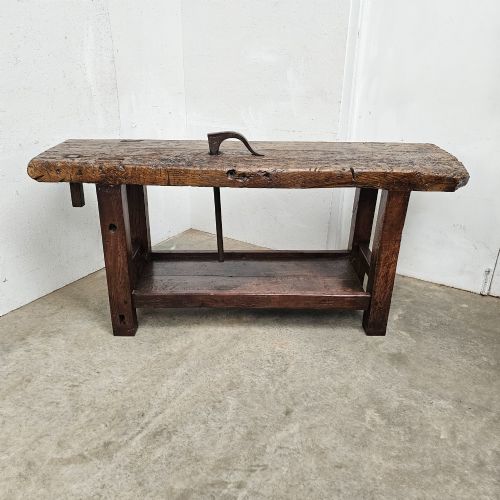
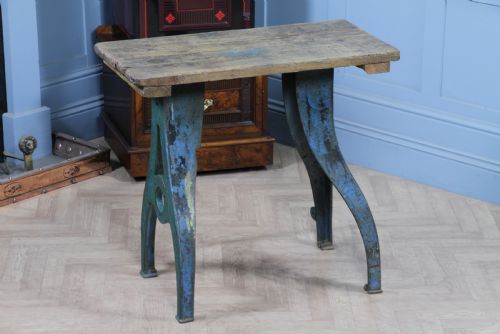
The most common versions on this page are French and English craft benches, often constructed with heavy wooden tops and functional vises or clamping bars. Alongside these, buyers find simpler trestle tables and repurposed machine bases paired with timber boards.
How they were made
Construction relies on a straightforward combination of durable timbers and industrial metalwork. Makers used solid oak, pine, beech, and hardwood for the heavy working surfaces, often securing them to robust cast iron, forged iron, or steel bases.
Joinery and hardware reflect pure utility, featuring integrated vices, wooden clamping bars, and heavy metal stretchers. Surfaces frequently display the scars of past trades, from tool marks to paint splatters.
Industrial Workbench Table Retail Price Guide 2026
Typical asking prices for industrial workbench table among the pieces listed under this phrase on Sellingantiques today, from the lower quarter to the upper quarter. They describe what is for sale here now, not the wider market.
What varies in quality
Quality rests in the integrity of the original construction and the character of the materials. Superior examples retain their working mechanisms, such as operational wooden vices and original iron screw threads, rather than relying on later replacements.
The proportion and thickness of the timber top also distinguish the better pieces. A deep, solid oak or beech slab carries a commanding presence that lighter, constructed boards simply cannot match.
The Industrial Workbench Table Glossary
- Workbench
- A sturdy table used by artisans and craftspeople to hold work securely. These form the primary template for industrial tables.
- Trestle table
- A table consisting of two or more support frames connected by a longitudinal beam. This design offers excellent legroom and stability.
- Cast iron
- A strong, hard iron alloy poured into moulds to create heavy machine bases and frames. It provides exceptional weight and industrial character.
Industrial Workbench Table: Frequently Asked Questions
How do I use a workbench table at home?
These pieces serve well as generous dining tables, kitchen islands, or large hallway consoles. Their sturdy construction handles daily domestic life with ease.
The height and knee clearance vary depending on whether the table retains its original tool drawer or vice, so checking measurements matters for seating.
Are these tables waterproof?
Most surfaces consist of untreated or lightly waxed historical timber that can absorb liquids. Spills should be wiped away promptly to protect the aged wood.
Applying a clear beeswax or sealing oil helps preserve the surface without removing the authentic patina accumulated over decades of trade.
How do I date an industrial table?
Dating relies on the manufacturing marks, the composition of the metal frame, and the joinery methods used in the timber top. Cast iron bases often bear foundry marks from the nineteenth or early twentieth century.
Hand-cut joints and dense hardwoods generally point towards earlier nineteenth century origins, whereas lighter steel elements often suggest the nineteen-twenties or thirties.
Can I remove the heavy metal base?
Many cast iron and steel frames bolt directly into the wooden top, allowing them to be separated for transport. However, the sheer weight of these materials requires multiple people to move them safely.
Professional delivery is often recommended due to the dense hardwoods and heavy ironwork involved in their construction.