

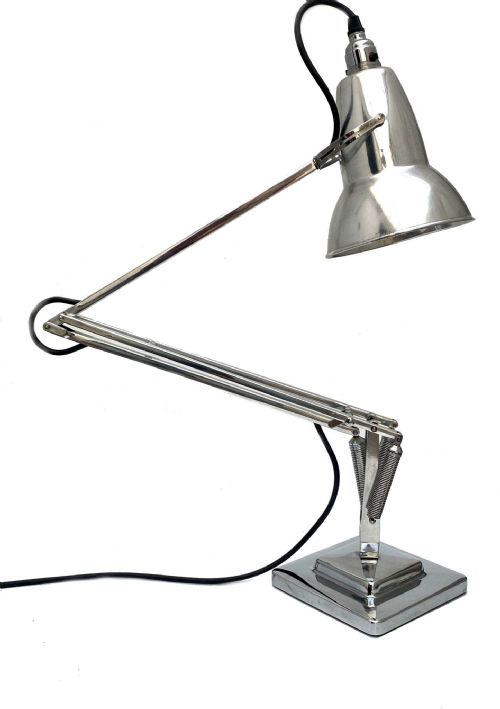


Industrial Task Lighting
Industrial task lighting brings focused illumination and mechanical adjustment to a room, drawing on utilitarian metal designs from the early twentieth century.
Industrial Task Lighting
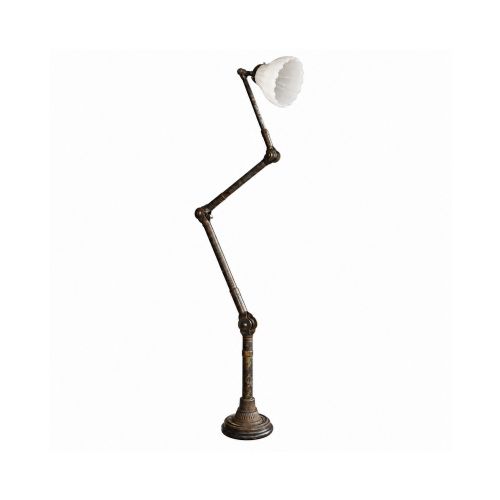
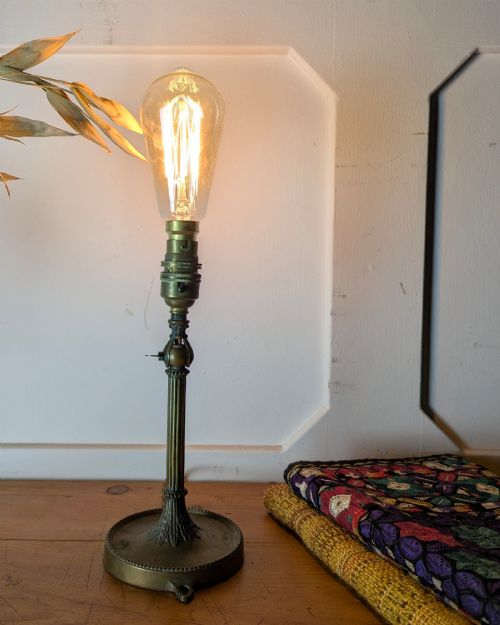
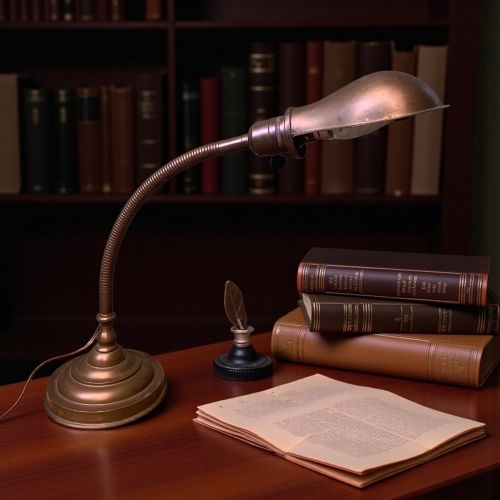
Industrial task lighting encompasses adjustable metal desk lamps, table lamps, and floor lamps originating from the nineteenth century through the 1940s. These utility pieces were engineered for workshops, offices, and drawing rooms where directed illumination was essential for close work.
The versions most commonly met on this page date from the 1920s and 1930s, reflecting Art Deco, Bauhaus, and industrial design sensibilities. Form follows function closely in these examples, utilising articulated arms, heavy bases, and metal or glass shades.
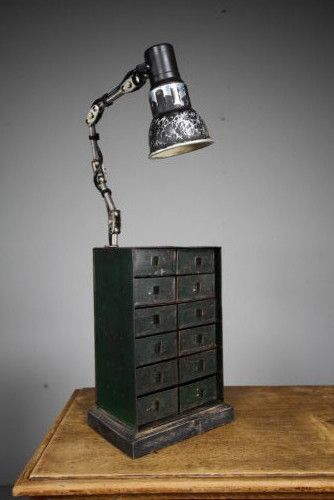
Examples range from early twentieth-century brass Pullman wall lamps to chrome Anglepoise desk lamps by makers such as Herbert Terry and Pirouette. Buyers also encounter specialised forms like jewellers chests fitted with original lights and bankers desk lamps.
Materials and construction
Construction relies heavily on durable metals including steel, brass, chrome, cast iron, and iron, often paired with glass shades or wooden components. These materials were chosen for their strength and resilience in demanding workspaces.
Mechanical adjustment is achieved through articulated arms, springs, and swivel joints that allow the user to direct the beam precisely. Surface finishes vary from polished chrome and warm brass to painted or patinated metal surfaces.
Industrial Task Lighting Retail Price Guide 2026
Typical asking prices for industrial task lighting among the pieces listed under this phrase on Sellingantiques today, from the lower quarter to the upper quarter. They describe what is for sale here now, not the wider market.
Listings feature metal, brass, chrome, steel, cast iron, iron, and wood across desk, table, and floor lamp formats.
Assessing quality
Quality in industrial task lighting is determined by the sophistication of the articulation mechanism and the integrity of the original components. Pieces featuring complex multi-arm movement or signed maker engineering represent higher standards of period production.
The choice of materials also separates standard utility items from finer examples, with heavy cast iron bases, solid brass fittings, and original glass shades elevating the piece. The retention of original surface finishes and maker markings distinguishes superior survivors.
Herbert Terry·Pirouette·Wilhelm Wagenfeld·Dugdill·Hawkins
The Industrial Task Lighting Glossary
- Anglepoise
- A type of balanced arm lamp utilising tension springs to maintain position, famously produced by Herbert Terry in the twentieth century.
- Art Deco
- A design style popular in the 1920s and 1930s characterised by sleek geometric forms, streamlined chrome surfaces, and modern industrial aesthetics.
- Bauhaus
- A German art school and style influencing 1920s design through functional simplicity, unadorned metal frames, and clean geometric lamp silhouettes.
- Pullman
- A style of adjustable lamp originally designed for railway carriage berths or heavy-duty travel use, typically featuring compact brass or metal construction.
- Task lighting
- Functional illumination directed specifically at a workspace rather than general ambient room lighting.
Industrial Task Lighting: Frequently Asked Questions
What periods do these lamps cover?
The pieces span from the nineteenth century through the Edwardian era, 1910s, 1920s, 1930s, and into the 1940s.
Most examples lean heavily into the interwar period of the 1920s and 1930s when adjustable metal task lighting evolved rapidly.
How were these lamps originally used?
These lamps were built for practical workspaces, including offices, drafting tables, jewellers benches, and industrial factories where precise light was required.
They provided movable illumination that could be clamped, angled, or swivelled directly over a task.
How do I identify Art Deco or Bauhaus styles?
Art Deco pieces often feature polished chrome, streamlined curves, and decorative machine-age geometry.
Bauhaus examples strip away ornamentation entirely to focus on stark, functional metal geometry and unadorned industrial utility.
Are these lamps suitable for modern desks?
Their adjustable arms and directional shades make them practical for contemporary desks and reading areas.
They bring both focused task illumination and strong period character to modern interiors.