



Adjustable Industrial Lamp
These adjustable industrial lamp examples bring functional movement and utilitarian strength into workspaces and living rooms alike.
Adjustable Industrial Lamp
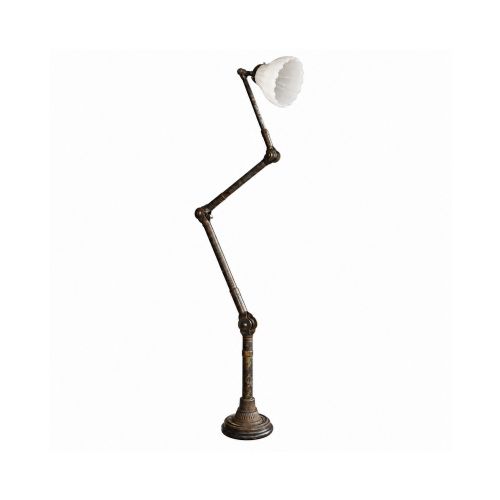
When searching for an adjustable industrial lamp, collectors encounter utilitarian task lighting designed for factories, offices, and specialist transport during the nineteenth and twentieth centuries. These fittings prioritised directional illumination, utilising articulated arms and weighted bases to direct light precisely where required.
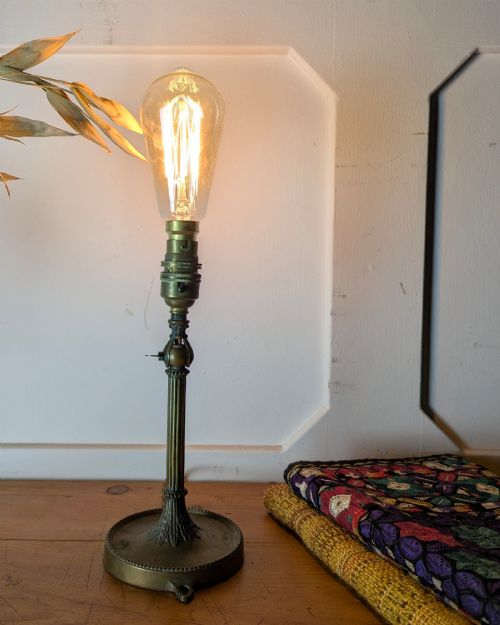
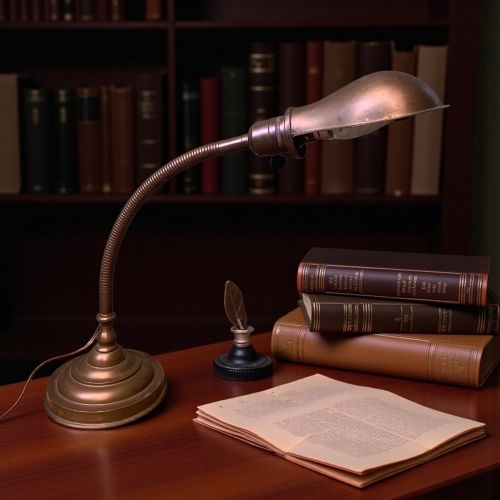
The selections available here range from early twentieth-century desk lamps to standard floor lamps and searchlights. Forms span Art Deco desk lights, French industrial brass and chrome models, and heavy cast iron or wrought iron standard lamps.
Pieces frequently originate from the 1900s, 1910s, 1920s, and 1930s, alongside nineteenth-century examples and Victorian wrought iron creations. Buyers most commonly meet desk lamps and table lamps equipped with movable arms and mechanical joints.
How they were made
Makers constructed these lamps using robust industrial metals including brass, chrome, steel, cast iron, and wrought iron. Structural components relied on heavy casting and forging to withstand daily workshop or office use.
Articulated movement was achieved through engineered metal arms, mechanical hinges, and pivoting joints often paired with weighted bases or wall brackets. Elements like glass shades and specialised reflectors directed the beam from early incandescent bulbs.
Adjustable Industrial Lamp Retail Price Guide 2026
Typical asking prices for adjustable industrial lamp among the pieces listed under this phrase on Sellingantiques today, from the lower quarter to the upper quarter. They describe what is for sale here now, not the wider market.
Some adjustable lamps began life pointing at locomotive engines before ending up on modern writing desks.
What varies in quality
The distinction between ordinary utility items and superior examples lies in the sophistication of the mechanical articulation and the integrity of the original metal surfaces. Finer pieces demonstrate clever engineering in their joints and arms, allowing smooth movement without slack.
Material choice and finishing also dictate worth, with high-grade polished chrome, patinated brass, and heavy cast iron outlasting lighter sheet metal constructions. Retaining original components such as specialised shades, weighted bases, and maker-marked switches elevates the standing of a piece.
Dugdill·Herbert Terry·Pirouette·Hawkins
The Adjustable Industrial Lamp Glossary
- Anglepoise
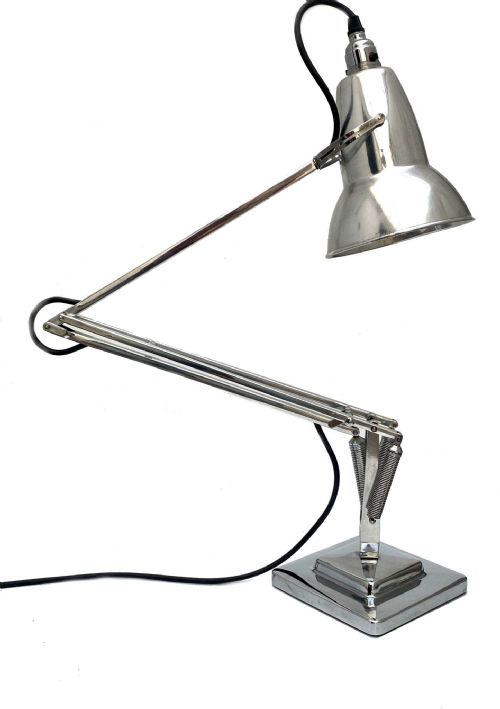
- A type of balanced-arm desk lamp utilising springs or tension joints to maintain position. Herbert Terry popularized this mechanism in the twentieth century.
- Art Deco
- A design style spanning the 1920s and 1930s characterised by sleek geometric forms and streamlined metal finishes. It heavily influenced desk lamp manufacturing of the era.
- Standard Lamp
- A tall floor lamp designed to stand independently on the floor. Victorian and early twentieth-century examples often featured adjustable arms for reading.
- Machine Age
- An early twentieth-century aesthetic celebrating industrial efficiency, steel, chrome, and functional machinery. Lamps from this period emphasise exposed metal and utilitarian design.
Adjustable Industrial Lamp: Frequently Asked Questions
Where were adjustable industrial lamps used?
These lamps were primarily designed for factories, engineering workshops, drafting tables, and offices where precise, directional task lighting was essential for detailed work.
Over time, their functional utility and robust aesthetic transitioned into domestic settings, making them popular for contemporary desks and living spaces.
How do I identify an Art Deco desk lamp?
Art Deco desk lamps typically feature streamlined chrome finishes, geometric shapes, and machine-age materials that reflect the design sensibilities of the 1920s and 1930s.
They often incorporate directional metal shades or coloured glass elements that distinguish them from earlier Victorian or Edwardian utility lighting.
Are these lamps safe for modern electrical use?
Many vintage industrial lamps retain their original wiring or sockets, which may require professional rewiring to meet contemporary safety standards before regular home use.
Buyers should consult a qualified electrician to inspect and update internal components while preserving the exterior metalwork and mechanical joints.
What materials are common in industrial lighting?
Common materials include brass, chrome, steel, cast iron, and wrought iron, chosen for their durability and structural strength in demanding workplace environments.
Glass shades and wooden accents also appear, adding textural contrast to the predominantly metallic construction of early twentieth-century task lamps.