


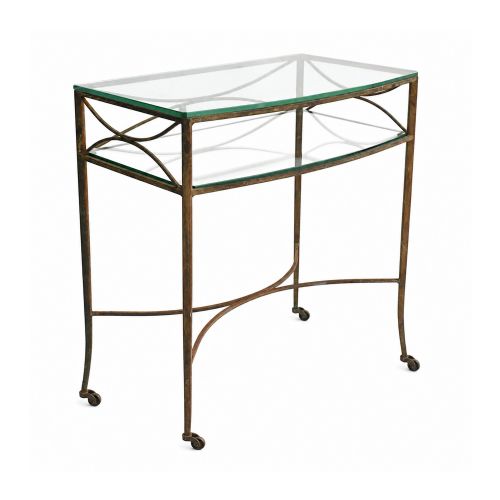


Industrial Iron Shelf
These industrial iron shelf pieces bring utility into domestic spaces, forged from metal and wood for enduring service.
Industrial Iron Shelf
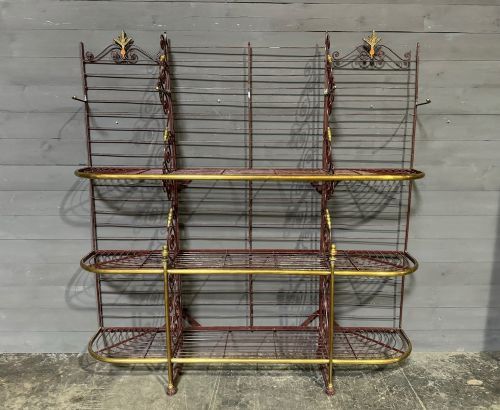
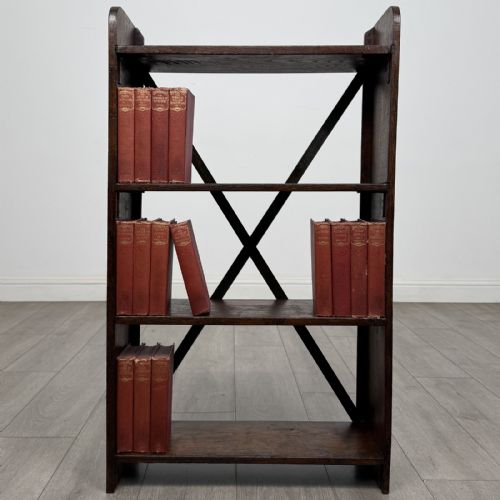
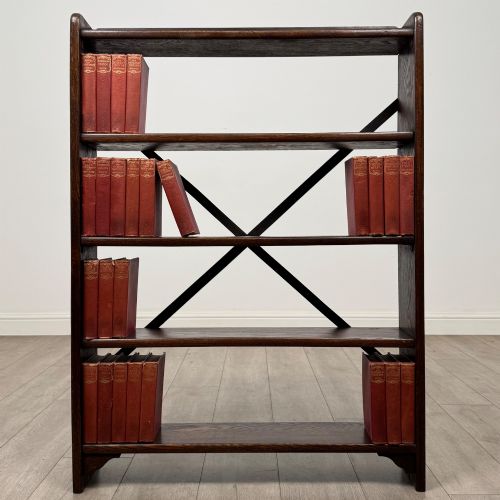
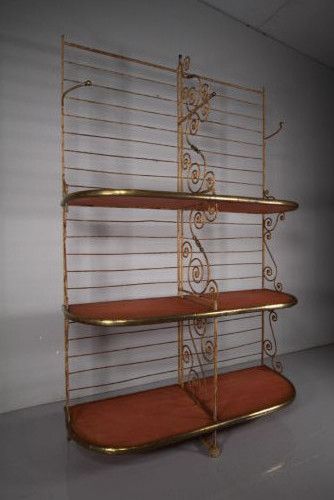
When you search for industrial iron shelf, you encounter robust items built for commercial and domestic utility. The selection spans bakers racks, open bookcases, console tables, display stands, shelf brackets, and coat racks.
You are most likely to meet French bakers racks and English open bookcases dating from the nineteenth century into the 1920s. These pieces combine heavy iron or cast-iron frames with timber shelves or slate elements.
Styles range from Victorian industrial and French provincial to Arts and Crafts designs. The underlying structure relies on industrial strength, whether configured as towering bakers racks or small shelf brackets.
Materials and construction
Makers utilised wrought iron, cast iron, and steel for the primary load-bearing frames, often incorporating scroll-work or cross-bracing for stability. Brass and bronze appear in specific display stands and bracket fixings.
Timber surfaces in oak complement the metal frameworks, alongside slate shelving found in specific early twentieth-century examples. Structural integrity comes from heavy casting and forged iron components designed to bear substantial weight.
Industrial Iron Shelf Retail Price Guide 2026
Typical asking prices for industrial iron shelf among the pieces listed under this phrase on Sellingantiques today, from the lower quarter to the upper quarter. They describe what is for sale here now, not the wider market.
Some bakers racks stood in French provincial kitchens for over a century before earning retirement as indoor plant stands.
Distinctions in manufacture
Quality rests in the weight and purity of the metalwork, distinguishing heavy cast-iron brackets and stamped workshop frames from lighter utility items. Finer pieces display deliberate scroll-work and maker stamps rather than anonymous assembly.
The integration of materials determines the standard, where solid oak or slate sits securely within robust iron rather than compromised secondary timber. Original patination on the metal surfaces signifies genuine age and untampered industrial provenance.
Dubois of Lyon
The Industrial Iron Shelf Glossary
- Bakers rack
- A tall shelving unit originally utilised in patisseries and boulangeries for cooling bread. These structures combine iron framework with multiple slatted tiers.
- Cast iron
- Molten iron poured into a mould to create rigid structural shapes and decorative brackets. This material provides substantial weight and durability.
- Wrought iron
- Iron heated and hammered into shape by hand, resulting in fibrous, resilient scroll-work. It forms the flexible framework of many nineteenth-century racks.
- Slate
- A fine-grained metamorphic rock utilised for heavy-duty shelving surfaces. It offers a smooth, cool shelf resistant to moisture and wear.
Industrial Iron Shelf: Frequently Asked Questions
What are industrial iron shelves?
These pieces are functional storage units and architectural elements built from iron, steel, and cast metal. They originate from commercial and domestic contexts spanning the nineteenth and early twentieth centuries.
They include bakers racks, console tables, bookcases, and heavy wall brackets designed to carry significant loads while displaying goods or household items.
How were bakers racks used?
Bakers racks served in French boulangeries and patisseries to cool freshly baked bread and pastries on open metal or wooden tiers. Their sturdy open design allowed air circulation around the loaves.
Today, they function in kitchens and living spaces as open storage for cookware, books, and plants, utilising their vertical height efficiently.
How do I style an iron shelf?
Integrate these pieces into contemporary or traditional interiors by balancing heavy metal structures with softer textures like books, ceramics, and textiles. Their industrial aesthetic anchors a room without overwhelming the floor plan.
Ensure large pieces like bakers racks are secured to walls if they carry heavy loads, respecting their original commercial purpose.
How do I date an iron shelf?
Dating relies on observing construction methods, material combinations, and stylistic clues such as Victorian scroll-work or Arts and Crafts oak integration. Maker stamps and cast iron foundry marks often provide specific chronological markers.
Twentieth-century pieces introduce slate elements and streamlined Art Deco details, separating them from heavier nineteenth-century French and English workshop items.