


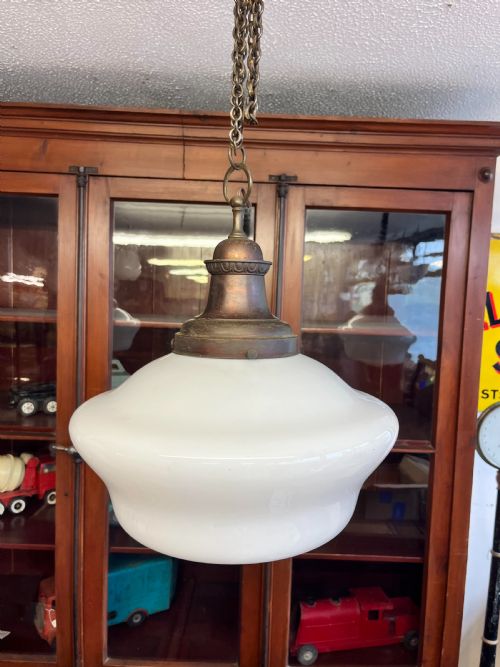
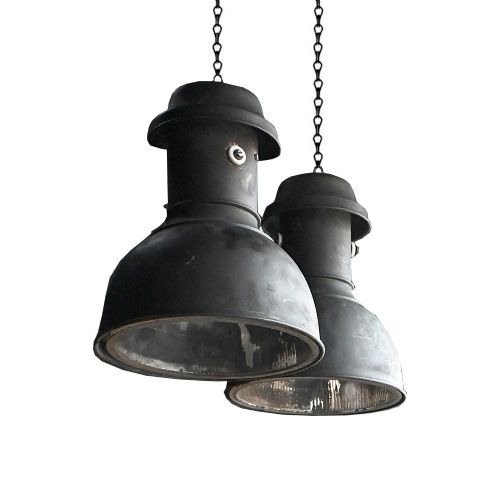

Industrial Glass Hanging Lamp
An industrial glass hanging lamp brings robust utility and diffuse light into a modern interior, drawing on utilitarian origins from factories, railways, and ships.
Industrial Glass Hanging Lamp
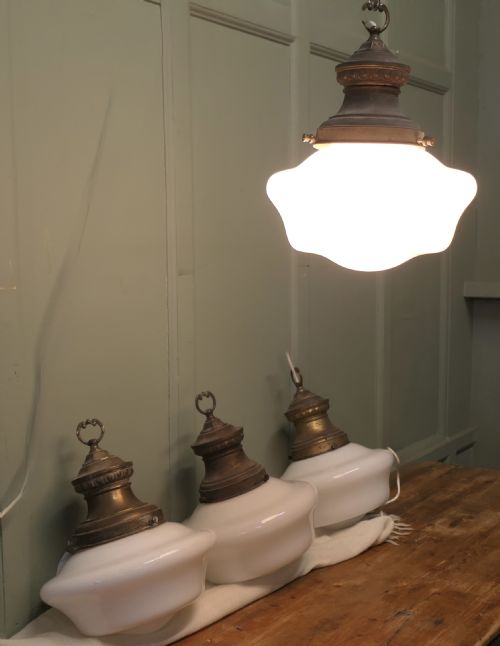
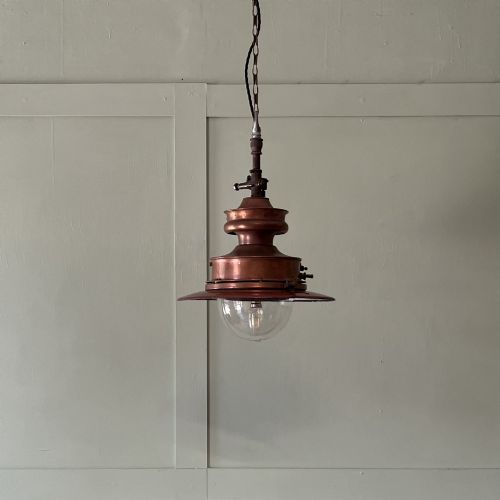
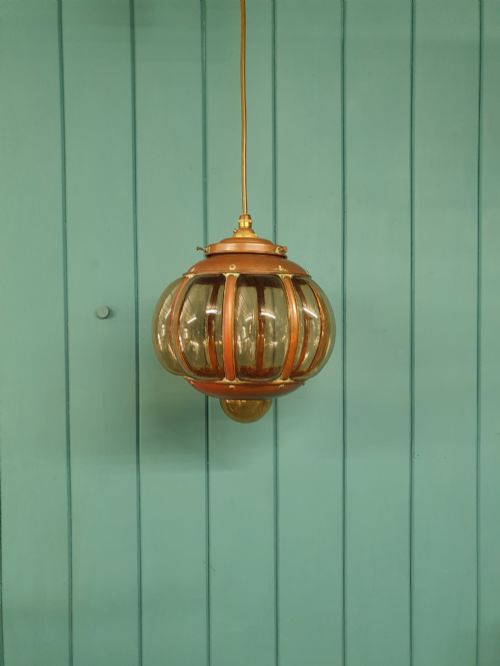
When you search for an industrial glass hanging lamp, you encounter pendant lights and ceiling lights spanning from the Victorian era through the mid-twentieth century. The selection ranges from railway lanterns and nautical fixtures to factory and chapel pendants.
Most examples you meet on this page originate from the nineteen-twenties, nineteen-thirties, and nineteen-forties, carrying distinct aesthetic traits from the Art Deco and Edwardian periods. These utilitarian fixtures transition easily from commercial origins to domestic residential settings.
Forms vary from compact nine-inch shades to unusually large chapel lights and multi-light sets. Ceiling suspension remains the primary mounting method across all listed styles.
Materials and Manufacture
Makers utilised heavy-duty glass types, including opaline, prismatic, mercury mirrored, and smoked glass, paired with structural metals like brass, copper, cast iron, and chrome. These durable materials served demanding industrial environments such as railways and trade workshops.
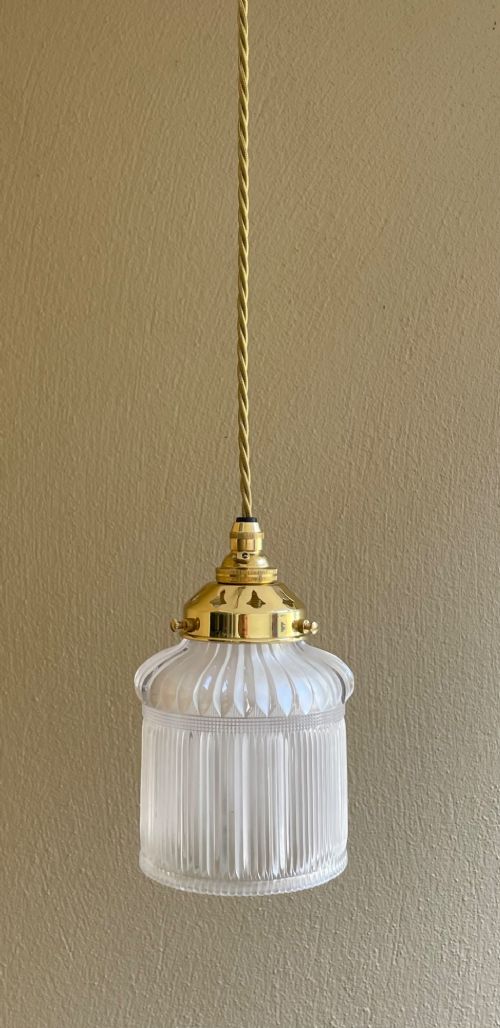
Specialised optical glass treatments, notably Holophane shades, were engineered to maximise and diffuse illumination from early electric bulbs. Metal galleries secured the glass shades while providing robust housing for suspension wiring.
Some railway lanterns still smell faintly of coal smoke and Victorian ambition, though we cannot legally prove it.
Judging Quality
Quality rests upon the integrity of the glass shade and the matching metal components. Superior examples retain original prismatic or opaline surfaces without modern replacement parts.
The sophistication of the metal gallery, whether cast iron, brass, or copper, distinguishes standard utility pieces from more refined commercial lighting. Heavier gauges of metal and intact original patination indicate higher-tier manufacture.
The Industrial Glass Hanging Lamp Glossary
- Holophane
- A brand of scientific glass shade designed with prismatic ribs to direct and diffuse light efficiently. These shades are frequently found on early twentieth-century pendants.
- Opaline glass
- A milky, translucent white glass that softens light output while hiding the bulb. It appears frequently in period factory and chapel lighting.
- Mercury glass
- A double-walled blown glass silvered on the interior to create a mirrored appearance. This technique gives pendants a reflective metallic finish.
- Gallery
- The metal collar or fitter that grips the top of the glass shade and connects to the suspension rod or chain. Galleries are often cast from brass, copper, or chrome.
- Pendant light
- A hanging light fixture suspended from the ceiling by a cord, chain, or metal rod. These fixtures serve as central overhead illumination in various spaces.
Industrial Glass Hanging Lamp: Frequently Asked Questions
Where were these lamps originally used?
These lamps hung in Victorian railways, Edwardian factories, trade sign displays, and large chapels.
They provided functional, bright illumination tailored for industrial workspaces and public buildings.
What is a Holophane shade?
A Holophane shade is a specialised glass diffuser featuring precision-molded prisms.
This design directed and softened harsh electric light in commercial and industrial settings.
How do I date an industrial pendant?
Dating relies on material combinations, glass treatments, and structural styles associated with specific decades.
Victorian and Edwardian pieces often incorporate copper and brass, while nineteen-twenties and thirties fixtures frequently feature opaline or prismatic glass.
Can these lights be hung on standard ceilings?
These fixtures suspend easily from standard domestic ceilings using appropriate wiring and mounting hardware.
Professional electrical installation ensures the weight of the glass and metal gallery is properly supported.