




Industrial Bench
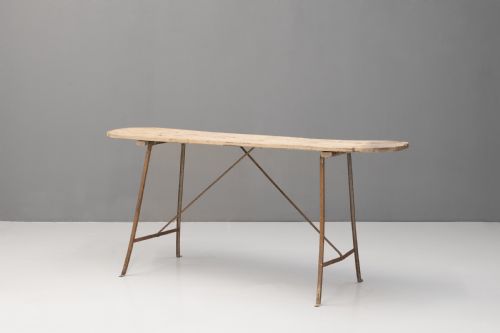
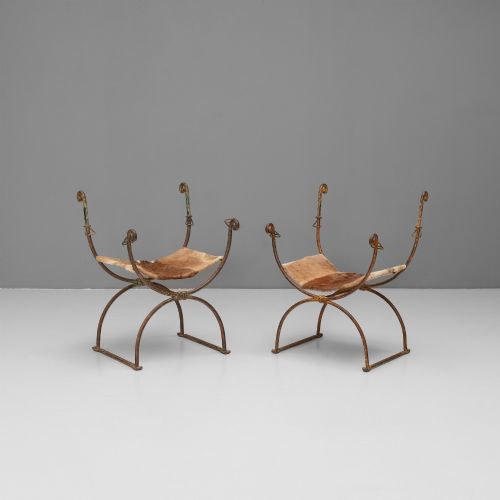
These industrial bench examples combine heavy iron or cast iron framework with robust pine, oak, or pitch pine tops, offering practical utility and rugged character for modern interiors.
Industrial Bench
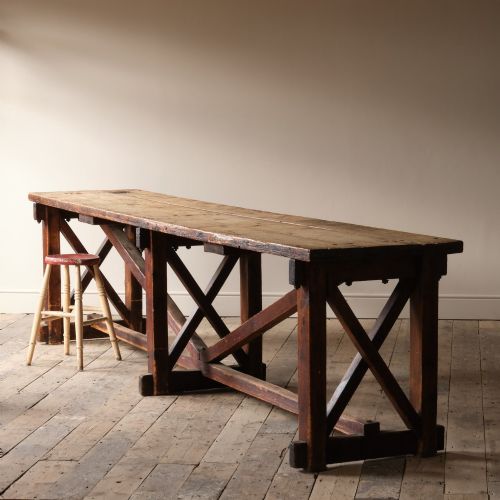
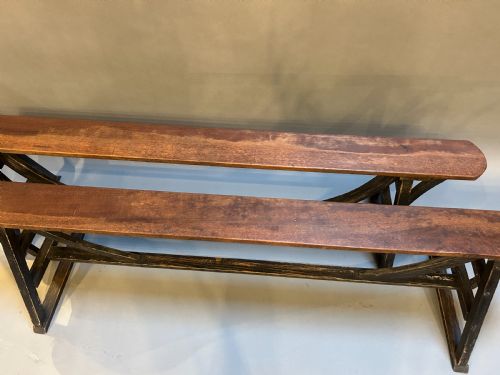
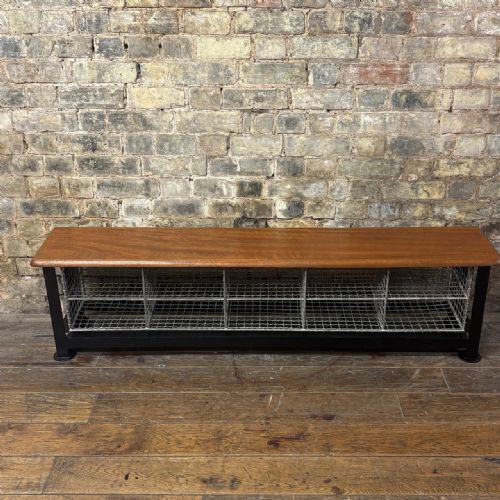
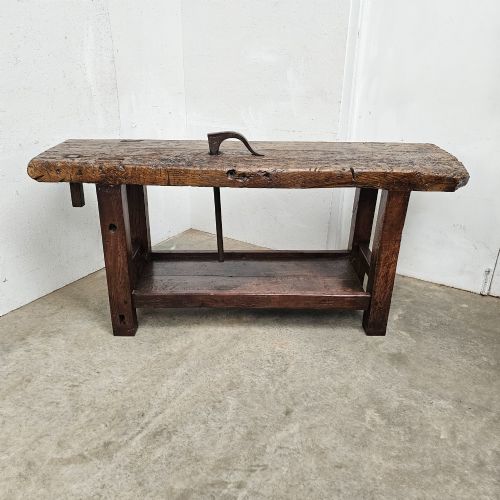
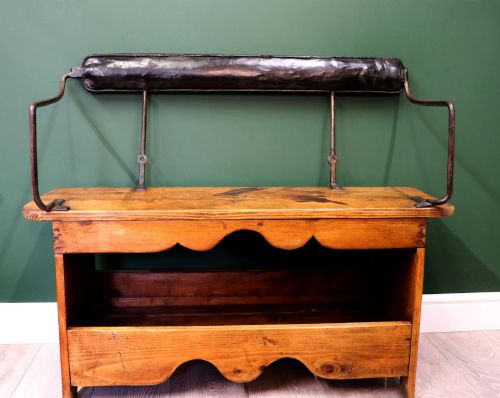
An industrial bench encompasses a varied selection of heavy-duty seating and work surfaces originating from utilitarian, workshop, and transport settings across the nineteenth and early twentieth centuries. Pieces found in this category range from railway station seating and school gym shoe benches to heavy carpenter and craftsman workbenches.
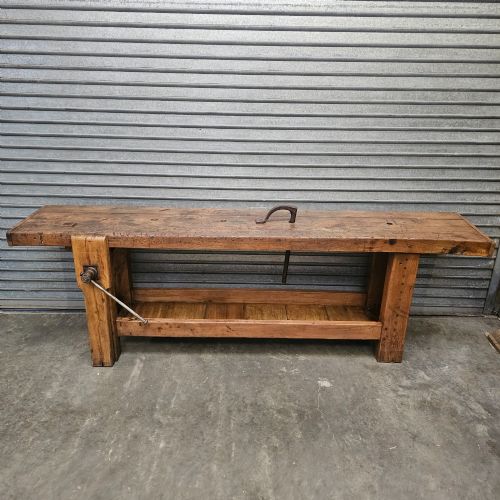
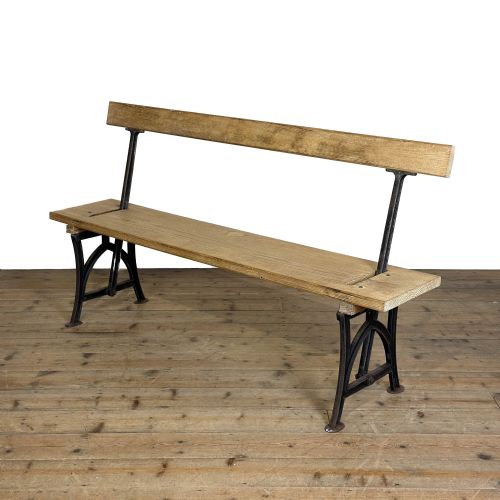
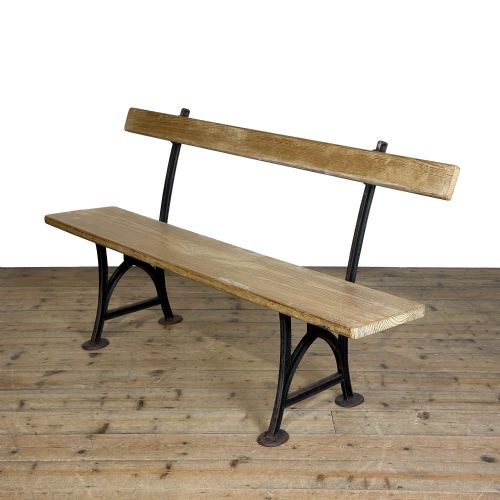
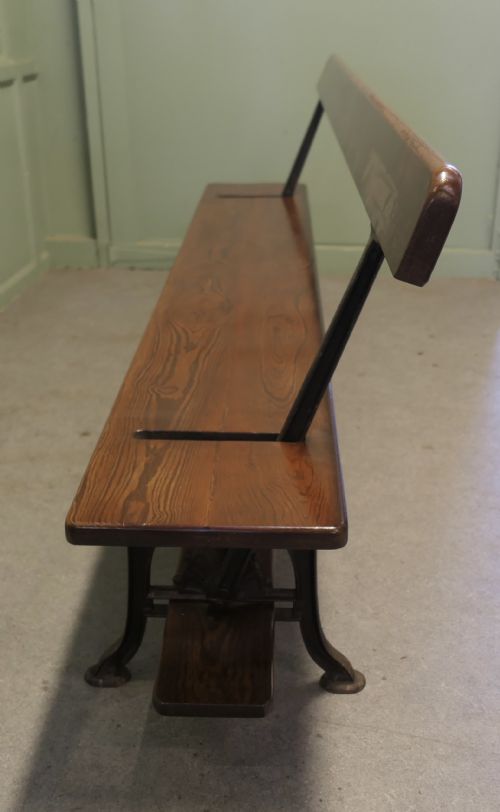
The most common forms include French artisans' workbenches fitted with vices and clamping bars, alongside railway station and tram reversible seating. Materials lean heavily towards durable combinations of cast iron, pine, oak, and pitch pine, reflecting their original demanding functions.
Materials and construction
Construction relies heavily on the pairing of dense structural metals with thick timber planks to withstand immense daily loads. Cast iron and steel provide rigid support frames, while pine, oak, and pitch pine form substantial tops and seats.
Joinery methods prioritize absolute strength over decorative refinement, utilising heavy bolts, braces, and integrated wooden vices. Original surfaces often display layers of historic paint, acquired through decades of workshop or public use.
Industrial Bench Retail Price Guide 2026
Typical asking prices for industrial bench among the pieces listed under this phrase on Sellingantiques today, from the lower quarter to the upper quarter. They describe what is for sale here now, not the wider market.
Listings span from the 1850s Victorian era through the Edwardian period up to the 1930s, showcasing iron, pine, oak, and pitch pine.
Judging quality
Quality in an industrial bench lies in the integrity of its original working mechanisms, such as functioning wooden vices, clamping bars, and reversible pivot actions. Pieces retaining their original cast iron bases and uncompromised timber thicknesses stand apart from heavily altered examples.
The character of the patina, formed through genuine industrial or municipal service rather than artificial distress, dictates the desirability of the piece. Proportion and structural balance also vary significantly between utilitarian workshop items and domestic adaptations.
Beatty Bros Fergus Canada·Trussant & Cie
The Industrial Bench Glossary
- Pitch pine
- A dense, resinous softwood utilised for heavy work surfaces and seating due to its exceptional durability. It frequently exhibits a pronounced grain pattern.
- Cast iron
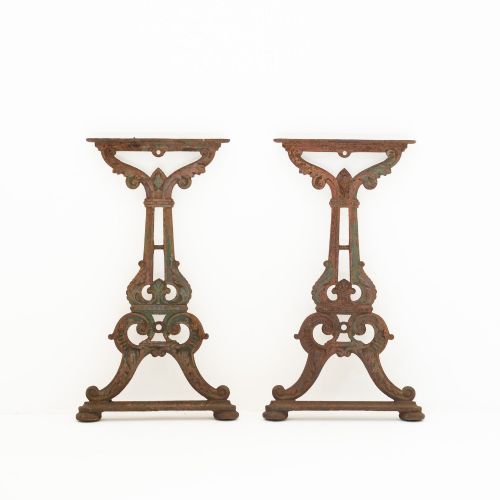
- A strong, heavy alloy poured into moulds to create rigid machine bases, bench legs, and structural supports. It provides the foundational weight for much of this furniture.
- Workbench
- A sturdy table used by artisans, carpenters, and jewellers, typically fitted with vices and dog holes for securing timber or metal during manual labour.
- Reversible bench
- A seating form featuring a movable backrest that flips from one side to the other, historically utilised on trams, trolley buses, and railway platforms.
Industrial Bench: Frequently Asked Questions
How were industrial benches used originally?
These items served functional roles in railway stations, schools, factories, and artisan workshops where durability was paramount. They supported manual trades, provided public transport seating, or accommodated heavy daily foot traffic.
Over time, many of these utilitarian objects transitioned from active industrial service into domestic and commercial interior schemes as tables and seating.
How do I clean a wooden workbench?
Maintain the historic surface by dusting with a dry cloth and occasionally applying natural beeswax to nourish dry pine or oak. Avoid harsh chemical cleaners that strip away decades of accumulated patina.
Keep the timber away from direct heat sources to prevent the heavy planks from warping or splitting over time.
Are these benches suitable for daily dining?
Many examples provide sturdy seating or low surfaces, though historical heights and depths vary considerably depending on their original trade. Railway station and gym benches function well as seating, while workbenches often serve as console or dining tables.
Check the dimensions carefully to ensure the height aligns comfortably with standard chairs or existing furniture.
How can I tell a Victorian bench apart?
Nineteenth-century examples frequently feature heavy cast iron bases, hand-cut joinery, and dense timbers like pitch pine or oak. Look for signs of genuine workshop wear and maker stamps cast directly into the ironwork.
Later twentieth-century versions often incorporate lighter steel framing and more standardised industrial components.