



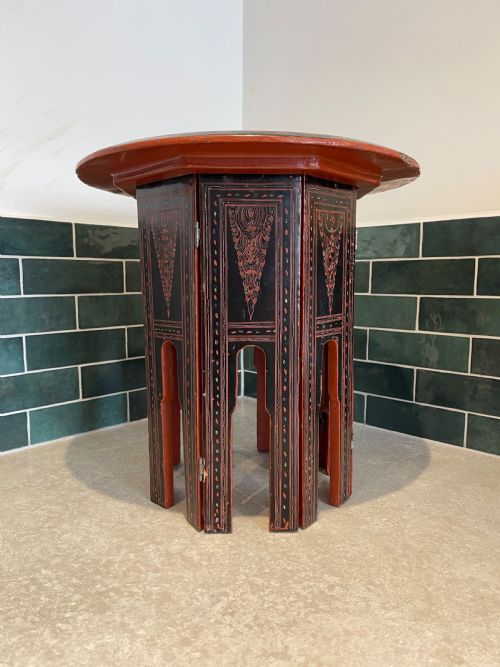


Indian Wooden Stool
An indian wooden stool brings rich colonial history and intricate craftsmanship into a room.
Indian Wooden Stool
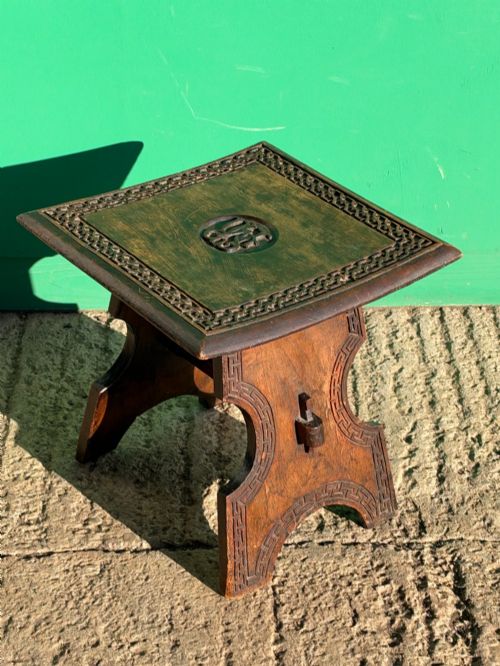
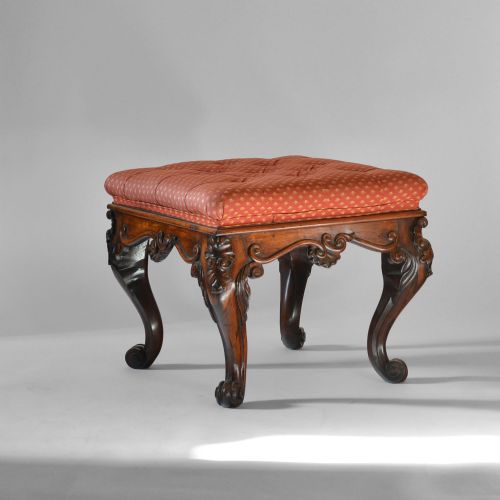
An indian wooden stool encompasses items ranging from low seating and footstools to occasional tables and benches, often styled within the Anglo-Indian, Moorish Revival, and Asian folk art traditions. The selection spans the late nineteenth century through to the early twentieth century, capturing diverse colonial and indigenous designs.
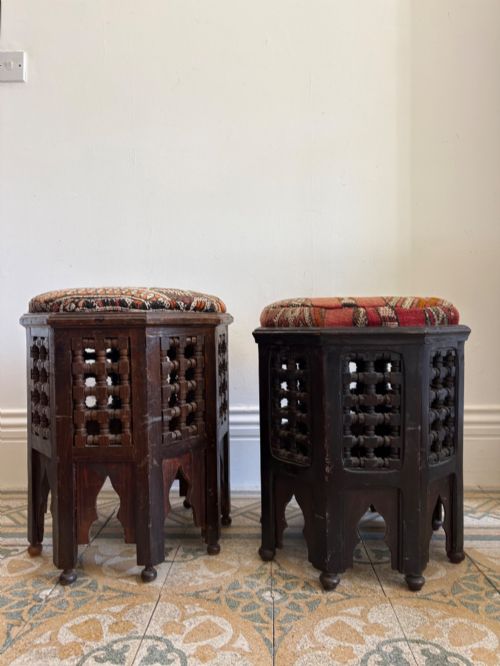
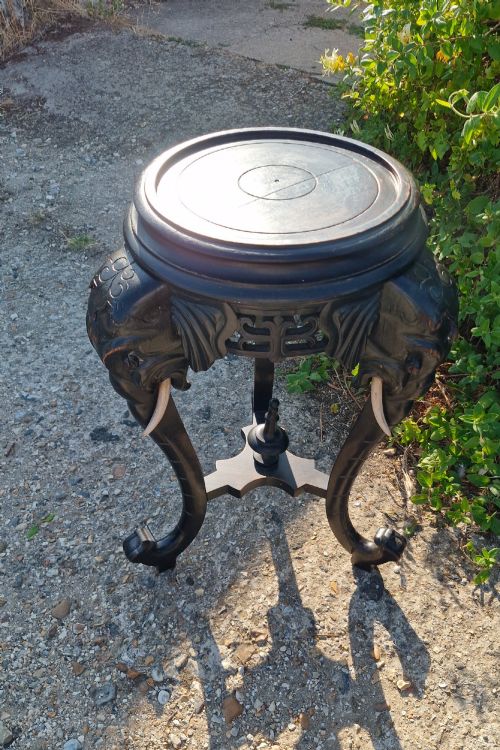
Most examples rely on dense timbers and intricate surface carving, sometimes incorporating upholstery such as kilim tapestry or fabric. Buyers frequently encounter forms featuring animal motifs, notably carved elephants, alongside octagonal and circular silhouettes typical of the period.
How they were made
Maker workshops utilised durable timbers including teak, rosewood, and general hardwood as the structural foundation for carving and joinery. These woods allowed artisans to execute deep, elaborate relief patterns across surfaces and structural supports.
Indian Wooden Stool Retail Price Guide 2026
Typical asking prices for indian wooden stool among the pieces listed under this phrase on Sellingantiques today, from the lower quarter to the upper quarter. They describe what is for sale here now, not the wider market.
Several tables and stools come complete with painted wooden tusks and sculptural elephant bodies.
What varies in quality
The distinction between standard production and superior craftsmanship lies in the depth and precision of the wood carving. Profusely carved surfaces with sharp, well-defined motifs reflect a higher level of artisan skill than shallower, softer detailing.
Material selection also dictates the tier of the piece, with dense rosewood and teak or skilled bone inlay commanding greater attention than plain hardwood. Integrated textiles, such as genuine kilim tapestry seats, elevate the decorative complexity.
The Indian Wooden Stool Glossary
- Anglo-Indian
- A design style produced during British rule in India, blending British furniture forms with traditional Indian carving and motifs.
- Kilim Tapestry
- A flat-woven textile often utilised as a durable and decorative seat cover on stools and ottomans.
- Bone Inlay
- A decorative technique where small pieces of bone are set into the wooden surface to create geometric or floral patterns.
- Moorish Revival
- An architectural and decorative style incorporating Islamic design elements, popular in nineteenth-century furnishings.
- Hoshiarpur
- A region in Punjab renowned for intricate wooden carving and bone inlay work on tables and small furniture.
Indian Wooden Stool: Frequently Asked Questions
How do I date an indian wooden stool?
Dating relies on stylistic markers, timber types, and documented periods such as late Victorian or the late nineteenth century. Examining the construction methods and the presence of regional motifs helps establish the era of production.
Makers often drew upon specific historical revivals, allowing collectors to narrow down the decade based on carving styles and inlay techniques.
Were these stools used as seating?
Many examples served as occasional seating, footstools, or ottomans, though some larger pieces functioned primarily as side tables or elephant tables.
The sturdy construction of teak and hardwood ensured they could withstand regular domestic use despite their ornate surface decoration.
How do I care for carved wooden furniture?
Maintaining these pieces involves keeping them away from direct heat sources and sudden humidity changes to protect the timber and any bone inlay.
Gentle dusting with a dry cloth preserves the intricate relief work without damaging the historic surface finishes.
What is an elephant table?
An elephant table is a form of occasional furniture featuring carved wooden figures or elephant legs, occasionally incorporating painted tusks.
These pieces reflect the decorative tastes of the late nineteenth century and the influence of Asian folk art traditions on British colonial interiors.