


Indian Repousse Box
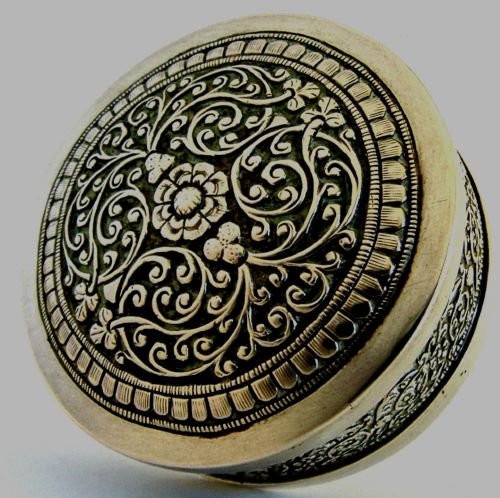
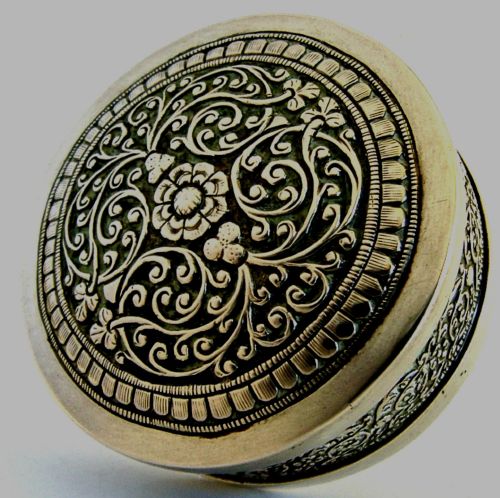
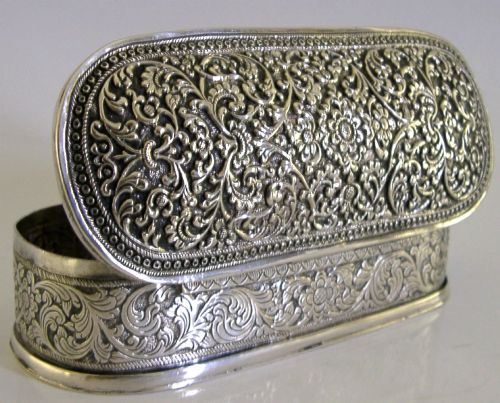
An indian repousse box brings heavy metalwork and intricate chased detail to a desk or dressing table.
Indian Repousse Box
An indian repousse box is a vessel shaped from silver, silver plate, or metal, designed for holding small items like trinkets, tea, cards, or betel nut.
The pieces on this page span the nineteenth century and the early twentieth century, taking the form of round boxes, heart-shaped trinkets, tea caddies, and card cases.
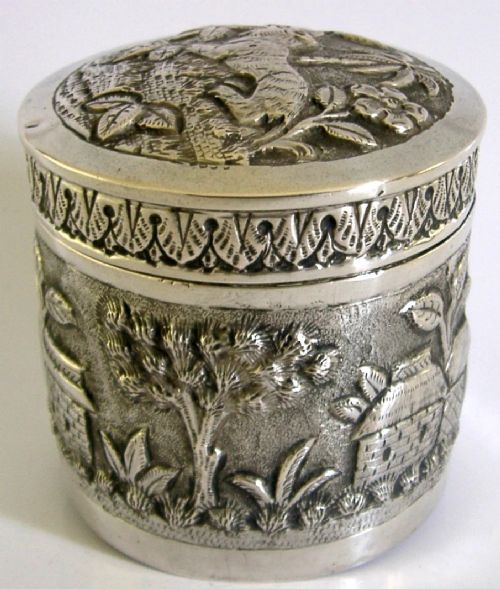
Makers produced these items in Anglo-Indian and colonial styles, frequently covering the exterior surfaces with figures, deities, and folk motifs.
How they were made
Silversmiths and artisans worked primarily in solid silver and silver plate, shaping the metal by hammering it from the reverse side to push the design into relief.
Craftsmen also utilised brass and hardwoods such as teak, combining metal decoration with wooden structures for larger storage pieces and boxes.
Detailing was finished by hand through chasing and embossing, creating deeply textured patterns across the surfaces of jars, caddies, and containers.
Some containers feature hidden deities lurking among the embossed foliage.
What varies in quality
Quality depends upon the crispness of the repousse work and the depth of the metal used to form the body of the box.
Fine examples display intricate depictions of deities and figures with clear definition, whereas simpler pieces show softer, shallower stamping.
The weight of the silver and the structural integrity of the container distinguish standard storage items from heavier, substantial desk pieces.
The Indian Repousse Box Glossary
- Repousse
- A metalworking technique where the artisan hammers the design from the reverse side to form a raised pattern on the front. This creates the characteristic three-dimensional surface seen on these boxes.
- Anglo-Indian
- A style describing decorative arts produced during the British period in India, blending local craftsmanship with European forms. It bridges two distinct design traditions.
- Pandan
- A traditional container used for holding betel nut and related leaf preparations. These boxes often feature segmented interiors for organising contents.
- Tea Caddy
- A small storage vessel originally intended for keeping loose tea leaves dry and secure. Many examples include fitted lids and substantial metal walls.
- Card Case
- A slim protective holder designed for calling cards during the nineteenth century. These items typically feature densely decorated panels front and back.
Indian Repousse Box: Frequently Asked Questions
What were these boxes used for originally?
These vessels served various domestic purposes, from holding precious trinkets and calling cards to storing tea and betel nut.
Their varied sizes accommodated specific daily items required in nineteenth-century households.
How can I date an indian repousse box?
Dating relies on stylistic clues, construction methods, and period indicators noted across nineteenth-century and early twentieth-century examples.
Records show pieces concentrated around the decades leading up to nineteen ten, reflecting distinct colonial production periods.
Are these items made of solid silver?
The materials vary between solid silver, silver plate, and mixed metals combined with wooden elements like teak.
Listings specify the metal composition and weight where recorded by the dealer.
How do I care for antique silver boxes?
Silver surfaces require gentle dusting and minimal cleaning to preserve the dark patina settled within the recessed repousse details.
Avoiding harsh polishes protects the hand-chased figural work from wearing down over time.