

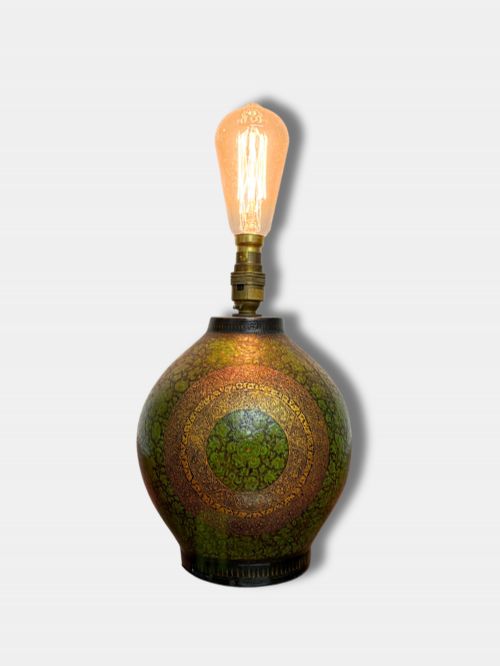


Indian Lacquered Lighting
These Indian lacquered lighting pieces are hand-painted wooden and papier-mâché table lamps that bring vibrant Kashmiri folk art colour to a room.
Indian Lacquered Lighting
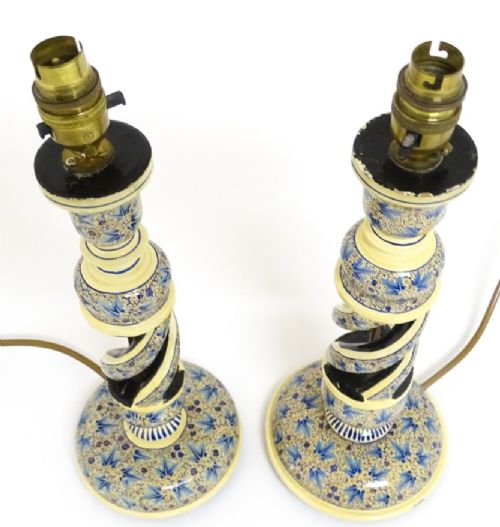
Indian lacquered lighting mostly consists of Kashmiri table lamps originating from the Victorian era up to the 1930s. These pieces include both single columns and matched pairs designed for domestic interiors.
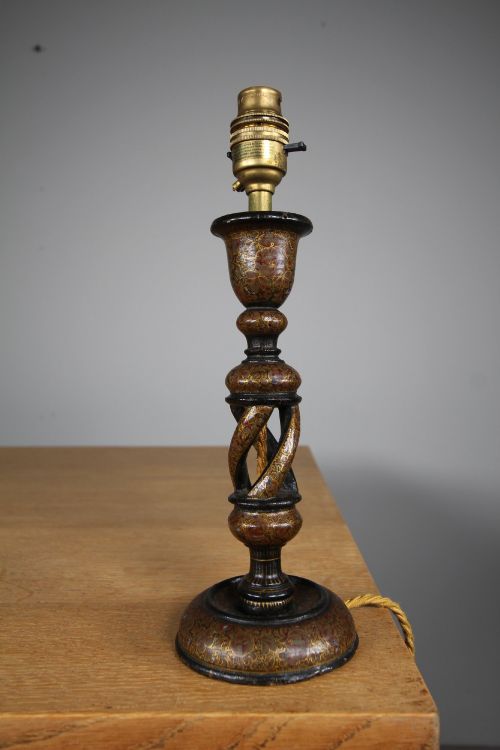
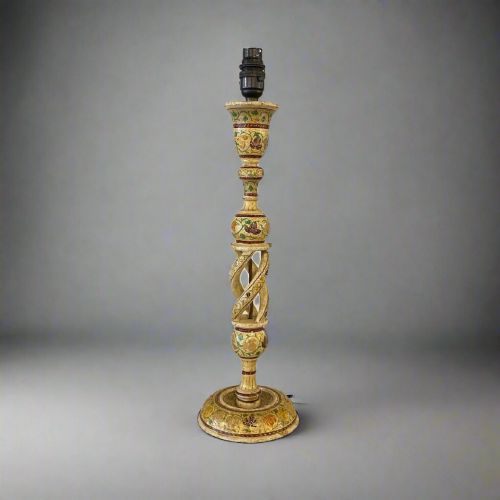
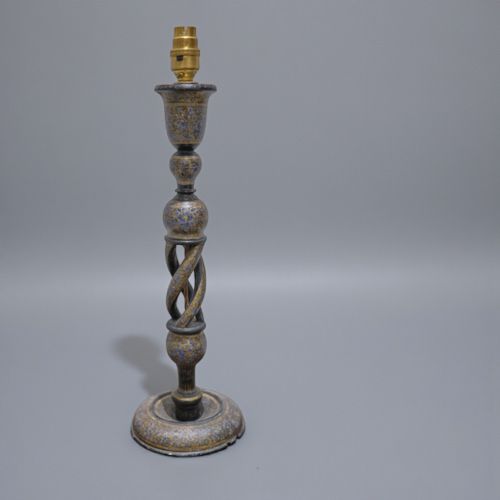
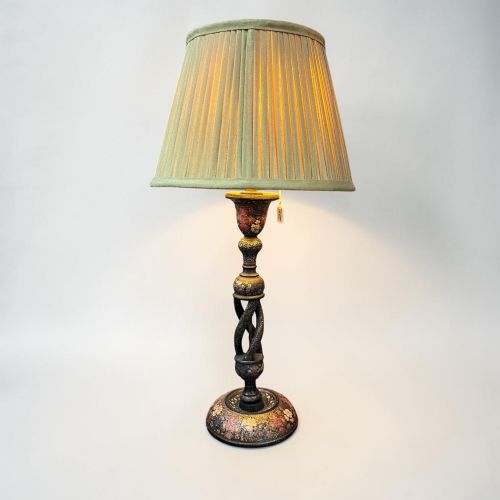
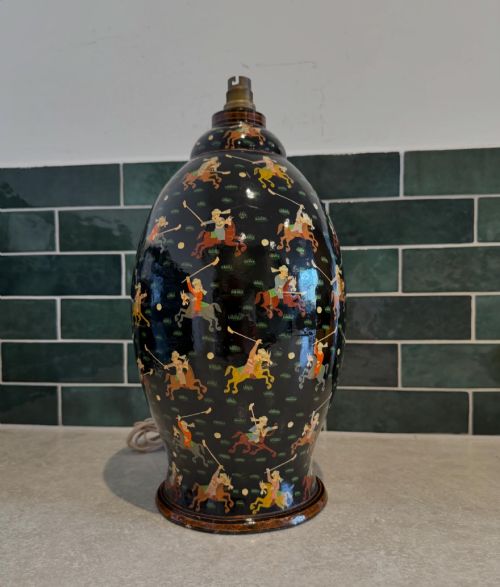
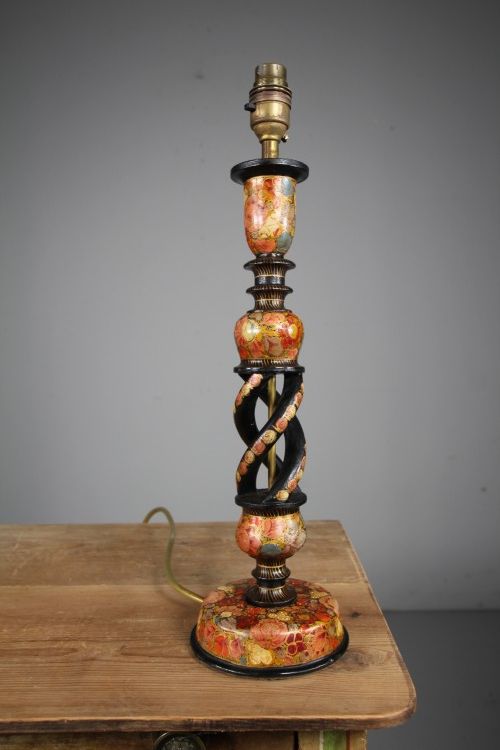
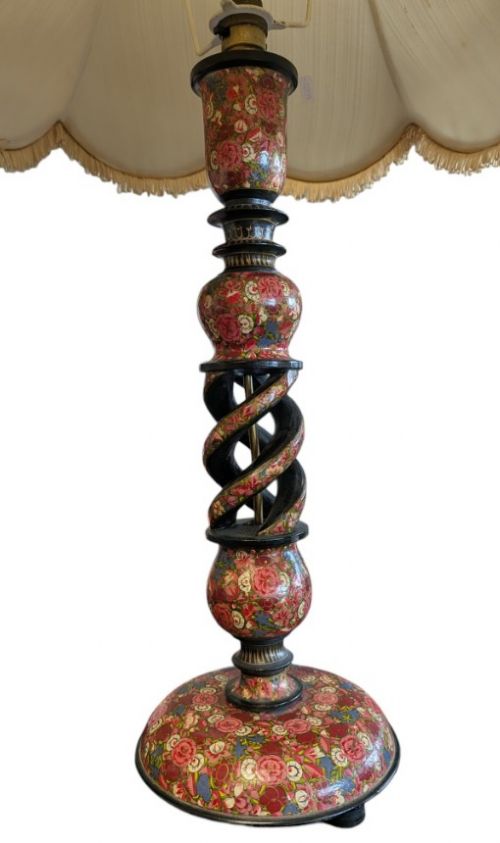
The dominant forms are turned wooden twist table lamps alongside papier-mâché bodies finished with intricate hand-painted surfaces. Most examples date from the early 20th century, specifically the 1920s and 1930s.
Anglo-Indian designs merge traditional regional craftsmanship with forms suitable for British homes of the period. Buyers find everything from standard proportions to enormous tall lamps and unusual brass-painted variations.
Materials and construction
Artisans turned solid wood on lathes to create slender twisted columns and sturdy bases for the table lamps. Alternatively, papier-mâché provided a lighter yet robust substrate moulded into characteristic lamp bodies.
Surfaces received layers of lacquer applied by hand, sealing the material before artists painted detailed floral and geometric motifs. Gilt gold and green pigments frequently feature alongside vibrant multi-coloured palettes characteristic of Kashmiri folk art.
Wiring and electrical components are modern updates fitted to older lamp holders, allowing these antique bodies to function safely today.
Indian Lacquered Lighting Retail Price Guide 2026
Typical asking prices for indian lacquered lighting among the pieces listed under this phrase on Sellingantiques today, from the lower quarter to the upper quarter. They describe what is for sale here now, not the wider market.
Listings span the Victorian era through the 1930s, featuring turned wood and papier-mâché in Kashmiri folk art styles.
Judging the work
Quality rests primarily on the crispness of the wood turning and the precision of the hand-painted decoration. Finer examples display intricate, well-preserved brushwork with minimal fading in the gilt and enamel colours.
Scale and proportion separate standard domestic items from exceptional pieces, such as tall or enormous specimens that demand greater artisanal skill to construct stably. The survival of original lacquered surfaces without heavy restoration also dictates desirability.
The Indian Lacquered Lighting Glossary
- Papier-mâché
- A composite material made from paper pulp or reinforced paper layers bound with glue, then moulded and lacquered. It provides a smooth canvas for detailed miniature painting.
- Twist lamp
- A table lamp featuring a column carved with a spiral or helical twist along its length. This decorative turning technique was popular in early 20th-century woodwork.
- Kashmiri folk art
- Decorative styles originating from the Kashmir region, known for dense floral patterns, bright pigments, and traditional lacquer finishes. It reflects distinct regional craft heritage.
- Anglo-Indian
- A term describing items made in India during the British period, combining local materials and craftsmanship with European domestic forms. These pieces bridge two design traditions.
Indian Lacquered Lighting: Frequently Asked Questions
What rooms suit Indian lacquered lamps?
These colourful table lamps suit living rooms, studies, or bedside tables where their vibrant painted finishes add warmth and pattern.
They pair well with traditional wooden furniture or serve as eclectic statement pieces in more contemporary interior schemes.
Are these lamps safe to use?
Many antique examples arrive rewired with modern electrical components to meet current safety standards while preserving the original body.
Buyers should check that the lamp holder and cord match standard domestic requirements before plugging them in.
How do I date a Kashmiri lamp?
Dating relies on stylistic clues, materials such as papier-mâché or turned wood, and construction methods typical of the late 19th century through the 1930s.
Earlier Victorian pieces often show heavier brass integration, whereas 1920s examples frequently feature slender twist columns.
Do painted lamps need special care?
Lacquered and painted surfaces require gentle dusting with a dry microfibre cloth rather than liquid cleaners or harsh chemicals.
Keeping them out of direct sunlight prevents the vibrant green, gold, and multi-coloured pigments from fading over time.