



Indian Floral Carved Table
An indian floral carved table brings intricate regional craftsmanship and rich timber into a room, offering both practical surface space and distinct decorative character.
Indian Floral Carved Table
When searching for an indian floral carved table, buyers encounter an array of occasional pieces, side tables, and centre tables originating from the nineteenth and early twentieth centuries. These works span periods such as the Victorian era alongside 1880, 1900, and 1920 dates, reflecting diverse regional aesthetics.
The most common forms on this page include circular or square occasional tables, side tables, and nesting sets. Many examples incorporate distinct stylistic designations such as Anglo-Indian, Kashmiri, and Anglo-Indian Colonial.
The regional origins and production periods dictate the specific carved motifs and structural forms encountered. Buyers frequently select these tables to introduce warm timber tones and detailed surface ornamentation into traditional or eclectic interiors.
How they were made
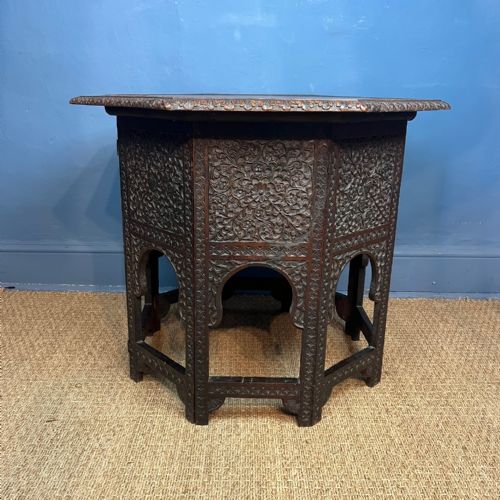
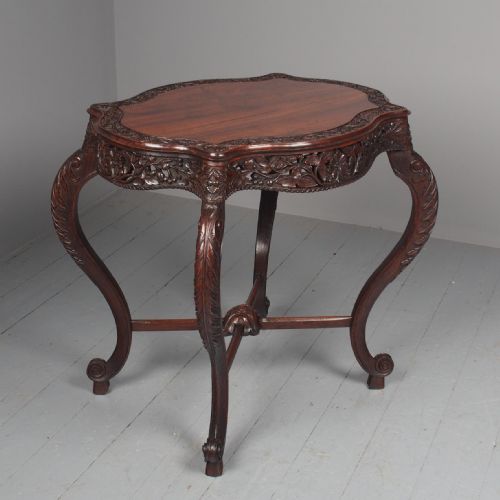
Construction relies heavily on dense timbers including teak, padauk, rosewood, and general hardwood, chosen for their stability under intricate chisel work. Artisans carved deep floral and foliate patterns directly into the wood substrate.
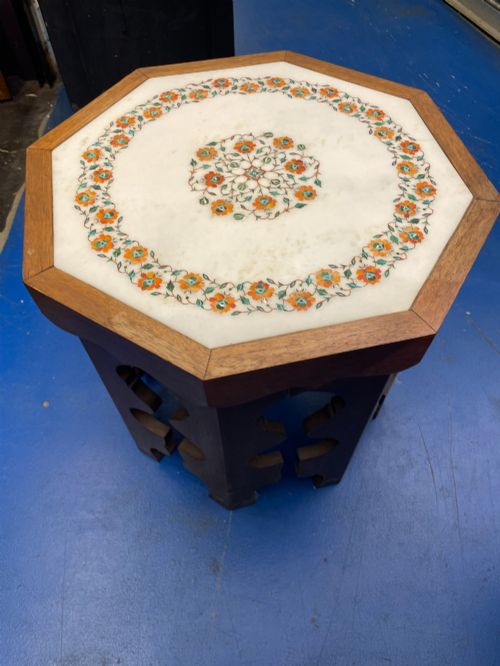
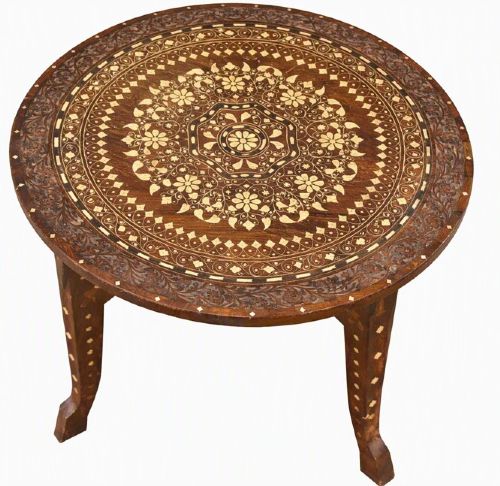
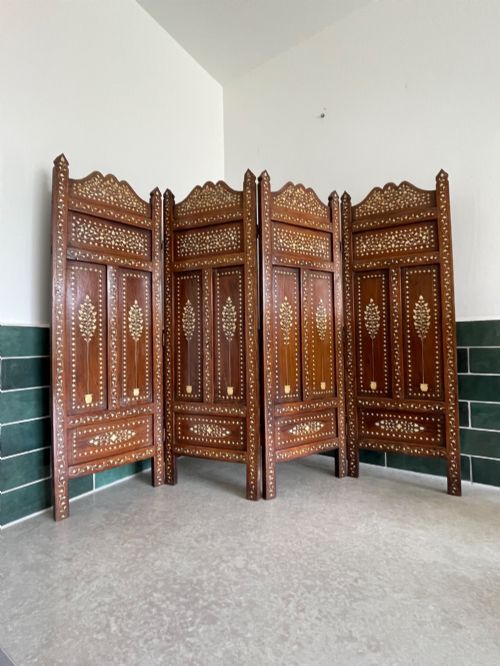
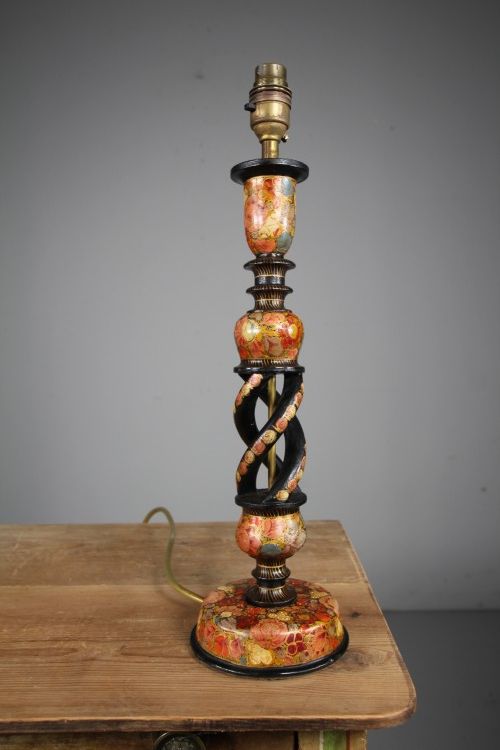
Many examples incorporate contrasting materials, utilising bone inlay, brass wire or sheet work, and painted lacquer details to accentuate the carved designs. Selected pieces pair the wooden frames with inlaid marble tops or specialised brass components.
Indian Floral Carved Table Retail Price Guide 2026
Typical asking prices for indian floral carved table among the pieces listed under this phrase on Sellingantiques today, from the lower quarter to the upper quarter. They describe what is for sale here now, not the wider market.
Listings feature pieces spanning from the mid-nineteenth century through to 1920, incorporating teak, rosewood, bone, brass, and painted lacquer.
What varies in quality
The depth, sharpness, and precision of the floral carving define the upper tier of execution, separating finely articulated foliage from softer, shallower surface incisions. The complexity of the composition, particularly where carving covers every available surface, indicates greater artisan effort.
The integration of secondary materials such as bone or brass inlay requires exacting standards to ensure flush surfaces and secure seating within the timber. Condition of the underlying hardwood and originality of components further distinguish superior examples.
Liberty and Co
The Indian Floral Carved Table Glossary
- Anglo-Indian
- A descriptive term for decorative arts and furniture produced during the British period in India, frequently combining British furniture forms with local carving traditions.
- Hoshiarpur
- A North Indian centre renowned for intricate woodwork, particularly known for dense bone and brass wire inlay set into shisham or other hardwoods.
- Kashmiri
- Pertaining to items originating from Kashmir, typically distinguished by colourful painted lacquer decoration or fine surface carving.
- Padauk
- A heavy, durable tropical hardwood with a reddish hue utilised in high-status nineteenth-century colonial furniture.
- Occasional table
- A small, movable table designed for specific, intermittent uses within a residential interior.
Indian Floral Carved Table: Frequently Asked Questions
Where should I place an indian floral carved table?
These pieces function effectively as accent surfaces in living rooms, hallways, or studies where their detailed carving can be appreciated. Their compact scale suits placement beside seating or beneath lamps.
Because many examples feature intricate woodwork and delicate inlays, positioning them away from direct heat sources and strong sunlight preserves the timber and decorative elements.
How do I clean an indian floral carved table?
Routine maintenance requires gentle dusting with a soft, dry cloth to prevent accumulation within the deep recesses of the floral carving. Avoid liquid polishes that can build up in the intricate crevices.
For pieces with bone or brass inlay, specialised care ensures the contrasting materials remain secure and untarnished without damaging the surrounding wood.
Are these tables sturdy enough for daily use?
Most occasional and side tables are built from durable hardwoods like teak and rosewood, offering adequate stability for supporting lamps, books, or decorative objects. Their solid construction handles normal domestic placement.
However, heavily carved edges and inlaid surfaces benefit from thoughtful handling to prevent accidental impact to protruding wooden elements or delicate inlays.
How can I tell a Kashmiri table from a Hoshiarpur table?
Kashmiri examples are typically identified by their painted lacquer decoration and floral surface designs applied directly to the wood. They often showcase vibrant coloration alongside traditional carving.
In contrast, Hoshiarpur pieces rely on intricate geometric or floral patterns formed by precise bone and brass inlay embedded into a dark hardwood background rather than paint.