




Indian Elephant Stand
An indian elephant stand brings colonial craftsmanship and intricate woodwork into a room, serving as a striking surface for plants or lamps.
Indian Elephant Stand
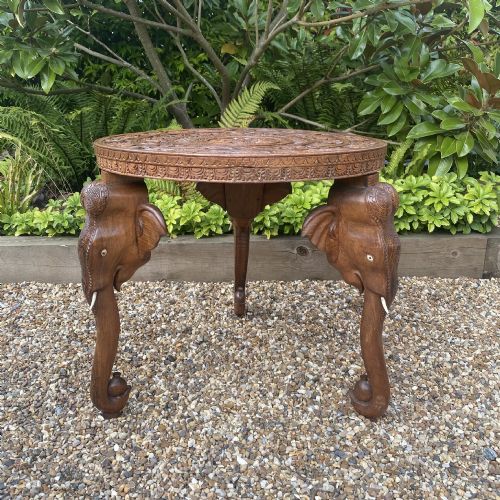
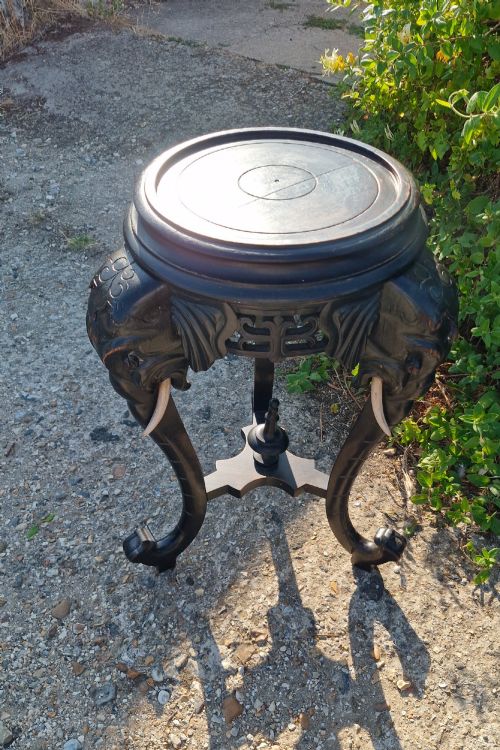
An indian elephant stand typically takes the form of a low side table, occasional table, or plant stand supported by carved animal figures. These pieces originate from the nineteenth and early twentieth centuries, spanning periods from the Victorian era up to around nineteen-twenty.
The most common versions encountered here are circular, hexagonal, or octagonal tables featuring carved wooden elephants as legs or bases. Alongside these standard occasional tables, the listings include occasional stools, sculptural seats, and smaller tripod tables.
Originating predominantly from regional workshops in British India and Burma, these items often bear stylistic traits of Anglo-Indian, Victorian colonial, and Asian folk art traditions. Such pieces reflect the cross-cultural exchange of design during the height of the British Empire.
Materials and Construction Techniques
Makers utilised dense timbers such as solid rosewood, teak, and other regional hardwoods that could support intricate carving without splintering. These woods provide the structural integrity required for legs shaped as full elephant figures and detailed supports.
Surface decoration frequently involves deep relief carving, bone inlay, and occasionally painted wooden tusks or lacquer details. Artisans combined traditional joinery with meticulous hand-chizzling to achieve the complex foliage and animal motifs seen across the tops and borders.
Indian Elephant Stand Retail Price Guide 2026
Typical asking prices for indian elephant stand among the pieces listed under this phrase on Sellingantiques today, from the lower quarter to the upper quarter. They describe what is for sale here now, not the wider market.
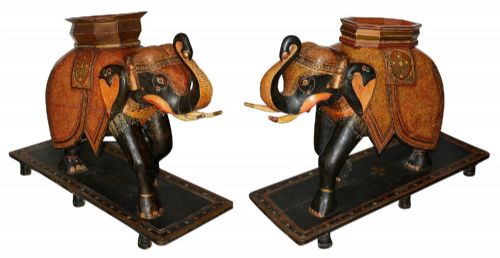
Painted wooden tusks give some of these sturdy wooden elephants a surprisingly cheerful expression.
Assessing Quality and Craftsmanship
The distinction between ordinary and superior pieces lies in the depth and precision of the hand-carving upon the elephant figures and table tops. Finer examples display lifelike anatomical details in the animals and crisp, sharp edges in the geometric or floral borders.
The choice of primary material also dictates the grade of the object, with solid rosewood and intricate Hoshiarpur bone inlay commanding higher regard than plain painted softwood. Furthermore, the structural stability of the elephant supports under daily weight determines the practical utility of the stand.
The Indian Elephant Stand Glossary
- Anglo-Indian
- A design style produced in India during the British colonial period, blending traditional South Asian motifs with European furniture forms. It heavily influenced the creation of these stands.
- Hoshiarpur
- A town in Punjab renowned for its intricate wood carving and micro-mosaic inlay work using bone or brass wire. Pieces from this region often feature dense geometric patterns.
- Tripod Table
- A small occasional table supported by three legs, which in this context often take the form of three carved elephants facing outward. This configuration ensures stability on uneven floors.
- Specimen Wood
- Furniture constructed from multiple contrasting native and exotic timbers to display a variety of natural grain colours. Ceylonese makers frequently employed this technique.
Indian Elephant Stand: Frequently Asked Questions
What is an indian elephant stand used for?
These pieces serve primarily as occasional tables, plant stands, or display surfaces for lamps and decorative objects. Their sturdy wooden construction allows them to hold moderate weight while adding a distinctive focal point to a room.
Historically, they functioned as decorative occasional furniture in colonial drawing rooms and parlours. Today, collectors utilise them similarly to display ornaments or support house plants.
How do I date an antique elephant table?
Dating relies on examining the timber types, tool marks, and stylistic indicators such as Victorian colonial influence or specific regional carving patterns. Pieces often date from the late nineteenth century through to the early twentieth century.
Construction methods, such as the use of solid rosewood or specific bone inlay styles, help narrow the manufacture period. Comparing the carved details against documented regional workshop practices provides further chronological accuracy.
How should I care for a carved hardwood stand?
Maintain the wood by dusting regularly with a dry, soft cloth and keeping the piece away from direct heat sources. Excessive temperature changes can cause dense hardwoods like teak and rosewood to split.
Avoid applying heavy liquid polishes that might seep into the deep recesses of the hand-carvings. Gentle cleaning preserves the original patina and protects the intricate bone inlay where present.