



Indian Carved Settee
An indian carved settee brings deep wood relief and colonial heritage into a room, offering generous seating rooted in traditional craftsmanship.
Indian Carved Settee
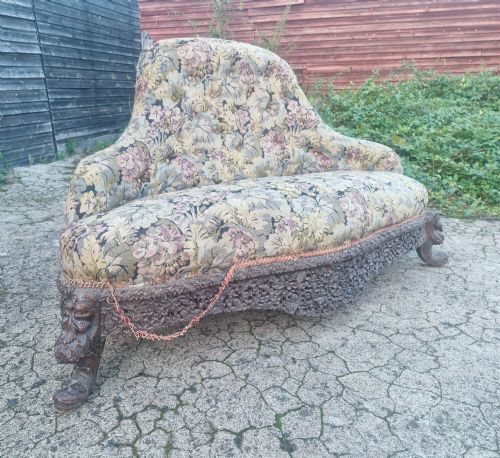
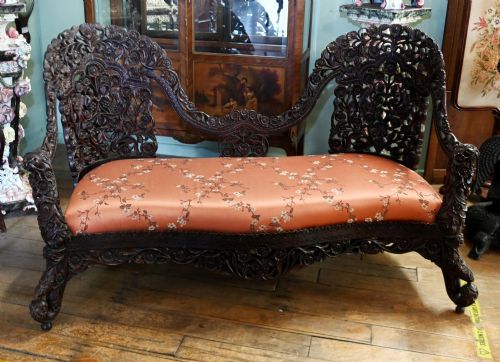
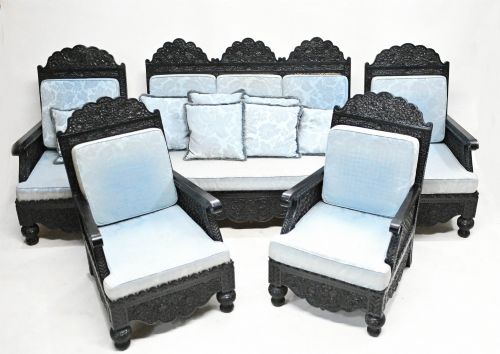
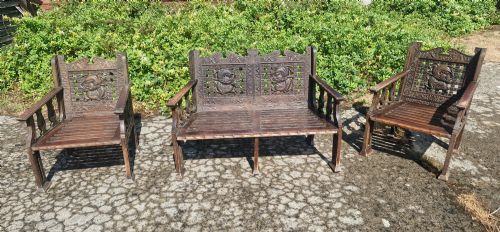
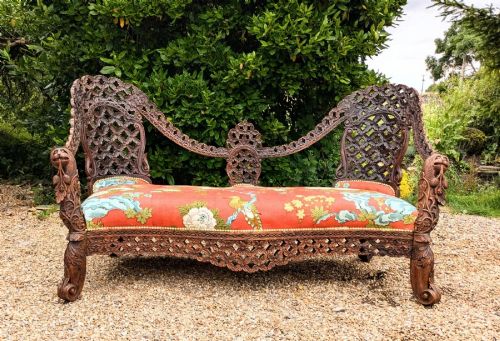
An indian carved settee represents a distinct tradition of seating furniture, encompassing forms from multi-piece suites to single veranda benches. The pieces span from the eighteenth century through to the early decades of the twentieth century, reflecting varied eras of production.
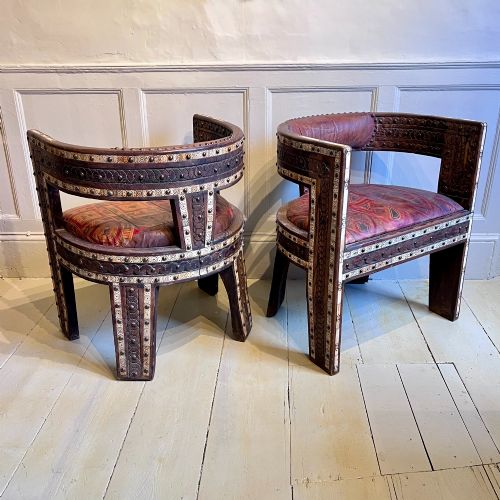
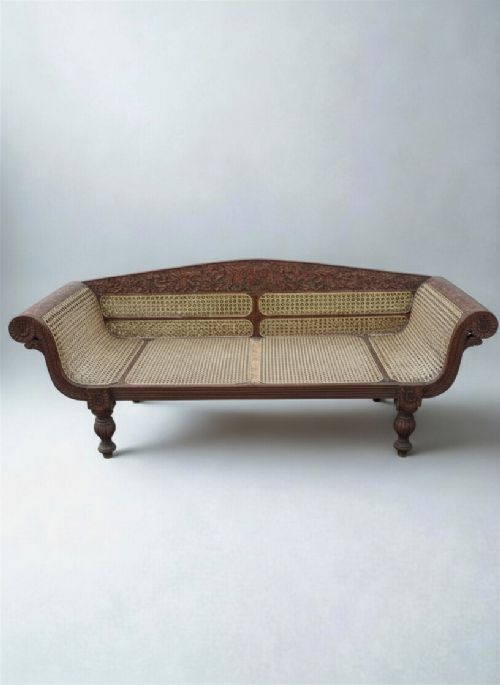
Buyers will encounter stylistic influences described as Anglo-Indian, Moorish, and Victorian Colonial alongside traditional Indian designs. Forms range from heavy hardwood sofas to caned daybeds and floor seats.
Origin points noted in the evidence point to India, Ceylon, Burma, and North Africa. The construction frequently pairs substantial timber frames with detailed surface carving.
How they were made
The physical construction relies heavily on dense timbers such as teak, padauk wood, hardwood, and rosewood. These durable materials support deep, intricate relief carving across the frames and backrests.
Many examples incorporate woven cane panels into the seat bases or backs for ventilation and texture. Other variations utilise added upholstery, leather, or bone inlay to complete the surface finish.
Indian Carved Settee Retail Price Guide 2026
Typical asking prices for indian carved settee among the pieces listed under this phrase on Sellingantiques today, from the lower quarter to the upper quarter. They describe what is for sale here now, not the wider market.
Materials recorded across the selection include teak, padauk wood, cane, leather, and bone.
What varies in quality
Quality rests primarily on the depth and crispness of the hand-carved detail across the wood. Finer examples show precise botanical or geometric relief that remains sharp and well-defined.
The choice and treatment of timber also dictate the standard of the piece, with dense tropical hardwoods holding structural integrity better over generations. Original caning or well-matched secondary materials add further distinction.
The Indian Carved Settee Glossary
- Anglo-Indian
- A descriptive term for furniture made in India during the British colonial period, combining local craftsmanship with European forms. These pieces often feature dense surface carving and tropical timbers.
- Caned
- A seating method using woven rattan or cane strips to create a light, porous panel. This technique is frequently found on seats and backs designed for warmer climates.
- Padauk wood
- A heavy, durable reddish-brown timber native to the tropics. It provides a robust foundation for intricate furniture carving.
- Veranda bench
- A long, sturdy bench intended for semi-open outdoor living spaces. They are typically built from robust hardwoods like teak to withstand varied conditions.
Indian Carved Settee: Frequently Asked Questions
Where were these settees placed originally?
Many of these pieces served in colonial homes, wide verandas, and conservatories where durable seating was essential. Their robust construction suited semi-open spaces and large reception rooms.
Over time, owners moved them into interior drawing rooms and studies as decorative statement furniture.
How do I care for carved wood?
Maintain the timber by dusting regularly with a dry cloth and avoiding placement near direct heat sources. Excessive temperature changes can cause dense hardwoods to split.
Apply a suitable neutral wax sparingly if the timber appears dry, following the grain of the carving.
How do I identify the period?
Dating relies on the style of the carving, the choice of timber, and structural assembly methods. Eighteenth-century and early nineteenth-century pieces often display heavier proportions and distinct colonial motifs.
Later Victorian and early twentieth-century examples shift slightly in form while retaining traditional hand-carved techniques.