
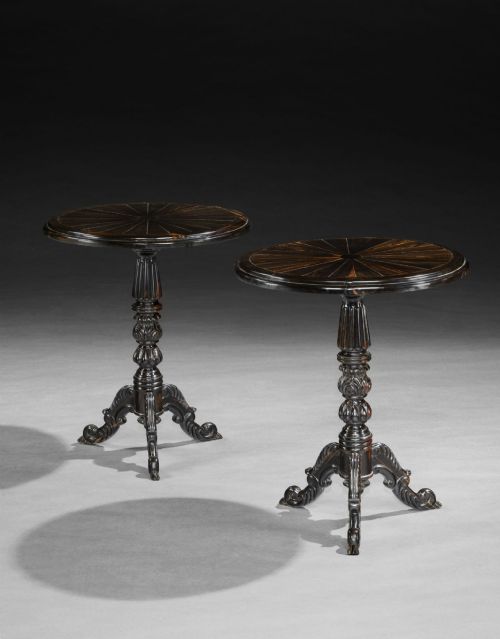
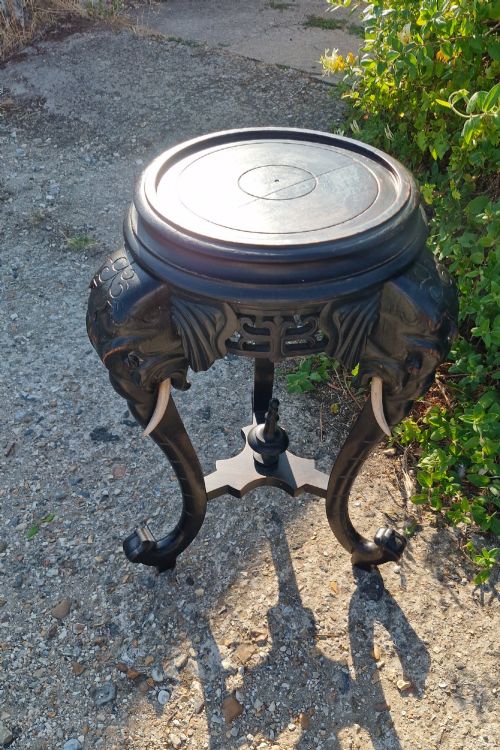
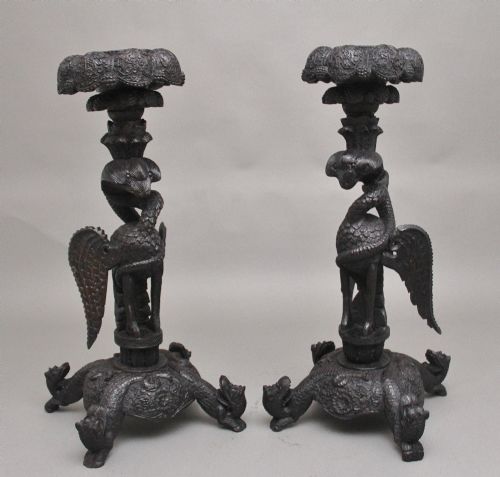
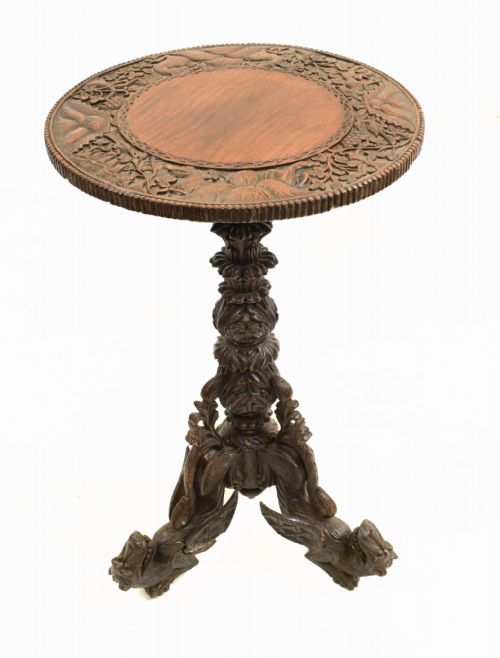




Indian Carved Pedestal Stand
An indian carved pedestal stand brings dense foliage, animal figures, and deep relief work directly into a room.
Indian Carved Pedestal Stand
An indian carved pedestal stand encompasses plant stands, torcheres, columns, and occasional tables originating from nineteenth-century colonial trade and production. The pieces span Victorian, Edwardian, and early twentieth-century eras, reflecting global tastes in British domestic interiors.
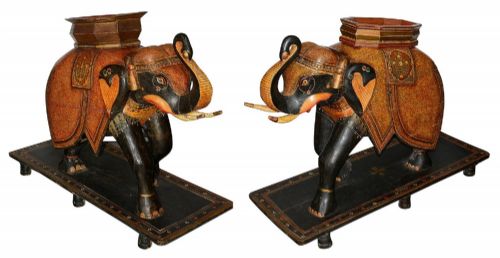
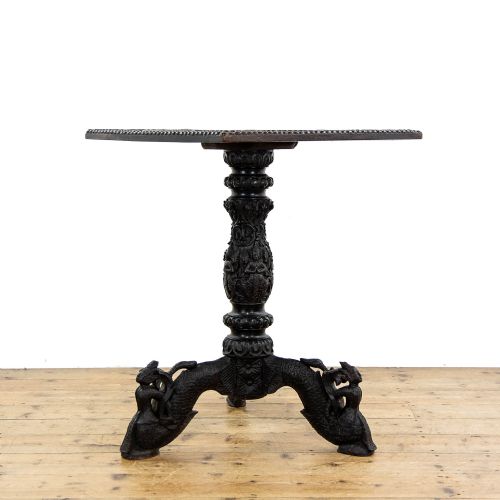
Buyers meet varied forms on this page, from tripod tables and hexagonal rosewood stands to figural elephant and camel tables. Teak, ebony, rosewood, and painted wood dominate the selection, often grouped under Anglo-Indian, Anglo-Burmese, or Asian folk art styles.
The practical function remains simple, providing a raised surface for lamps, plants, or decorative objects while functioning as a sculptural element. Construction types range from folding book pedestals and two-tier side tables to monolithic stone columns and jardinières.
What Varies in Quality
Depth and sharpness of the chisel work dictate the visual success of the carving, separating flat, mechanical rendering from crisp, expressive foliage and animal anatomy. The density and grain of the chosen hardwood also influence the overall finish and permanence of the object.
Structural integrity depends on the joinery connecting the top to the pedestal or tripod base, particularly on tall torcheres and heavy figural tables. Proportion and balance differentiate standard production items from finely balanced pieces with stable, well-distributed weight.
The listings show nineteenth-century and early twentieth-century dates, spanning Victorian and Edwardian periods across teak, ebony, rosewood, and painted wood.
The Indian Carved Pedestal Stand Glossary
- Anglo-Indian
- Descriptive term for furniture produced in India during the British colonial period, combining European forms with local carving traditions. These pieces often utilise native hardwoods such as teak and rosewood.
- Torchere
- A tall stand designed to hold a light source, candle, or small decorative object. In these listings, they frequently feature tripod bases and carved wooden shafts.
- Padauk
- A heavy, durable tropical hardwood with a reddish hue used in regional Indian furniture construction. It accepts fine detail work and provides substantial weight to tables and stands.
- Jardinière
- An ornamental pot or stand designed to hold plants or flowers. Examples often incorporate raised tripod bases and deep relief carving around the vessel.
- Tripod Base
- A three-legged support structure commonly found on occasional tables and plant stands. This configuration ensures stability on uneven floors.
Indian Carved Pedestal Stand: Frequently Asked Questions
What are these stands used for?
These pieces function as raised surfaces for lamps, plants, ceramics, and small display objects within a room.
They also serve as sculptural accents, bringing dense wood carving and figural forms into domestic spaces.
How do I date an Indian carved stand?
Dating relies on stylistic markers, timber choice, and construction methods associated with nineteenth and early twentieth-century production.
Victorian and Edwardian import records often align with the colonial trade items documented in these periods.
Are these pieces solid wood?
The listings consist primarily of solid hardwoods such as teak, ebony, rosewood, and padauk.
Selected items incorporate painted wood, stone, or lacquer elements alongside the primary wooden structure.
How do I care for carved wood?
Maintenance involves dusting with a dry or slightly damp cloth to prevent accumulation within deep crevices.
Keeping the wood away from direct heat sources and dramatic humidity shifts protects the dense timber and finish.