
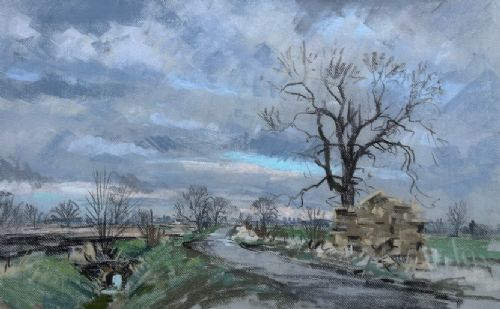
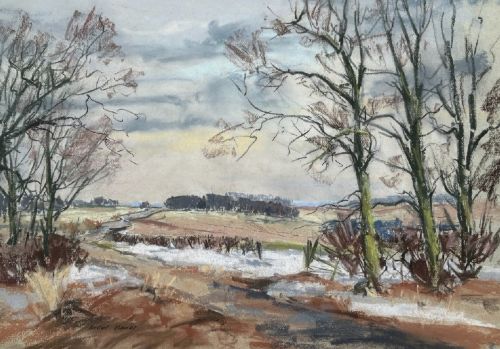
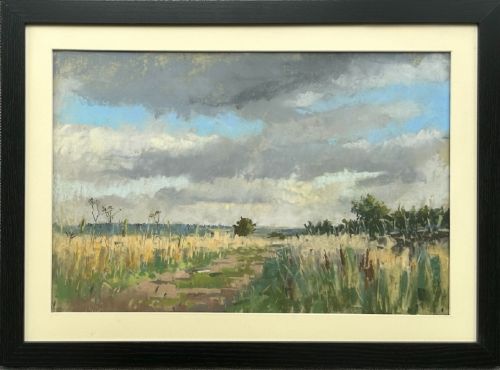
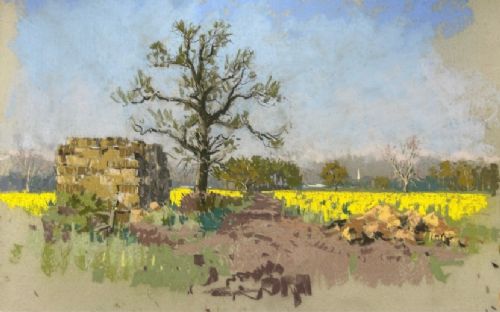


Impressionist Pastel Painting
Impressionist pastel painting captures fleeting light and atmosphere on paper through rapid chalk marks.
Impressionist Pastel Painting
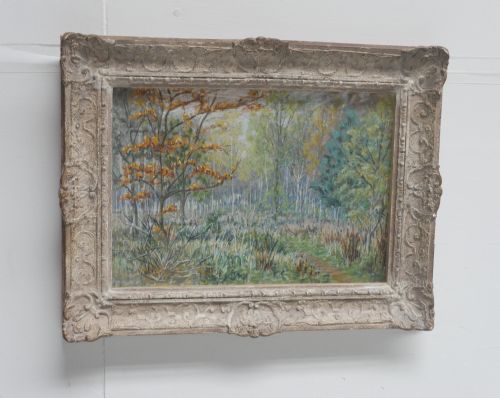
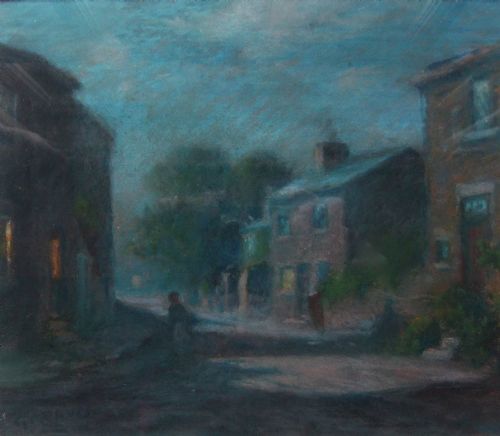
An impressionist pastel painting brings immediate atmosphere into a room through soft chalk marks on paper. When searching this phrase, buyers look for works that capture movement and light rather than rigid detail.
The examples gathered here span from the nineteenth century through the mid-twentieth century, embracing British Impressionism, Post-Impressionism, and Modern British movements. Landscapes, harbour scenes, and portraiture form the core of these offerings.
Most pieces date from the twentieth century, particularly the decades surrounding the nineteen-fifties, alongside earlier nineteenth-century examples. Works often arrive framed under glass in wood or gilt wood surrounds.
Materials and technique
Artists utilise dry pastel pigments applied directly to paper to build rapid, textured layers of colour. Some works combine pastel with watercolour or oil paint to alter the density and surface finish.
Framing under glass protects the friable pastel chalk from smudging and environmental moisture. Wooden and gilt wood frames enclose the paper supports, preserving the delicate dry medium over decades.
Listings feature paper supports combined with pastel, watercolour, glass, and wood frames across multiple decades of the twentieth century.
Judging quality
The strength of an impressionist pastel painting lies in the confidence of the hand and the vitality of the colour palette. A skilled composition balances negative space with energetic pigment application to convey weather and light instantly.
Condition plays a vital role, specifically the preservation of the chalk beneath the glass without fading or dust accumulation. The harmony of the original frame further elevates the presence of the artwork on the wall.
William Greaves·Gyrth Russell·Berthe des Clayes·Lena M Alexander·Henry Wimbush·Walter Holmes·Bertouch·Augustus William Enness·Gaston Bouy·Angus Rands·Lamorna Birch
The Impressionist Pastel Painting Glossary
- Pastel
- A dry art medium consisting of powdered pigment and a binder rolled into sticks. It allows artists to apply pure colour directly to paper with speed.
- Post-Impressionism
- An art movement extending the stylistic approach of impressionism while rejecting its limitations. Artists prioritised symbolic content and expressive use of form and colour.
- Gilt wood
- Wood carved and coated with a thin layer of gold leaf or metallic paint. It provides traditional reflective framing for works on paper and canvas.
- Fixative
- A liquid spray applied to pastel drawings to prevent the chalk from smudging. Its historical application varies across period works.
Impressionist Pastel Painting: Frequently Asked Questions
Where should I hang a pastel painting?
Select an interior wall away from direct sunlight and damp environments to prevent the paper support and dry pigments from fading or degrading.
Stable room temperatures help preserve both the delicate chalk medium and the original wooden framing.
Are pastels painted on canvas or paper?
Traditional pastels require a textured paper or card support that allows the dry chalk particles to grip the surface effectively during application.
Some related twentieth-century works utilise board or canvas surfaces for mixed media compositions involving pastel and oil paint.
How can I tell a nineteenth-century pastel from a later one?
Examine the backing boards, framing nails, and paper ageing characteristics, as earlier works often display hand-cut framing elements and toned paper stocks.
Twentieth-century examples frequently feature brighter palettes associated with British Impressionism and post-war modernist movements.