

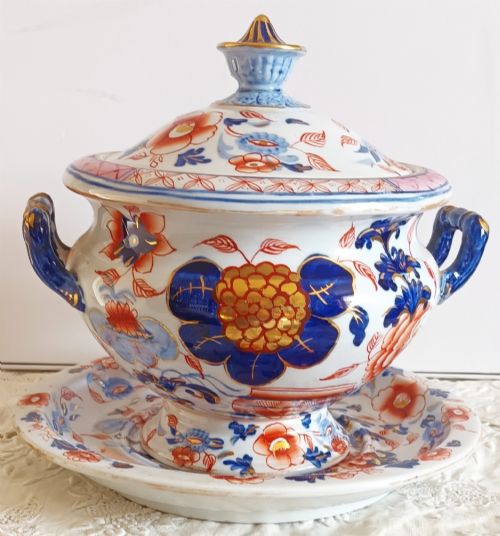

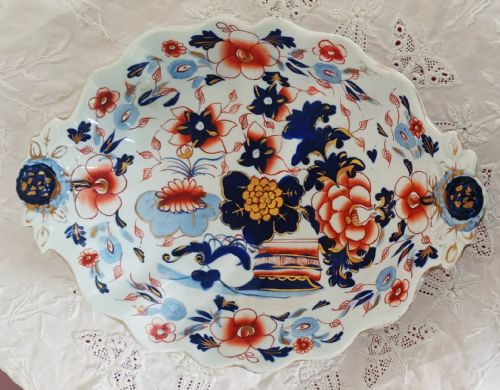
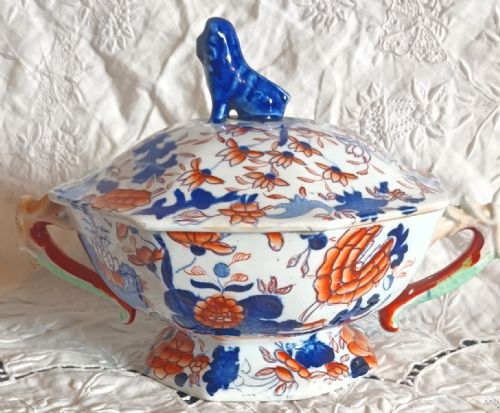
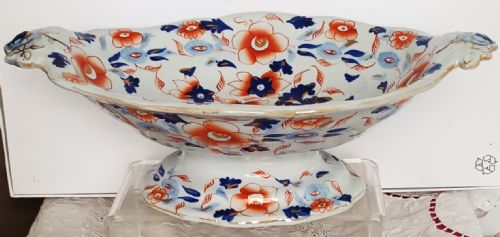


Imari Ironstone Dish
An imari ironstone dish brings heavyweight nineteenth-century body and vibrant enamel patterns to the table.
Imari Ironstone Dish
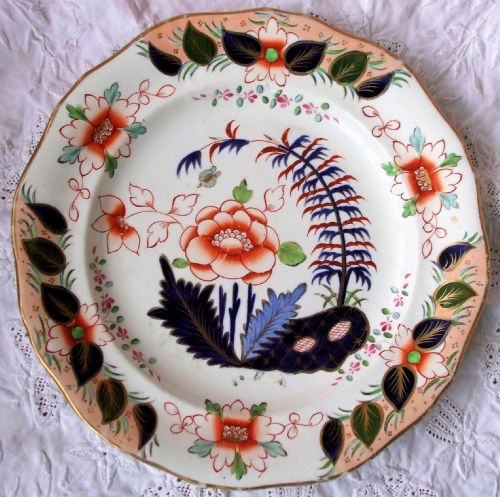
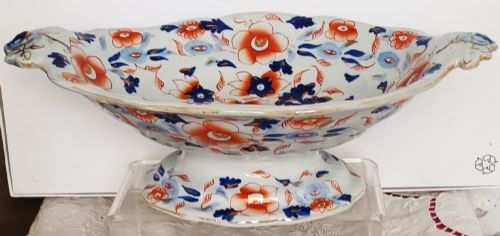
An imari ironstone dish combines the durable, dense ceramic body of nineteenth-century earthenware with the characteristic rich iron red, underglaze blue and gilt decoration derived from Japanese porcelain traditions. Buyers seeking an imari ironstone dish will encounter serving platters, decorative plates, pedestals and tureens produced during the Georgian and Victorian eras.
The most common formats on this page include large platters, footed comports and covered tureens bearing names like Japan, Amherst Japan and Japan Basket patterns. These pieces were built for heavy domestic service in country houses yet retained bright, ornamental palettes that suited formal dining rooms.
Originating primarily from English potteries during the 1800s, these items span periods from Regency through the late Victorian decades. The surviving examples demonstrate how utilitarian kitchen ceramics were elevated into colourful display pieces through detailed enamel painting.
How they were made
Potters built these pieces using dense ironstone china or earthenware, a robust ceramic mixture designed to resist chipping during daily use. Glaze was applied over the moulded clay body to provide a smooth, vitrified surface capable of holding bright colours during firing.
Decorators applied enamel paints and gold leaf by hand, layering iron red, cobalt blue and gilding over the fired glaze to create the complex Chinoiserie and Imari motifs. Subsequent low-temperature kilns fused the pigments permanently onto the hard white substrate.
Imari Ironstone Dish Retail Price Guide 2026
Typical asking prices for imari ironstone dish among the pieces listed under this phrase on Sellingantiques today, from the lower quarter to the upper quarter. They describe what is for sale here now, not the wider market.
The listings feature ironstone pieces spanning the Georgian and Victorian eras, utilising enamel, gold leaf and glazed ceramic.
What varies in quality
The precision of hand-painted enamel work dictates the visual success of the piece, separating standard transfer-printed wares from meticulously hand-finished compositions. Crisp application of gold leaf and deep cobalt tones indicate superior workshop execution.
The crispness of the moulded ceramic form itself, particularly on relief-molded serving platters and comports, reveals the sharpness of the original metal or plaster master moulds. Crisp edges and defined handles denote an early strike from the kiln.
John Davenport of Longport·John Ridgway·Coalbrookdale·Minton·Mason's
The Imari Ironstone Dish Glossary
- Ironstone
- A heavy, vitrified ceramic patented in the nineteenth century to provide a durable alternative to porcelain. It resists cracking and supports thick enamel decoration.
- Comport
- A raised serving dish or pedestal bowl used for fruit and sweetmeats at formal nineteenth-century dining tables. These sit on a central foot or low base.
- Ashet
- A regional Scottish and northern English term for a large meat platter or serving dish. It derives from the French assiette.
- Chinoiserie
- European artistic style reflecting Chinese and East Asian motifs. It appears frequently on nineteenth-century ceramic patterns alongside Japanese Imari designs.
- Well and tree
- A serving platter featuring carved channels and a small well to collect meat juices during carving. This design kept roasts elevated from their drippings.
Imari Ironstone Dish: Frequently Asked Questions
How do I date an imari ironstone dish?
Dating relies on identifying backstamps, ceramic bodies and stylistic markers associated with nineteenth-century makers. Earlier Georgian pieces often exhibit heavier ironstone bodies and fluid hand-painting.
Later Victorian examples may show crisper transfer-printed outlines beneath the enamel fills. Comparing the pattern name to known factory production years narrows the decade further.
Can I use these dishes for serving food?
Most pieces remain structurally sound for serving dry foods, fruits or cold meats at the table. Hand-washing protects the fragile overglaze enamels and gold leaf from detergent wear.
Avoid dishwashers, microwaves and thermal shock from hot liquids to preserve the historical surface.
What is the difference between Imari and Japan patterns?
Imari traditionally refers to Japanese export porcelains featuring iron red, cobalt blue and gold, which English factories eagerly copied. Nineteenth-century potteries adapted these motifs under pattern names like Japan and Amherst Japan.
Both styles share the high-contrast palette, though English versions interpret the oriental motifs through local ceramic forms.
How should I display an ironstone comport?
Comports and pedestal bowls suit placement on sideboards, dining tables or open shelving where their profiles are visible. Their elevated bases allow them to anchor a room visually.
Keep them away from direct sunlight to prevent fading of the vibrant iron reds and enamels.