






Hunting Wall Decor
Hunting wall decor brings the vigour of the field indoors, combining traditional sporting art, taxidermy and carved woodwork.
Hunting Wall Decor
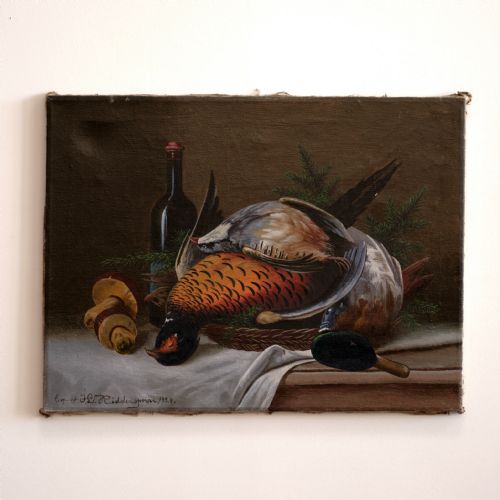
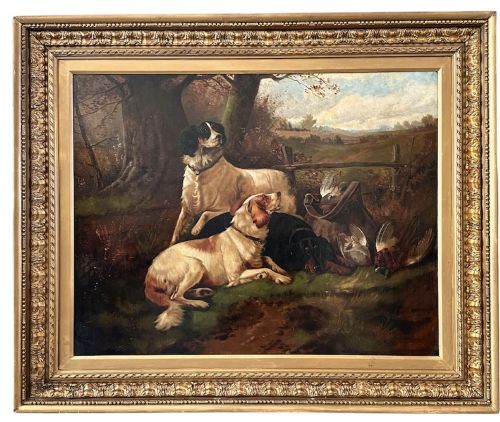
Hunting wall decor gathers pieces that celebrate equestrian pursuits, field sports and wildlife, created across the nineteenth and early twentieth centuries. A buyer exploring this selection encounters oil paintings, taxidermy mounts, framed prints and carved wooden panels originating from Victorian and Edwardian periods.
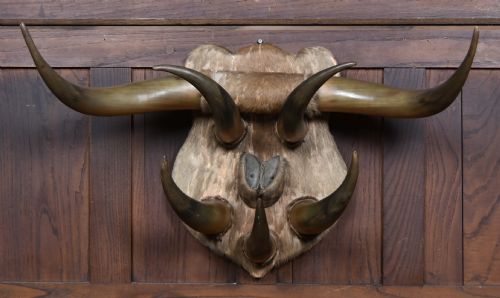
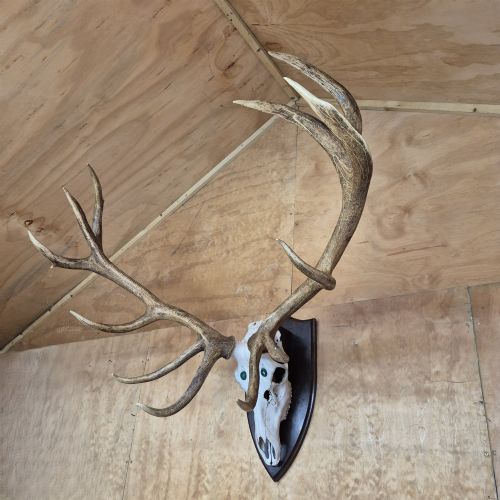
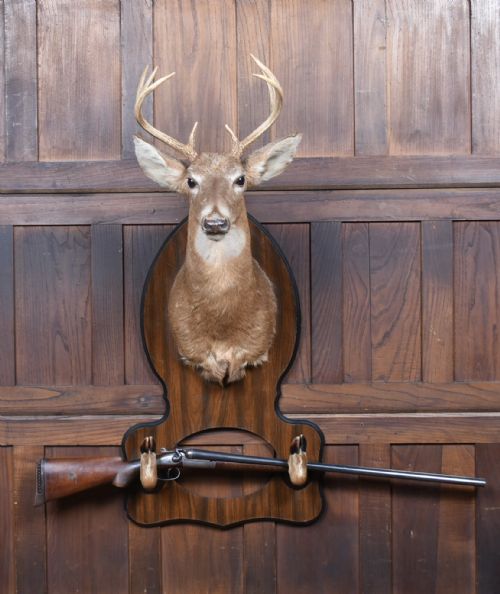
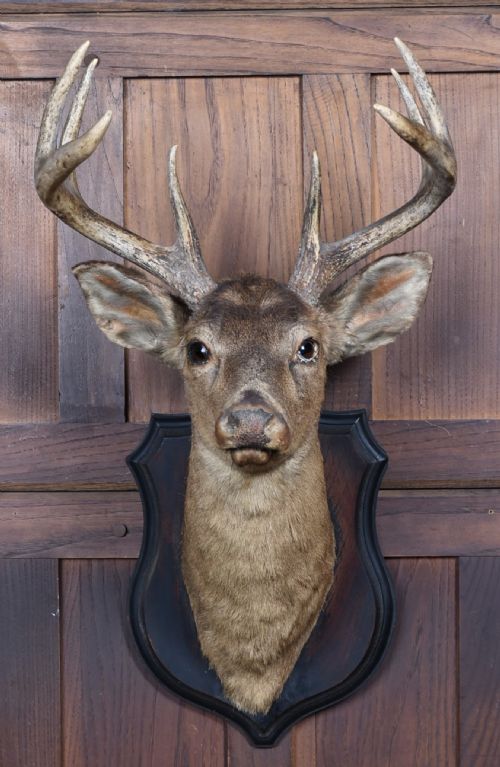
Oil paintings depicting hounds, huntsmen and gun dogs form a prominent part of the selection, alongside original prints by artists such as Charles Johnson Payne Snaffles. Taxidermy trophies, including stags' heads, deer mounts and antelope horns, provide three-dimensional focal points alongside flat art.
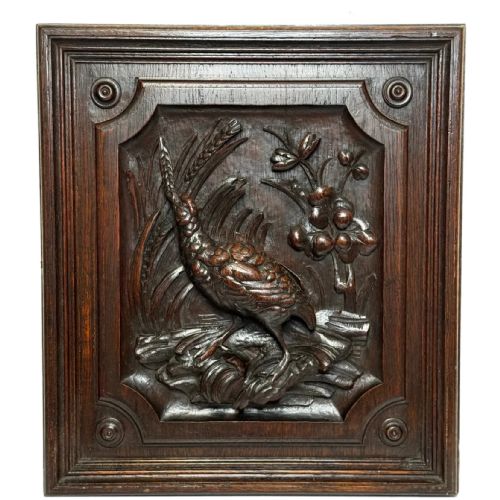
Carved oak panels, coaching horns and copper accessories complete the group, reflecting the material culture of the Highland lodge and the English country estate. These objects suit libraries, studies and hallways where traditional sporting aesthetics predominate.
Materials and construction
Makers utilised traditional natural materials, mounting taxidermy specimens on carved oak shields and fashioning horns into decorative arrangements. Canvases received oil paint applied by hand, whilst prints relied on paper and engravings utilised copper or steel plates.
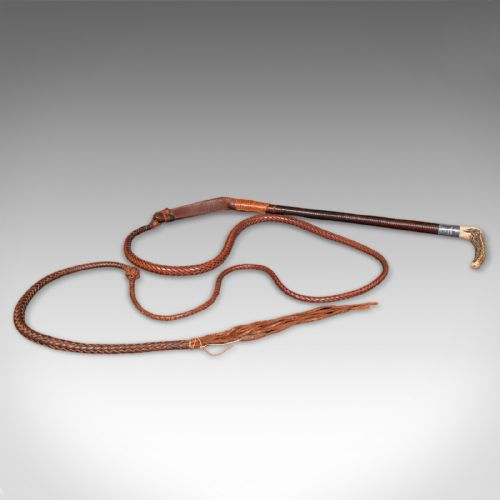
Woodworking craftsmanship appears in carved tiger oak panels and barometer surrounds executed in the Black Forest style. Metalwork involves brass and copper for coaching horns, alongside silver collars fitted to leather hunting whips.
Hunting Wall Decor Retail Price Guide 2026
Typical asking prices for hunting wall decor among the pieces listed under this phrase on Sellingantiques today, from the lower quarter to the upper quarter. They describe what is for sale here now, not the wider market.
Listings feature works from the eighteenth, nineteenth and early twentieth centuries, incorporating oil on canvas, paper prints, wood, bone, antler and brass.
Quality and execution
The standard of fine art depends upon the precision of brushwork and the anatomical accuracy of hounds, horses and quarry depicted by the artist. Signed works by established painters demonstrate superior draftsmanship compared to anonymous studio pieces.
Taxidermy mounts vary according to the preservation of the skin, the symmetry of the antlers or horns, and the skill involved in the original taxidermist's mounting technique. Carved wooden elements differ in depth of relief and the crispness of the foliage or animal motifs.
Peter Spicer and Sons·Swaine Adeney·Jennens and Bettridge
The Hunting Wall Decor Glossary
- Taxidermy mount
- The preserved skin of an animal fitted over a form, often displayed as a head or trophy on a wooden shield.
- Coaching horn
- A long brass or copper horn sounded by coachmen to signal arrival or clear the road, later utilised as wall decoration.
- Oil on canvas
- Pigments bound in drying oil applied to a stretched woven fabric support, prevalent in nineteenth-century sporting art.
- Black Forest style
- Carved wooden decorative objects originating from Central Europe, frequently featuring deeply carved foliage and animal subjects.
- Engraving
- A printmaking technique where an image is incised into a metal plate, producing fine lines on paper.
Hunting Wall Decor: Frequently Asked Questions
How do I hang heavy taxidermy mounts?
Heavy taxidermy mounts require secure fixing directly into wall studs or masonry using appropriate wall anchors. The weight distribution relies upon the wooden shield backing provided with the piece.
Ensuring structural support prevents damage to both the wall and the antique mounting board over time.
Are these oil paintings original?
The oil paintings listed are period originals created on canvas, ranging from early nineteenth-century works to later depictions of hunts and gun dogs. Each piece reflects the painting techniques and materials of its specific era.
Signatures and inscriptions on the canvas or stretcher frames often provide attribution to period artists.
How should I care for antique taxidermy?
Antique taxidermy benefits from placement away from direct sunlight and high moisture levels to protect hair and hide. Gentle dusting with a soft brush maintains the surface without disturbing the specimen.
Stable indoor temperatures help preserve the organic materials used in nineteenth-century mounting methods.
What periods do these pieces represent?
The selections span the nineteenth century through the Edwardian era and into the early twentieth century, including Victorian sporting art and Highland lodge decor. These periods reflect the height of traditional field sports and equestrian culture.
Stylistic markers such as carved oak framing and specific painting subjects help identify the exact era of each item.