






Hungarian Coffer
These Hungarian antique coffer pieces bring robust rural character to a room, offering practical storage with genuine folk art charm.
Hungarian Coffer
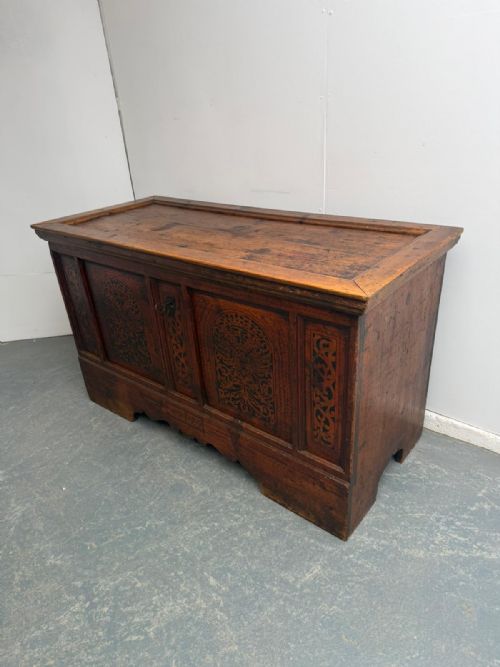
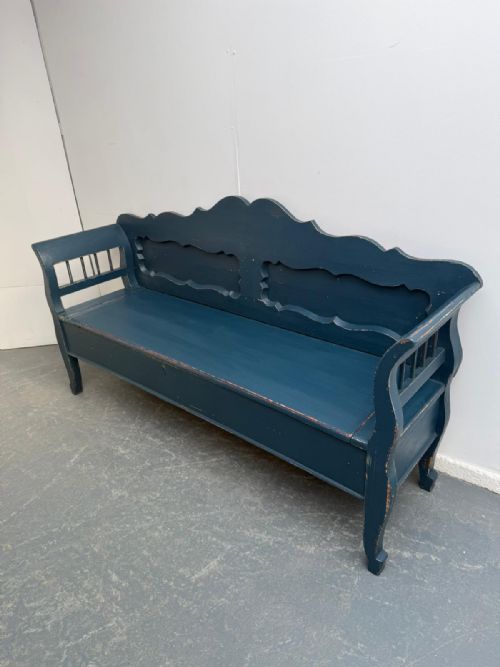
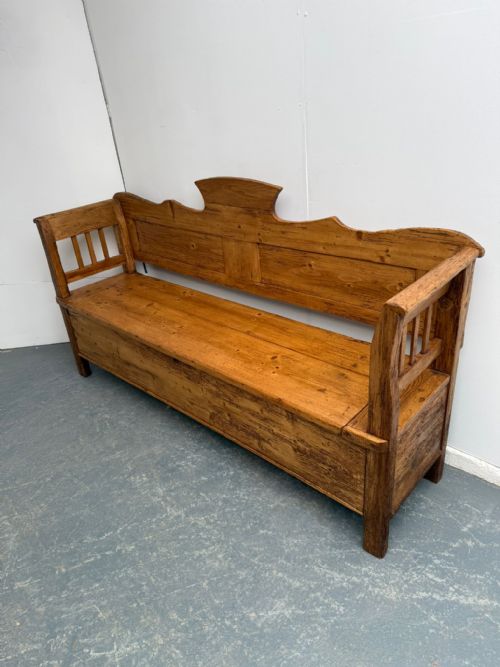
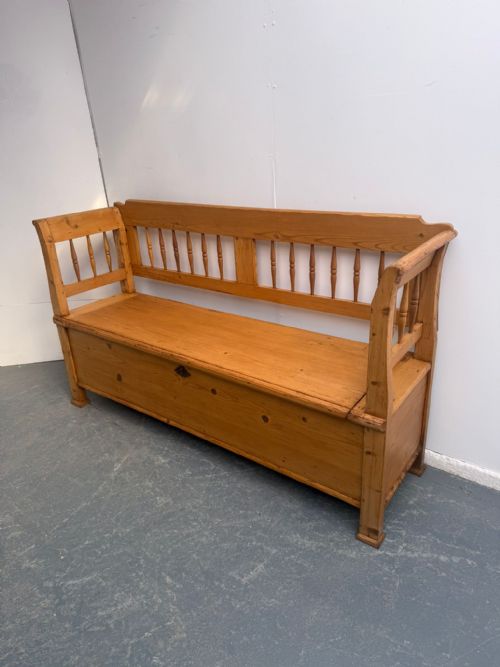
When you search for a Hungarian antique coffer, you are looking at substantial storage vessels and seating pieces originating from rural Hungary. These items encompass blanket boxes, trunks, mule chests, and settle benches constructed for everyday household utility.
The pieces on this page span several eras including the Georgian, Regency, and Victorian periods, alongside early twentieth-century examples from nineteen ten. You will most commonly encounter pine boxes finished in original paint or waxed surfaces, alongside multi-seater settle benches incorporating storage.
Forms vary from small painted boxes to massive coffer boxes and three-seater benches. Many feature traditional decoration such as floral motifs, or painted finishes in colours like blue, black, and teal.
Materials and construction
Construction relies primarily on solid pine timbers, selected for availability and durability in rural households. Master joiners utilised traditional panel and board assembly to build sturdy coffers and benches capable of heavy daily use.
Surface treatment defines much of the visual appeal, combining natural wax finishes with original layers of paint. Iron and brass hardware, alongside ceramic elements, provide functional hinges, locks, and structural reinforcement.
Hungarian Coffer Retail Price Guide 2026
Typical asking prices for hungarian coffer among the pieces listed under this phrase on Sellingantiques today, from the lower quarter to the upper quarter. They describe what is for sale here now, not the wider market.
Some small boxes hide floral secrets beneath their lids, proving that rural makers believed storage should bring a smile.
Judging quality in these pieces
Quality rests in the survival of original painted surfaces and authentic decorative details such as floral motifs or folk art designs. Pieces retaining their initial polychrome schemes stand apart from stripped or later repainted examples.
Structural integrity of the pine timber and original metal hardware dictates the standard of a coffer or bench. Well-preserved joinery and unaltered proportions distinguish the finest rural workshops from more basic utilitarian items.
The Hungarian Coffer Glossary
- Cofer
- A large chest used for storing valuables, linens, or clothing. These sturdy wooden boxes often feature hinged lids and painted decorations.
- Settle bench
- A wooden bench featuring a high back and enclosed storage beneath the seat. They were placed near hearths in traditional homes to block drafts.
- Mule chest
- A form of chest featuring one or more drawers beneath the main compartment. This design bridged the gap between basic blanket boxes and chests of drawers.
- Folk art
- Artistic work produced from an indigenous culture or peasant society. In these listings, it refers to the traditional hand-painted floral motifs and regional decorative styles.
- Waxed finish
- A protective treatment applied to timber using natural waxes. This method nourishes the pine while preserving its grain and historical patina.
Hungarian Coffer: Frequently Asked Questions
What is a Hungarian antique coffer used for?
These pieces function primarily as practical storage vessels for blankets, linens, and household goods. Many double as seating, particularly the settle benches designed for placement in living spaces.
Their robust construction makes them suitable for daily domestic use while adding rustic character to an interior. The flat lids also provide a convenient surface for display.
How do I identify a Georgian period piece?
Georgian items display construction traits and proportions characteristic of the eighteenth and early nineteenth centuries. The evidence shows these often take the form of substantial settle benches or large painted boxes.
Examine the timber and joinery for signs of age-appropriate wear and traditional hand-tool methods. Original painted surfaces from this era often show a distinctive craquelure and depth of patina.
Are these items made of solid pine?
The listings consistently point to pine as the primary timber utilised in these rural Hungarian works. Carpenters worked with softwood available locally to construct durable furniture for everyday domestic life.
This pine is frequently found either finished with a clear wax or covered in historical layers of paint. Metal hardware in iron and brass was added for structural reinforcement and hinges.
How do I care for a painted wooden coffer?
Preserve original painted surfaces by keeping the piece away from direct sunlight and excessive moisture. Dust gently with a dry cloth rather than using harsh chemical cleaning products.
Waxed pine surfaces benefit from occasional applications of traditional beeswax to nourish the wood. Avoid placing damp items directly onto the antique timber.