

Howard Style Club Armchair
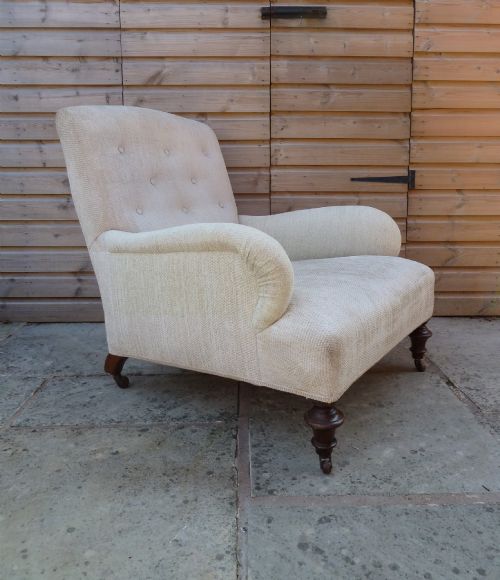
A howard style club armchair brings deep, sprung comfort and quintessential English country house character into a room.
Howard Style Club Armchair
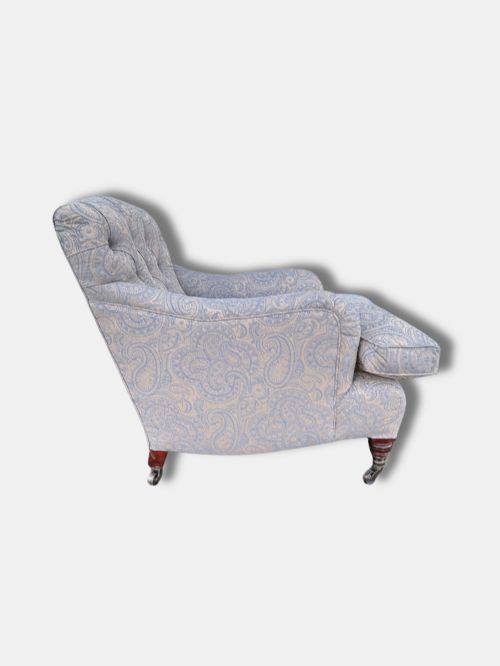
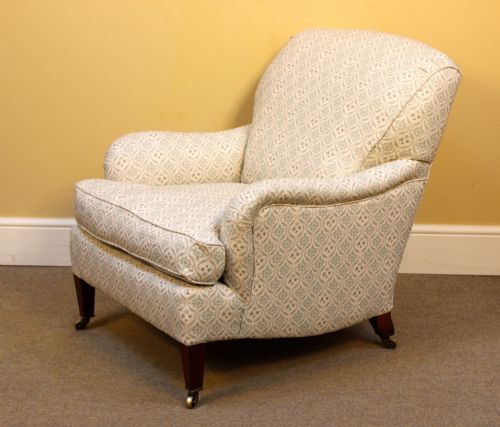
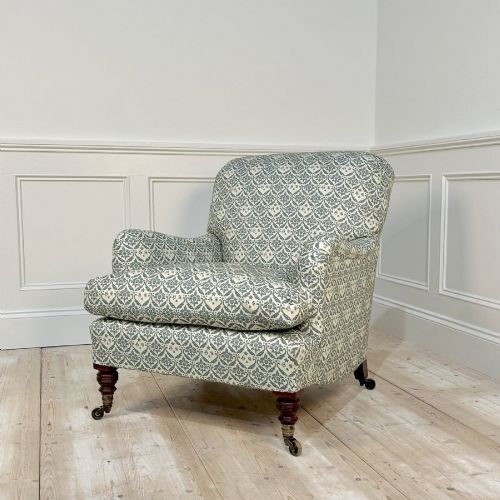
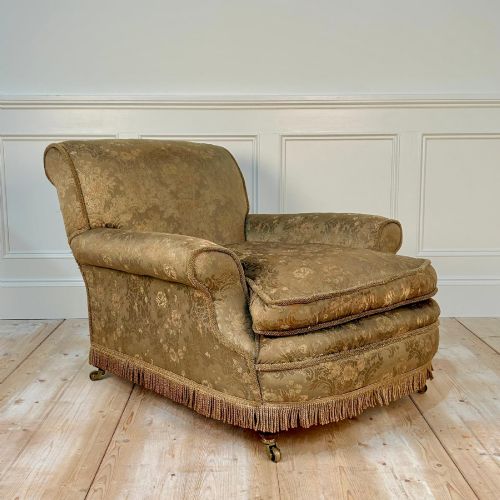
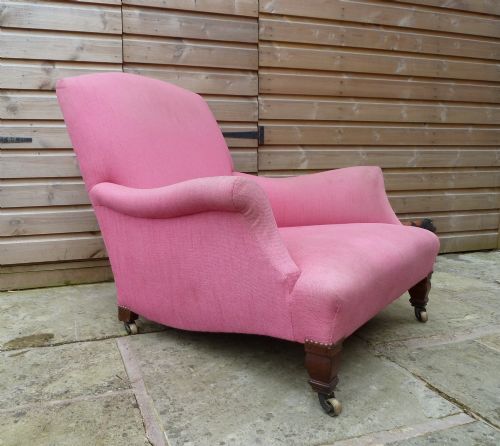
A howard style club armchair provides deep-seated proportions designed for relaxation, often associated with traditional English country houses. These seating pieces emerge predominantly from the nineteenth century and the Edwardian era, bearing low profiles and generous upholstered arms.
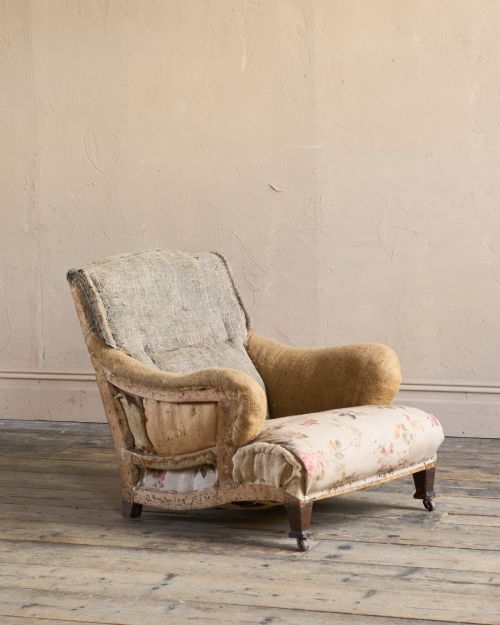
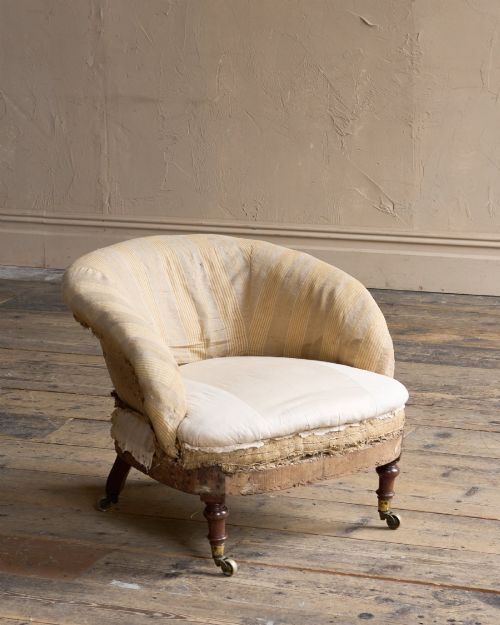
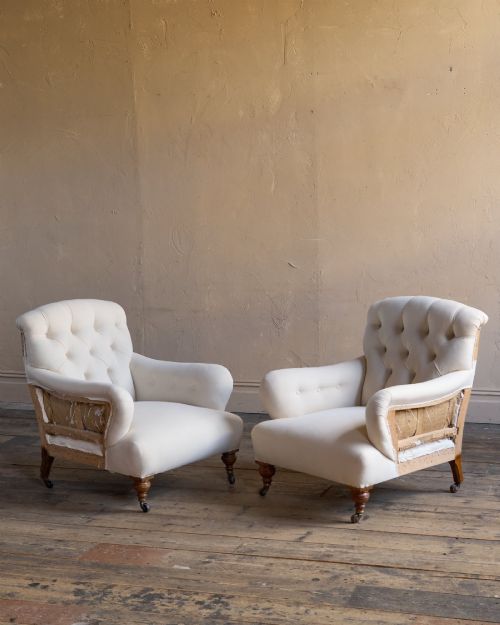
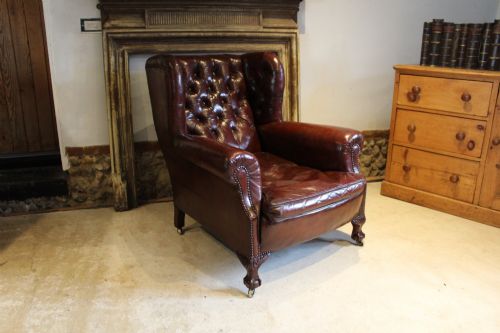
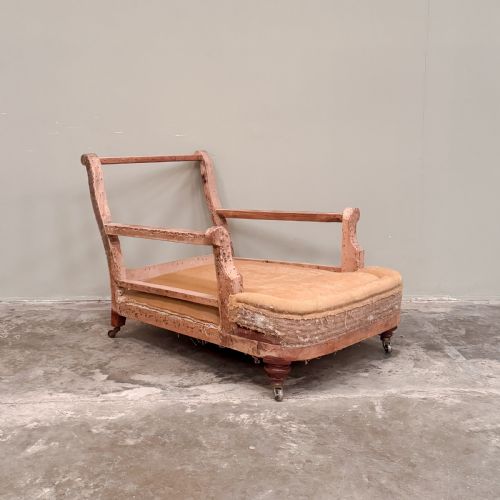
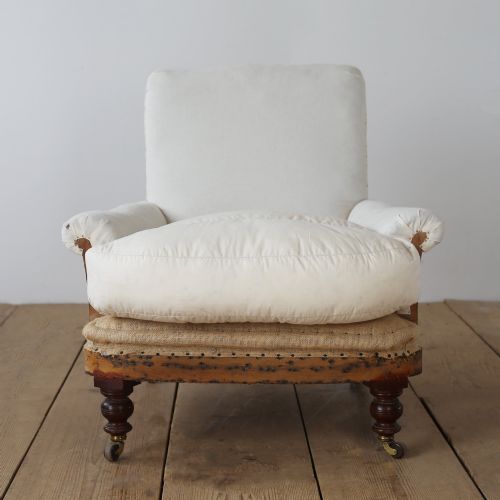
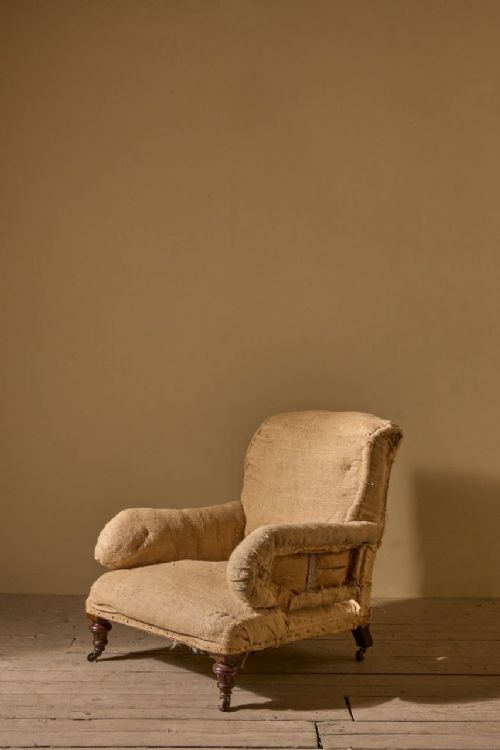
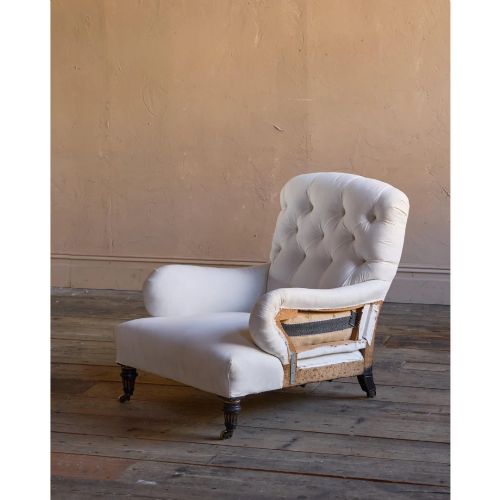
The selections available here range from open armchairs to large tub chairs and matched pairs. Many examples arrive covered in traditional calico, hessian, or ticking fabric, while others present richer finishes such as velvet or antique carpet upholstery.
Buyers frequently encounter pieces attributed directly to the nineteenth century or bearing the distinct aesthetic movement legs characteristic of the period. The overarching design prioritises uncompromised comfort alongside restrained, elegant lines.
Assessing Quality and Character
Quality in a howard style club armchair rests in the integrity of the original frame and the retention of deep, responsive sprung seating. Superior examples maintain their balanced proportions and firm support without excessive sagging in the arms or base.
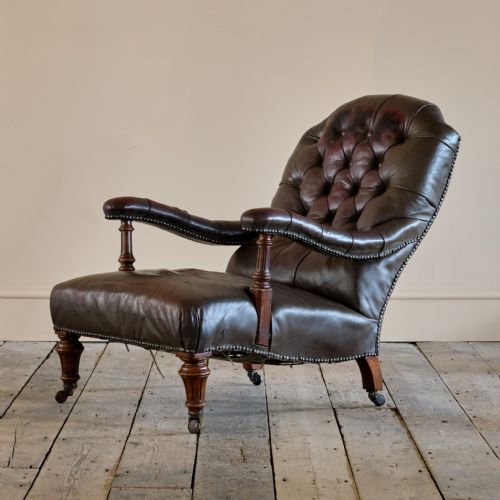
The refinement of the woodwork, from carved aesthetic movement legs to solid mahogany framing, distinguishes standard production from finer workshop output. Original upholstery treatments, such as traditional ticking or period carpets, further elevate the historical integrity of a piece.
Howard Style Club Armchair Retail Price Guide 2026
Typical asking prices for howard style club armchair among the pieces listed under this phrase on Sellingantiques today, from the lower quarter to the upper quarter. They describe what is for sale here now, not the wider market.
Listings feature woods including mahogany, walnut, and general hardwood, paired with traditional upholstery foundations like calico and hessian.
Howard and Sons·Trollope and Sons
The Howard Style Club Armchair Glossary
- Calico
- A plain-woven cotton fabric often utilised as the inner tight upholstery layer beneath decorative covers. It provides a durable foundation for the stuffing of traditional armchairs.
- Hessian
- A coarse woven fabric, typically made from jute fibres, used internally for webbing and shaping the sprung interiors. This material forms the hidden structural support beneath the exterior upholstery.
- Castor
- A small wheel fitted to the base of furniture legs to permit smooth rolling across floors. Brass fittings frequently appear on nineteenth-century club armchairs.
- Aesthetic Movement
- A late nineteenth-century design style emphasising visual beauty over narrative subject matter. Furniture from this movement often incorporates distinct leg turning and refined structural details.
- Tub Chair
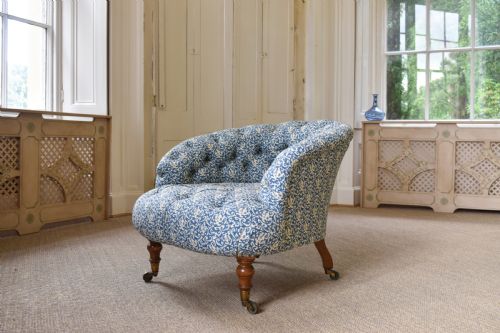
- An upholstered seating form featuring a rounded back that curves continuously into low arms. This compact style offers an enveloping seat within a smaller footprint.
Howard Style Club Armchair: Frequently Asked Questions
What defines a howard style club armchair?
These armchairs are defined by deep sprung seats, low profiles, and generous upholstered arms designed for comfort. They typically date from the nineteenth century or the Edwardian period.
Their proportions make them a cornerstone of English country house interior decoration.
Are these chairs comfortable for daily use?
Yes, the original intention behind the deep-seated design was uncompromising relaxation. The internal coil springing provides a resilient yet yielding seat.
They function exceptionally well as primary lounging seats in a living space.
What fabrics do these armchairs usually feature?
Many examples appear in traditional utilitarian textiles like ticking, calico, or hessian. Others feature velvet or decorative woven carpets.
These varied outer coverings reflect both original maker choices and subsequent reupholstering over the decades.
How do I identify a nineteenth-century piece?
Nineteenth-century examples frequently show specific wood choices like mahogany and walnut alongside hand-turned legs with brass castors. The weight and construction methods of the internal frame also point to this era.
Stylistic markers such as aesthetic movement legs help narrow down the period.