




Hotel Luggage Stand Oak
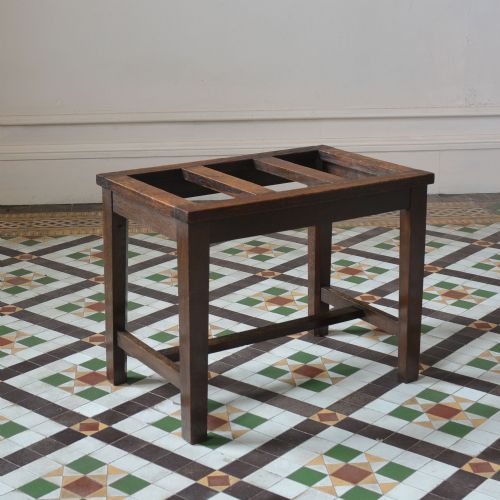
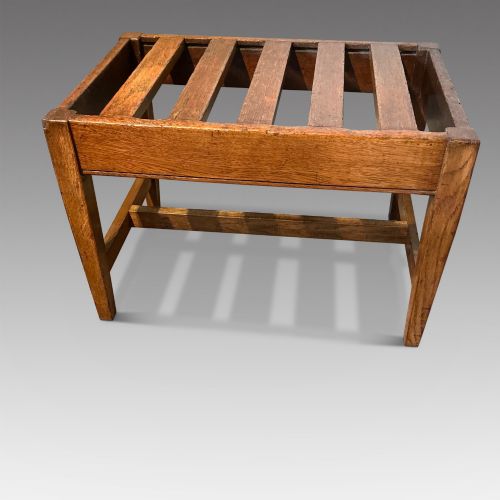
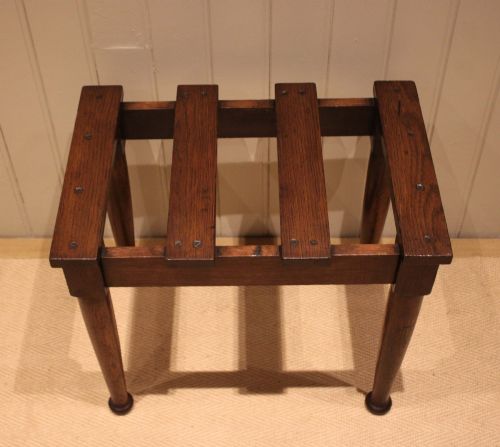
Hotel luggage stand oak pieces are sturdy folding racks that bring practical vintage utility and character to a bedroom or guest room.
Hotel Luggage Stand Oak
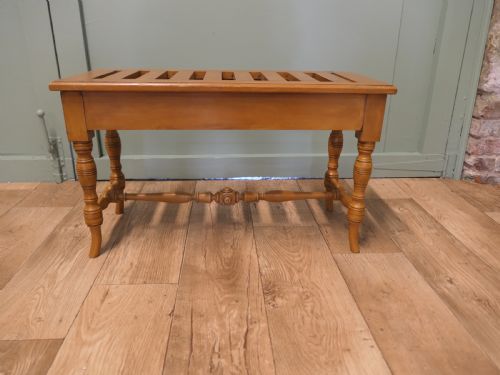
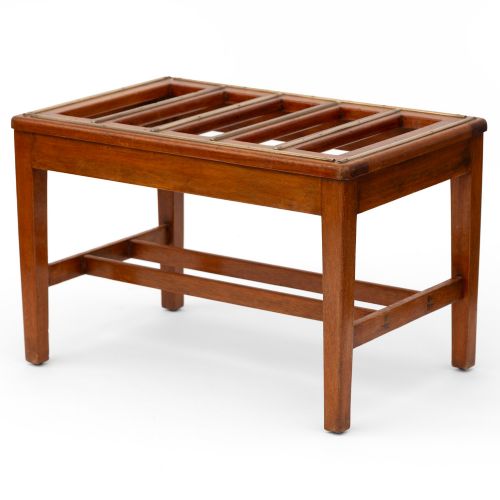
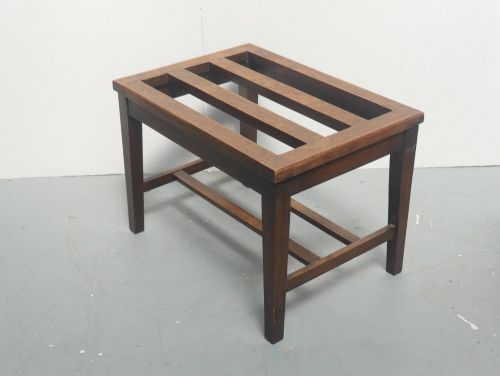
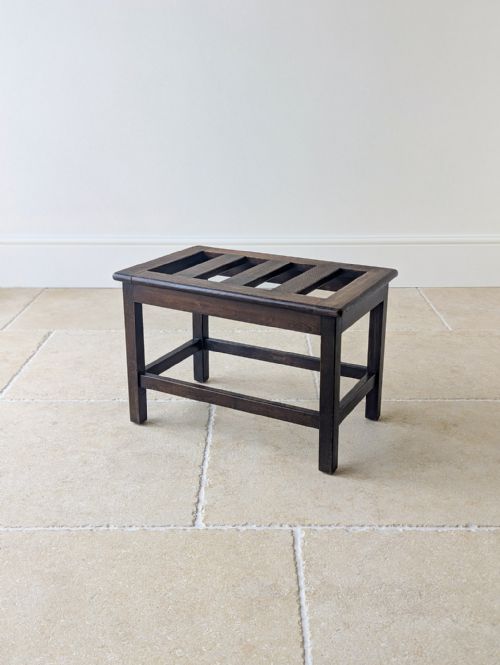
A hotel luggage stand oak piece serves as a raised platform for bags, keeping guest belongings off the floor in domestic and commercial spaces alike. These items appear across the Edwardian period, nineteen-ten, nineteen-twenty, nineteen hundred, and the nineteenth century, reflecting robust utilitarian design from the past.
Most examples found on this page belong to the Edwardian era, showing straightforward construction intended for frequent handling in hotels and country houses. The forms vary between luggage racks and luggage stands, incorporating solid or polished timber.
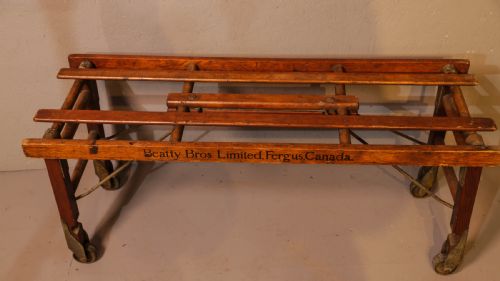
Originating from British workshops and international makers such as Beatty Bros Fergus Canada, these stands display regional variations in framing and slat arrangement. The prevailing style is predominantly Edwardian, alongside industrial and English country house interpretations.
How they were made
Construction relies heavily on solid oak and general wood, shaped to form rigid frames capable of supporting heavy suitcases. Metal elements such as iron and brass appear in hinges, braces, and folding mechanisms that allow the stands to collapse flat when not in use.
Surface finishes include polished treatments that highlight the natural grain of the timber, alongside carved detailing seen on specific Edwardian examples. Joinery techniques prioritize durability to withstand the demanding environment of guest accommodation.
Hotel Luggage Stand Oak Retail Price Guide 2026
Typical asking prices for hotel luggage stand oak among the pieces listed under this phrase on Sellingantiques today, from the lower quarter to the upper quarter. They describe what is for sale here now, not the wider market.
The object forms include luggage stands and racks reflecting Edwardian, industrial, and English country house styles.
What varies in quality
Quality in a hotel luggage stand oak piece depends on the weight and selection of the timber, with denser solid oak commanding greater appreciation than lighter secondary woods. The presence of maker attribution, such as Waring & Gillow, elevates the standing of a piece.
Finer examples demonstrate crisp carving, intact brass or iron hardware, and smooth folding action that reflects superior workshop execution. Simpler utility models focus strictly on functional robustness rather than decorative enrichment.
Beatty Bros Fergus Canada·Waring & Gillow
The Hotel Luggage Stand Oak Glossary
- Edwardian
- Pertaining to the reign of King Edward VII, spanning nineteen hundred to nineteen-ten, characterised by lighter and less ornate furniture than Victorian styles. This period produced many of the folding luggage racks seen today.
- Luggage stand
- A low wooden frame designed to hold a trunk or suitcase at a convenient height for packing. These stands often feature folding legs for easy storage.
- Waring & Gillow
- A notable British cabinet-making and furnishing firm formed by the merger of Waring of Liverpool and Gillow of Lancaster. Pieces bearing their mark reflect established commercial craftsmanship.
- Beatty Bros Fergus Canada
- A Canadian manufacturing enterprise known for producing agricultural equipment and utility hardware. Their stamping on a wooden rack indicates transatlantic commercial distribution.
Hotel Luggage Stand Oak: Frequently Asked Questions
What is an oak hotel luggage stand used for?
These stands provide an elevated surface for guests to rest their suitcases, making unpacking straightforward without bending down to the floor. They were standard fixtures in hospitality settings and large private residences.
Today, they serve a similar function in domestic guest bedrooms while adding a distinct historical aesthetic to the interior scheme.
How do I date an Edwardian oak luggage rack?
Dating relies on stylistic markers associated with the early twentieth century, such as lighter framing timber and specific brass or iron hardware configurations. Reference to the Edwardian period places the manufacture around nineteen hundred to nineteen-ten.
Maker stamps or retailer labels, when present, offer further verification of the production era.
Are these luggage stands collapsible?
Most examples incorporate folding mechanisms constructed from wood, iron, or brass that allow the frame to fold flat. This design facilitated easy storage by staff when rooms were not occupied by guests.
Buyers should examine the hinges and side braces to understand how the particular folding action operates.
What materials are used in these luggage stands?
Construction primarily utilises solid oak and general wood for the structural frames and slats. Metal components in brass and iron are integrated to provide pivot points, folding braces, and corner reinforcements.
Surface treatments range from natural polished oak to carved decorative surfaces on refined Edwardian models.