



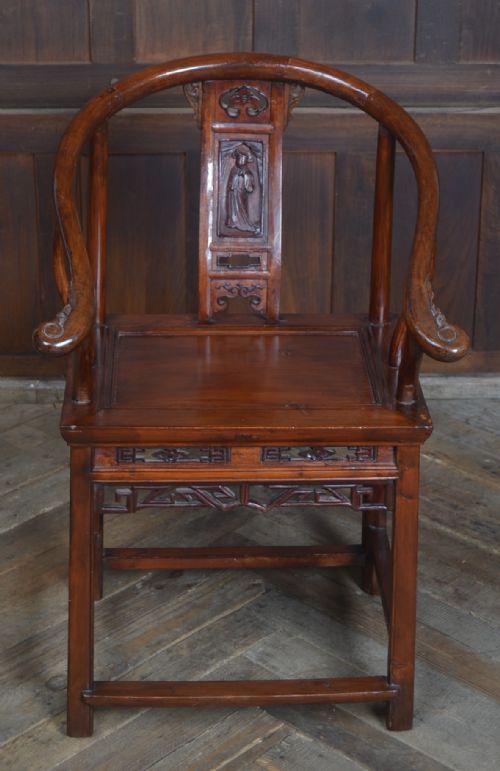


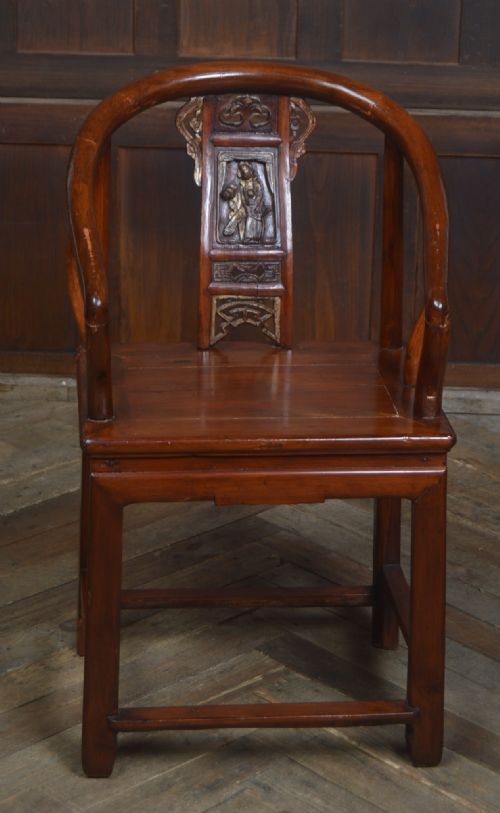
Horseshoe Back Desk Chair
These horseshoe back desk chair examples offer solid timber construction and curved support, combining traditional seating design with practicality for modern studies.
Horseshoe Back Desk Chair
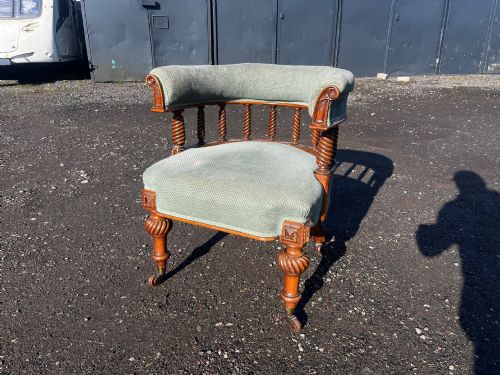
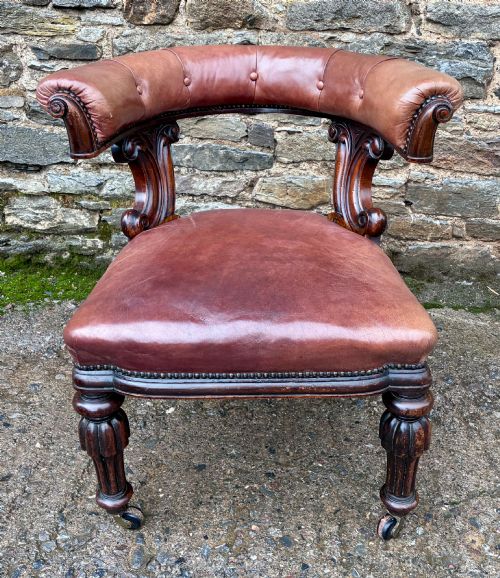
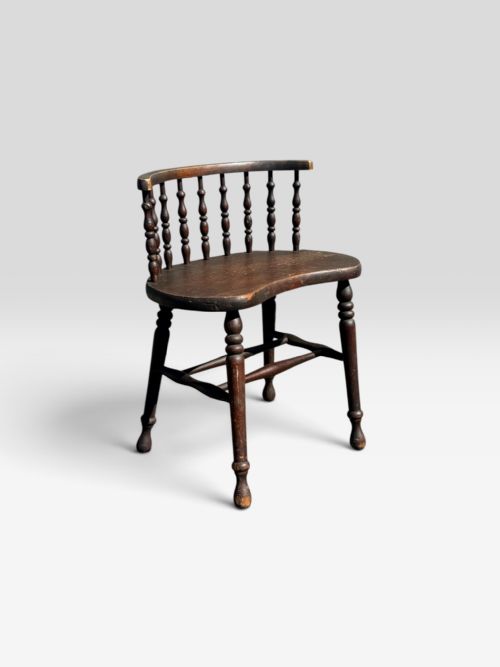
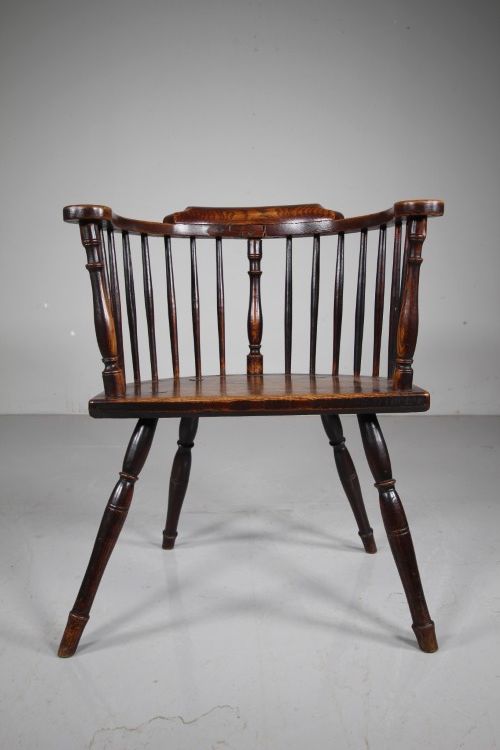
A horseshoe back desk chair provides a distinctive curved rail that sweeps around the upper body to offer continuous arm and back support. These pieces draw on 18th Century, Victorian, and Edwardian traditions, appearing in forms such as captain chairs, library seats, and corner chairs.
Makers shaped these seats in regional English country styles as well as Chinese lacquer and bamboo designs. The domestic versions often utilise robust timbers like elm and oak, while library and gaming pieces favour polished mahogany and walnut.
The layout of these listings shows a strong representation of nineteenth-century seating alongside earlier country craftsmanship. Buyers frequently encounter buttoned leather pads or cane panels set within the flowing wooden frame.
How they were made
Joiners constructed the characteristic curved backrests of a horseshoe back desk chair by steaming and bending solid timber such as elm, ash, or mahogany. This technique required precise tension to achieve the continuous semi-circular sweep without splitting the grain.
Cushions and seats incorporated traditional upholstery methods, securing horsehair and padding beneath leather hides or canework panels. Brass tacks and turned wooden spindles frequently reinforced the structural joints beneath the writing surface.
Horseshoe Back Desk Chair Retail Price Guide 2026
Typical asking prices for horseshoe back desk chair among the pieces listed under this phrase on Sellingantiques today, from the lower quarter to the upper quarter. They describe what is for sale here now, not the wider market.
Current listings feature materials ranging from elm and oak to lacquered bamboo and brass-detailed mahogany.
What varies in quality
The integrity of the curved wooden joint at the rear forms a primary indicator of quality in a horseshoe back desk chair. Fine examples maintain tight, seamless connections where the armrail meets the central uprights.
Surface finish and material selection distinguish standard utility seating from high-status library and gaming chairs. Richly figured walnut and mahogany display deeper patination than simpler elm or beech country variants.
The Horseshoe Back Desk Chair Glossary
- Captains Chair
- A sturdy wooden seat featuring a low curved backrest designed to fit beneath a desk. These typically stand on four turned legs with simple spindles supporting the arm rail.
- Cockfighting Chair
- A specialised low seating form featuring a padded upper rest designed for forward-leaning tasks. They often incorporate leather upholstery and compact dimensions.
- Canework
- Woven rattan or split cane used to form breathable panels within chair seats and backs. This technique lightened the visual weight of nineteenth-century seating.
- Patina
- The surface sheen and softening of colour developed through decades of handling and polishing. Natural wax buildup enhances the grain of period hardwoods.
Horseshoe Back Desk Chair: Frequently Asked Questions
How do I date a desk chair?
Dating relies upon examining the timber species, joinery methods, and the style of the turnings on the legs and spindles. Eighteenth-century pieces often show simpler country construction in elm.
Victorian and Edwardian examples introduce machine-sawn components, darker polished finishes, and more elaborate upholstery techniques such as buttoned leather pads.
Are these chairs comfortable for daily work?
Many of these seating options were built for long hours at a desk, library table, or gaming board. The curved back rail offers natural lumbar support.
Upholstered variants provide additional padding through leather or horsehair stuffing, though buyers should note that nineteenth-century proportions tend to be lower than modern office seating.
What woods were used for these chairs?
Cabinetmakers selected dense hardwoods that could withstand the stress of steam-bending and daily use. Elm and oak appear frequently in regional country pieces.
More formal library and gaming chairs utilise mahogany and walnut, occasionally accented with brass hardware, lacquered finishes, or bamboo framing.