





Horse Racing Painting
A horse racing painting brings the speed and spectacle of the turf straight onto the wall in oil, watercolour, or print.
Horse Racing Painting
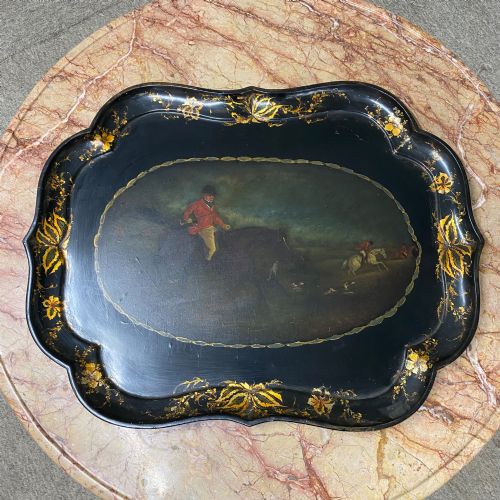
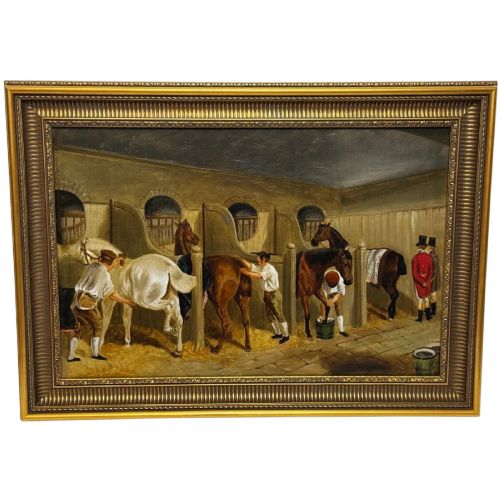
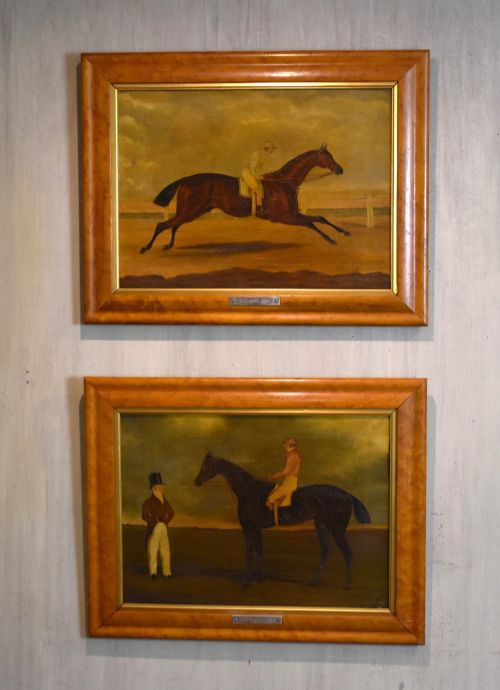
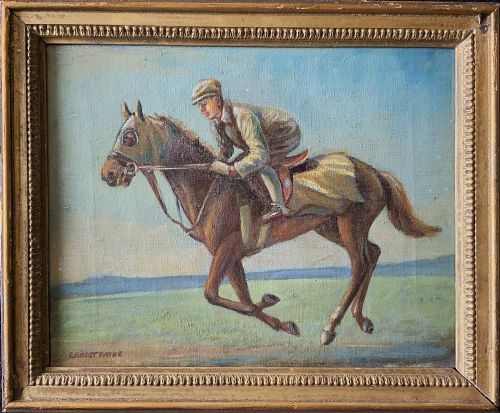
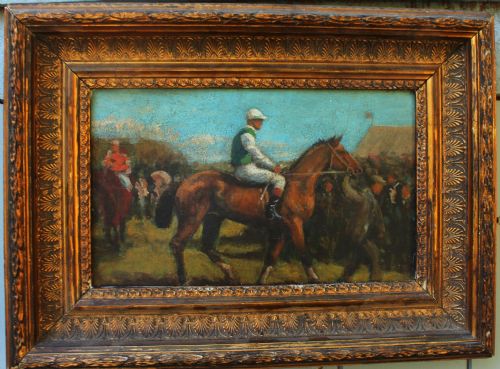
A horse racing painting captures the movement and atmosphere of the track, from Victorian portraits of named winners to mid-century paddock scenes. These works record legendary mounts, jockeys in specific racing silks, and famous courses like Newmarket, Kempton Park, and Longchamp. Buyers will encounter oil on canvas, gouache, watercolours, and painted prints framed in wood and gilt.
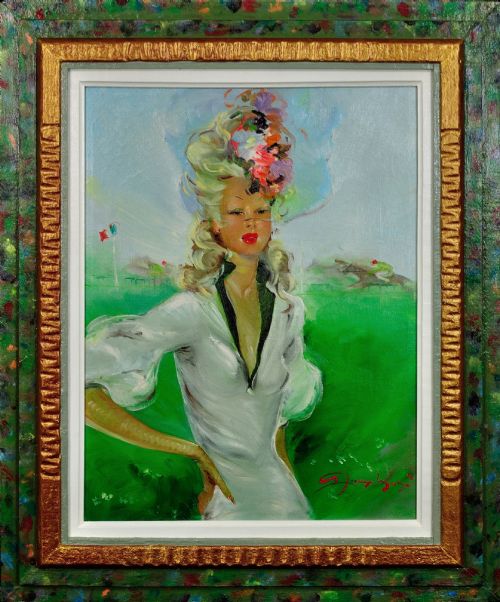
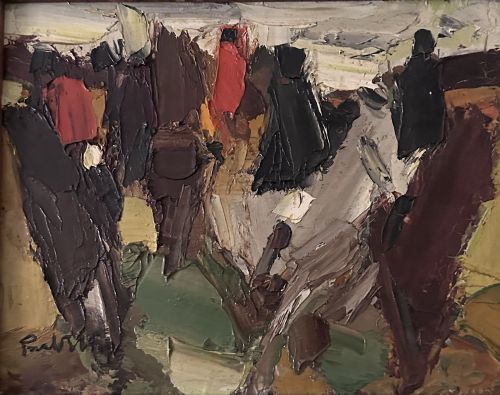
The pieces on this page span the nineteenth century through to the 1960s, showing shifts from Victorian sporting realism to British impressionism and French expressionism. Works range from intimate studies of a single horse and jockey up to bustling race day panoramas and dramatic steeplechase moments.
How they were made
Artists built these works using oil paint on canvas or board, alongside watercolours and gouache on paper, often finished with reverse glass techniques. Canvases are frequently housed in period wooden frames, some with gilt decoration that highlights the sporting subject matter.
Techniques vary from detailed realist studies focusing on the anatomy of the racehorse and the colours of the owner's silks to looser, expressive brushwork that prioritises the dynamic energy of the field in motion.
Horse Racing Painting Retail Price Guide 2026
Typical asking prices for horse racing painting among the pieces listed under this phrase on Sellingantiques today, from the lower quarter to the upper quarter. They describe what is for sale here now, not the wider market.
Several works meticulously record the names of the horses, owners, and jockeys, ensuring immortality for winners like Master Walter.
What varies in quality
Quality rests on the sureness of the draftsmanship in rendering equine anatomy, the dexterity of the brushwork, and the specific historical documentation of the horse, jockey, or course. Stronger pieces convey genuine kinetic energy and tension rather than a static profile of an animal.
The integrity of the framing, the preservation of the original paint surface or paper, and the attribution to a listed artist or a known follower elevate certain examples above standard decorative prints and lesser studio studies.
Ernest Payne·John Rattenbury Skeaping·Gabriel Dauchot·Alfred Wheeler·Charles Clifford Turner·John Atkinson·Isaac Cullin·Charles Johnson Payne Snaffles·Walter Herbert Wheeler·John Parker Davis·Frank Giggs
The Horse Racing Painting Glossary
- Gouache
- An opaque watercolour paint that dries to a matte finish, often used for detailed studies on paper. It allows artists to build rich, saturated fields of colour.
- Reverse glass painting
- An intricate technique where the image is painted directly onto the back of a glass panel to be viewed from the front. This method imparts a distinct glossy depth to the silhouette.
- Victorian sporting
- A nineteenth-century genre dedicated to field sports, horse racing, and hunting. These works prize accurate portraiture of prized animals and their handlers.
- Impressionism
- A style focused on capturing light and momentary action rather than microscopic detail. In racing scenes, it translates to fluid brushstrokes that evoke the rush of the crowd and horses.
Horse Racing Painting: Frequently Asked Questions
How do I identify the jockey's colours?
Jockeys wear distinctive jackets and caps known as racing silks, which represent the horse's owner. Many period paintings record the exact owner and course in the title or inscription.
Matching these details to racing archives helps confirm the specific event and historical context of the race.
What is the difference between an oil painting and a reverse glass painting?
An oil painting uses pigment suspended in drying oil applied to stretched canvas or wooden panels, offering textured brushwork and depth. A reverse glass painting applies paint to the rear of a glass sheet, creating a flat, luminous surface.
Both techniques appear across nineteenth-century sporting art but yield entirely different visual textures.
Are these works all British?
While many pieces document British courses and artists, the selection includes international perspectives such as French expressionist views of Longchamp and American works. Regional styles vary from Victorian realism to mid-century continental movements.
Checking the artist's background reveals where the work was created.
How should I frame and hang a vintage racing painting?
Many of these works retain their original wood and gilt frames, which complement the subject matter. Hang them away from direct sunlight to protect watercolours, paper prints, and oil pigments from fading over time.
Ensure proper wall fixings are used, as framed canvases and glass pieces can be surprisingly heavy.