



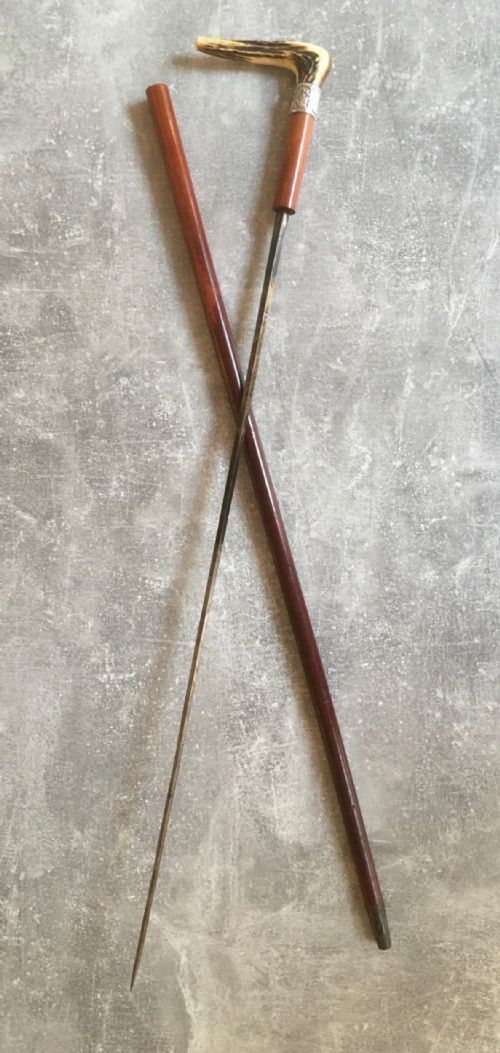


Horn Walking Stick
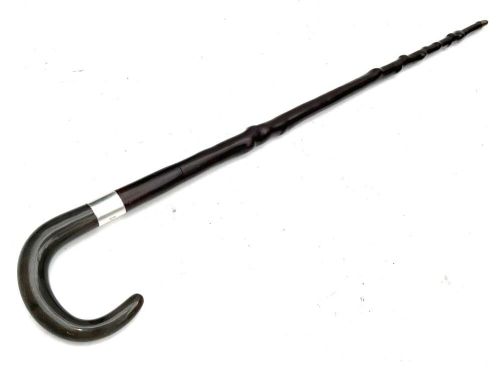
When you search for a horn walking stick, you find a practical support piece featuring natural horn handled sections, often housing hidden blades.
Horn Walking Stick
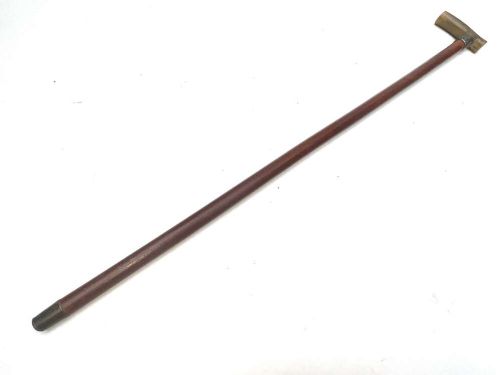
A horn walking stick serves as a traditional support implement combining organic horn sections with shafts fashioned from wood, malacca cane, or bamboo. These items appear across the nineteenth century and into the Edwardian era, reflecting both utilitarian purposes and distinct periods of design.
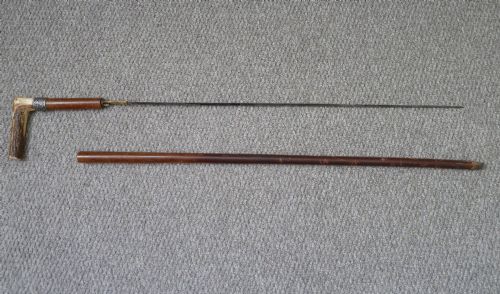
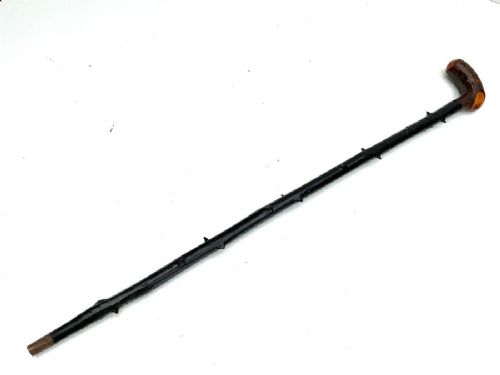
The most common version on this page pairs a shaped horn handle with a malacca cane, thorn wood, or rosewood shaft, frequently detailed with silver collars or mounts. Many pieces integrate hidden functional elements such as sword blades, corkscrews, or musical flutes within the shaft construction.
Makers utilised various horn types alongside antler and bone, creating carved handles shaped as animals, dogs, rabbits, or horses alongside simple domed pommels. Styles range from Victorian folk art and traditional Irish blackthorn variants to Meiji period Japanese carvings and maritime pieces.
How they were made
Craftsmen shaped natural horn and antler through heating and pressure techniques to form curved handles and domed pommels, securing them to shafts using metal pins or collars. Silver mounts and gold-coloured collars frequently reinforce the join between the handle and the wooden body.
Shafts rely on materials like malacca cane, thorn wood, rosewood, and ebony, selected for straightness and strength. Sword sticks conceal etched Toledo blades or double-edged steel blades inside the wooden shaft, accessed via button releases or screw threads.
Horn Walking Stick Retail Price Guide 2026
Typical asking prices for horn walking stick among the pieces listed under this phrase on Sellingantiques today, from the lower quarter to the upper quarter. They describe what is for sale here now, not the wider market.
Materials recorded here include horn, malacca cane, shark vertebrae, whalebone, and silver.
What varies in quality
Quality rests in the precision of the carving on the horn handle and the integration of concealed mechanisms. Finer examples display detailed animal forms or crisp engraving on silver collars bearing hallmarks.
The balance of the stick and the material choice for the shaft dictate overall standard, with dense malacca cane or rosewood representing superior production compared to basic ebonised wood. Mechanism smoothness in sword sticks and hidden corkscrews further separates standard pieces from exceptional ones.
Brigg·Jonathan Howell·Crook
The Horn Walking Stick Glossary
- Pommel
- The rounded or decorative handle at the top of a walking stick. This part rests in the palm of the hand during use.
- Sword stick
- A cane featuring a concealed blade housed inside the wooden shaft. A button release or screw mechanism secures the blade until needed.
- Malacca cane
- A durable rattan stem originating from Southeast Asia, prized for its mottled brown surface and flexibility. Makers frequently paired this material with horn handles.
- Blackthorn
- A dense Irish wood utilised for walking sticks, noted for its knobbly texture and dark bark. Traditional versions often incorporate hidden blades.
- Collar
- A metal band encircling the shaft just below the handle. These rings often bear silver hallmarks or personal initials.
Horn Walking Stick: Frequently Asked Questions
How do you use a sword stick?
A sword stick operates as a standard walking aid while housing a steel blade secured inside the hollow shaft. A button release or threaded mechanism holds the handle and blade firmly in place until unlatched.
Owners typically twist or press the release to withdraw the concealed Toledo blade from the wooden casing.
How do you date an antique cane?
Dating relies on examining silver hallmarks, maker stamps, materials, and stylistic cues present on the handle and collar. London and Birmingham silver assay marks provide specific year letters and town indicators.
Materials like malacca cane, tortoiseshell, and specific carving styles help narrow down the period of manufacture to the Victorian or Edwardian eras.
How do you care for horn handles?
Horn handles require occasional treatment with natural oils or specialist waxes to prevent the organic material from drying out or splitting. Keeping the stick away from extreme temperature shifts protects both the horn and any wooden shaft components.
Gentle dusting and dry storage ensure the silver mounts and steel blades remain free from tarnish and moisture damage.