



Historical Embroidery Art
Historical embroidery art brings needlework samplers and framed textile pieces from past centuries directly onto the wall.
Historical Embroidery Art
When you search for historical embroidery art, you encounter framed textile pieces, needlework pictures, and samplers created across several centuries. These works range from intricate silk and metal thread panels to wool work tapestries and dated childhood samplers.
You are most likely to meet Victorian and 19th-century needlework samplers on this page, alongside earlier 18th-century framed panels and continental textile works. These items often preserve specific dates, maker names, or commemorative scenes within their original frames.
The assortment includes English horse racing depictions, Scottish mourning scenes, French historical subjects like Napoleon, and Dutch silk embroidery. Each wall art piece functions as a preserved fragment of domestic needlework history.
How they were made
These works utilise base fabrics such as linen, canvas, and wool, providing the foundation for intricate needlework. Silk and metal threads frequently appear in the earlier panels, adding contrast and reflective detail to the stitched surface.
Makers stitched these designs using various embroidery techniques, mounting the finished textiles onto wooden or giltwood frames protected by glass. Gilded wood frames give many of these Victorian and 18th-century wall hangings a distinct architectural border.
Historical Embroidery Art Retail Price Guide 2026
Typical asking prices for historical embroidery art among the pieces listed under this phrase on Sellingantiques today, from the lower quarter to the upper quarter. They describe what is for sale here now, not the wider market.
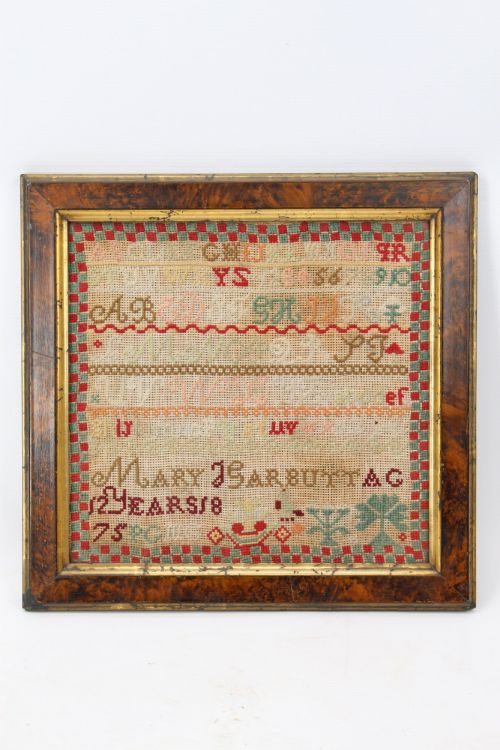
Mary J Garbutt stitched her name and age at twelve years old, leaving a permanent record in thread from 1875.
What varies in quality
The sophistication of the needlework and the complexity of the pictorial subject matter define the upper tier of these pieces. Works depicting detailed historical events or specific topographical scenes demand greater technical skill than standard practice samplers.
The preservation of the textile and the original framing materials also influence the character of the piece. Intact silk threads, stable canvas foundations, and period giltwood frames maintain the visual integrity of the historic artwork.
The Historical Embroidery Art Glossary
- Sampler
- A piece of needlework produced as a demonstration or test of skill in various stitches. These often feature alphabets, numerals, and decorative motifs alongside the maker's name and date.
- Needlepoint
- A type of canvas work embroidery where yarn is stitched through a stiff open-weave canvas. This technique covers the entire ground to create a dense, durable picture.
- Metal thread
- Flat or wound metal wires, often silver or gilt, used in embroidery for rich decorative effects. They appear in select historical panels to highlight specific details.
- Giltwood
- Wood carved and then covered with a thin layer of gold leaf or gilt paint. This finish frequently surrounds Victorian and 18th-century framed textile art.
Historical Embroidery Art: Frequently Asked Questions
What is historical embroidery art?
Historical embroidery art comprises stitched textile pictures, samplers, and framed wall art created during past centuries.
These pieces use materials like silk, wool, and metal thread on linen or canvas grounds.
How were needlework samplers used?
Needlework samplers served as practical exercises for young makers to practice lettering, numbers, and various stitches.
Once completed, these textiles were often framed and hung in homes as decorative records of skill and lineage.
How should I hang framed textiles?
Framed textiles require placement away from direct sunlight to prevent the fading of wool and silk threads.
Glass protection helps shield the delicate fabrics from dust and atmospheric moisture in the room.
How do I identify the period?
Periods are often identified through stitched dates, names, stylistic conventions, and framing materials.
Victorian and Georgian pieces frequently display distinct lettering styles, subjects, and framing techniques typical of their eras.