


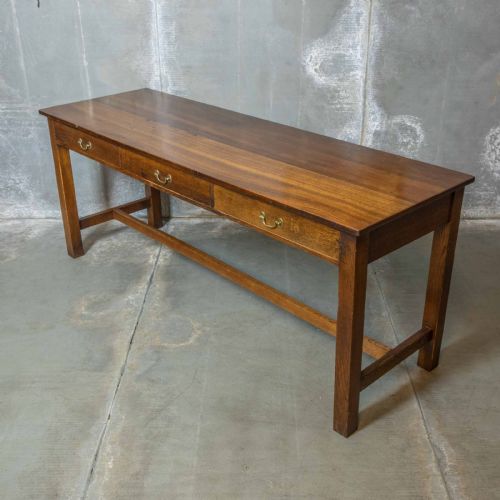


Historic Wooden Table
A historic wooden table carries the marks of centuries, offering robust oak, warm walnut, and time-worn boards that anchor a room with enduring character.
Historic Wooden Table
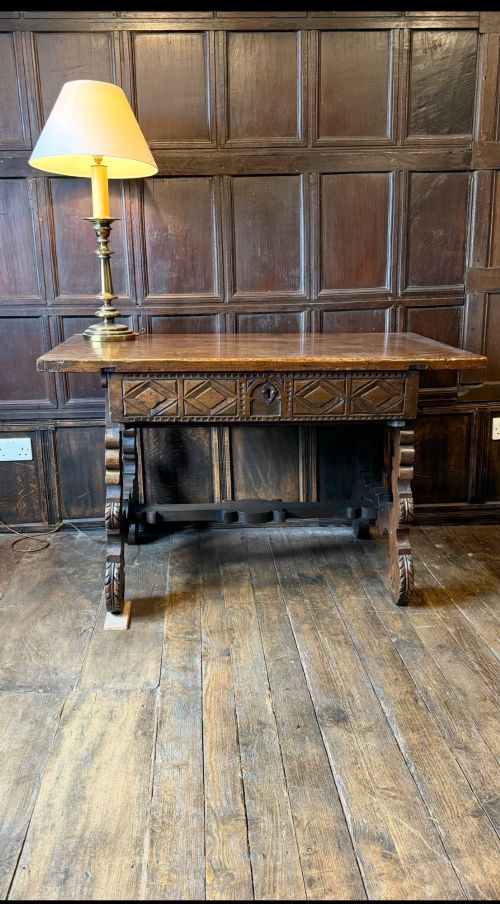
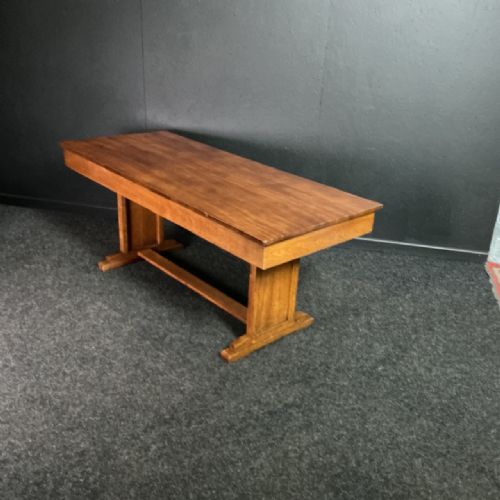
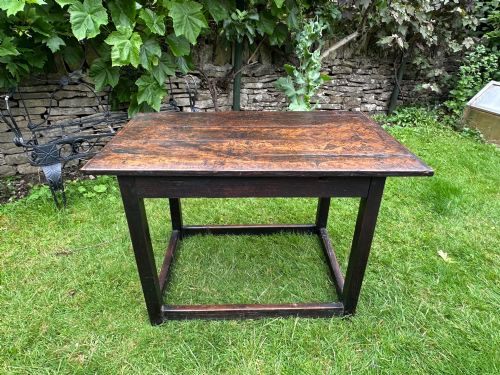
When you search for a historic wooden table, you encounter substantial furniture built from oak and walnut across centuries ranging from the seventeenth to the twentieth. These surfaces include sturdy side tables, expansive library tables, and long refectory tables designed for communal use.
You are most likely to meet seventeenth-century walnut side tables, eighteenth-century oak plank top tables, and twentieth-century refectory examples on this page. Each form reflects the domestic and institutional needs of its era, utilising heavy timber construction.
The styles span Georgian elegance, Jacobean revival, and Arts and Crafts simplicity, alongside Iberian Baroque and French nineteenth-century pieces. These items bring centuries of woodworking heritage directly into modern interiors.
How they were made
Makers utilised solid hardwoods like oak, walnut, and mahogany, often selecting thick planks for surfaces subjected to heavy daily use. Joinery relied on traditional methods that allowed timber to move naturally over generations without failing.
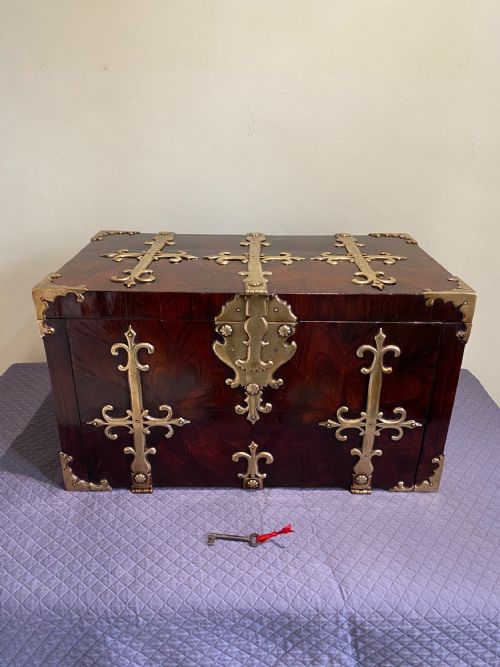
Surfaces frequently display hand-planed textures and carved details, particularly on friezes and supports. Metal fittings such as brass fixtures were integrated to reinforce joints and provide functional hardware.
The furniture styles represented include Georgian, Jacobean Revival, Arts and Crafts, and Iberian Baroque.
What varies in quality
The integrity of the timber dictates the standing of a piece, distinguishing surfaces fashioned from thick, uncompromised boards from those altered over time. The depth of grain and the natural patina developed through prolonged handling elevate the presence of the wood.
Execution of carving and the fidelity of period details separate standard utilitarian examples from masterworks of regional joinery. Structural proportion and the balance between top planks and underframes determine the visual harmony of the table.
Piggin Norwich
The Historic Wooden Table Glossary
- Plank top
- A solid wooden surface constructed from broad boards joined edge to edge. This method provides a durable workspace characteristic of earlier domestic furniture.
- Refectory table
- A long, narrow table traditionally used for communal dining in large halls. These heavy pieces are supported by substantial legs and stretcher rails.
- Frieze
- The horizontal band situated directly beneath the tabletop, frequently decorated with carved motifs. In many tables, this section houses integrated drawers.
- Jacobean revival
- A nineteenth-century style replicating the heavy, ornate furniture forms of the seventeenth century. These pieces utilise dark oak and deep relief carving.
- Side table
- A small table designed to stand against a wall or beside seating. They offer convenient surface space while occupying minimal floor area.
Historic Wooden Table: Frequently Asked Questions
What is a refectory table?
A refectory table is an elongated wooden surface originally built for communal dining halls and monasteries. They feature robust stretcher frames designed to prevent wobbling on uneven stone floors.
Over time, these large tables transitioned into domestic settings, where their generous proportions made them suitable for gathering and working.
How do I care for antique wood?
Antique wooden surfaces benefit from stable indoor environments away from direct heat sources and extreme humidity fluctuations. Applying appropriate wax occasionally helps nourish the grain and protects the patina.
Avoiding synthetic chemical polishes ensures the historic finish remains undamaged and continues to age gracefully.
Can I use an antique table daily?
Historic tables are built from durable hardwoods like oak and walnut designed for generations of heavy use. Using coasters and placemats protects the aged surface from moisture and heat marks.
Regular practical use allows you to appreciate the tactile qualities of the timber while continuing the story of the piece.
How do I identify the period?
Period identification relies on examining the joinery methods, tool marks left by makers, and the specific style characteristics of the woodwork. Elements such as carved friezes and leg turnings often correspond to distinct historical eras.
Comparing the timber species and construction details with documented examples helps clarify the date of origin.