


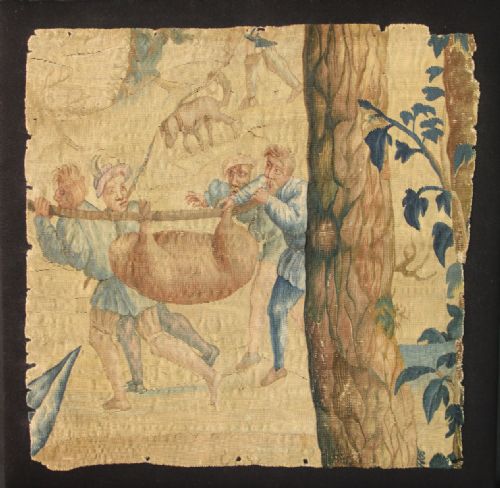


Historic Textile Fragment
Historic textile fragment pieces are survivors of earlier centuries, offering tactile connections to seventeenth and eighteenth-century interiors through wool, silk, and linen.
Historic Textile Fragment
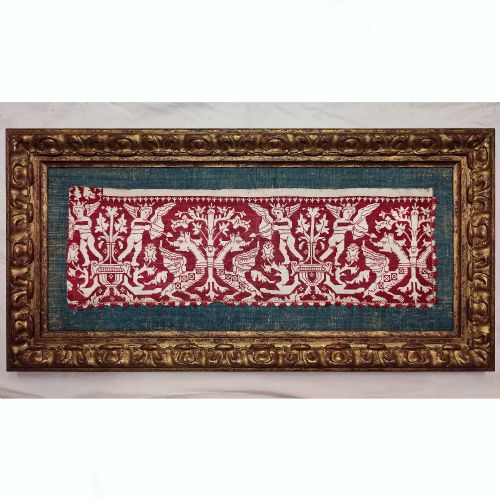
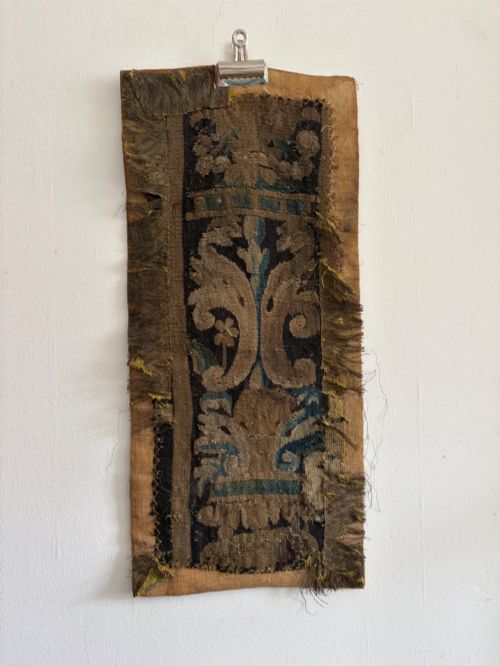
A historic textile fragment is a remnant of a larger furnishing, wall hanging, or garment, often encountered here as verdure tapestry borders, embroidered panels, and bedsheet trims. These pieces originate from seventeenth and eighteenth-century European and international workshops, spanning Flemish, Italian, English, Greek, and Mughal traditions. Buyers seek them for their weathered patinas and decorative versatility.
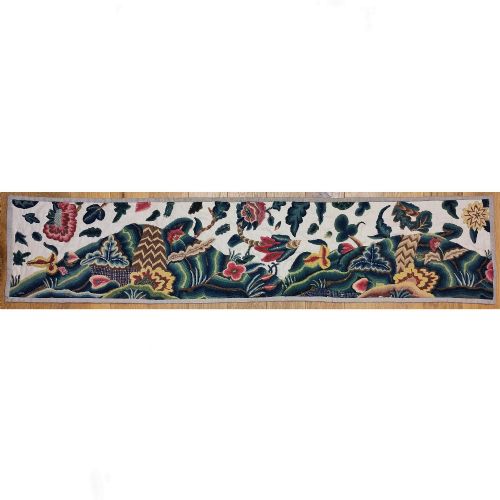
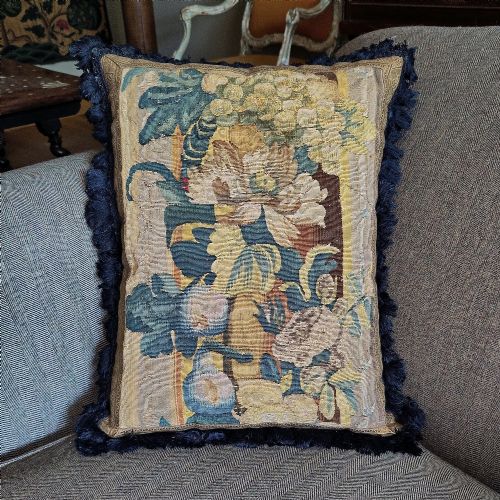
The selections on this page lean heavily towards Flemish verdure tapestries and seventeenth-century borders, mounted on linen or framed for display. Collectors also find English crewelwork panels and Greek island embroideries alongside large carpet fragments from North India. Each piece preserves a distinct fragment of historical craftsmanship.
Materials and construction
The construction of these pieces relies on natural fibres such as wool, silk, linen, and cotton, woven or embroidered by hand. Flemish tapestries utilise dense wool and silk weaves to build verdure landscapes and decorative borders. English crewelwork employs wool embroidery on linen grounds, while Greek and Italian works feature intricate needlework.
Framing and mounting methods vary, with many textile fragments secured to linen supports or placed behind glass within gilded wood frames. These secondary treatments stabilise fragile historic fibres for modern display while preserving the original edges and stitches of the textile.
Historic Textile Fragment Retail Price Guide 2026
Typical asking prices for historic textile fragment among the pieces listed under this phrase on Sellingantiques today, from the lower quarter to the upper quarter. They describe what is for sale here now, not the wider market.
Some seventeenth-century Flemish weavers hid tiny stray threads inside verdure borders, leaving miniature secret signatures within the leafy foliage.
Judgements of quality
Quality in a historic textile fragment rests on the density of the weave, the complexity of the design, and the retention of original colour. Finer wools and silks hold their pictorial depth better over centuries, whereas coarser textiles lose definition. The legibility of a verdure landscape or an embroidered border determines the visual impact of the piece.
The integrity of the remaining fabric and the quality of historical mounting also distinguish superior examples. Pieces with minimal restoration retain a more authentic surface texture, whereas heavily reworked fragments lose their primary character. The richness of the dye palette further separates standard domestic fragments from exceptional workshop productions.
The Historic Textile Fragment Glossary
- Verdure tapestry
- A wall hanging or fragment depicting a lush, stylised landscape featuring foliage, trees, and occasionally animals. These scenes dominated seventeenth-century Flemish weaving.
- Crewelwork
- A type of embroidery executed with wool yarn on a plain-weave cotton or linen ground. English examples often display flowing floral and botanical motifs.
- Flemish baroque
- A grand artistic style prevalent in seventeenth-century Flanders, characterised by dramatic movement and rich ornamentation in woven textiles.
- Border fragment
- A surviving section cut from the decorative outer band of a larger tapestry or carpet. These strips were frequently salvaged and repurposed into cushions or wall panels.
Historic Textile Fragment: Frequently Asked Questions
How were these textile fragments used originally?
Historic textile fragments originated as parts of larger wall hangings, decorative carpets, bedsheets, or furnishings within wealthy households.
Over time, as the main items wore out, surviving sections were salvaged, repurposed into smaller cushions and borders, or preserved as independent panels.
How do I care for a historic textile fragment?
These delicate organic fibres require protection from direct sunlight to prevent fading of natural wool and silk dyes.
Displaying pieces away from excessive moisture and handling them minimally ensures the fragile historic threads remain stable.
Can I hang these textile pieces on the wall?
Many fragments arrive mounted on linen or housed within frames specifically designed for secure wall display.
Using proper archival backing distributes the weight evenly across the fragile fabric rather than straining individual stitches.
How are seventeenth-century fragments identified?
Identification relies on examining the specific weave structure, the type of natural dyes used, and stylistic indicators such as Baroque motifs.
Comparing the needlework techniques against documented examples from Flemish, English, or Greek traditions helps establish the likely origin.