





Historic Storage Trunk
These historic storage trunks and coffers are robust timber vessels built for domestic security and utility, offering enduring character to any interior.
Historic Storage Trunk
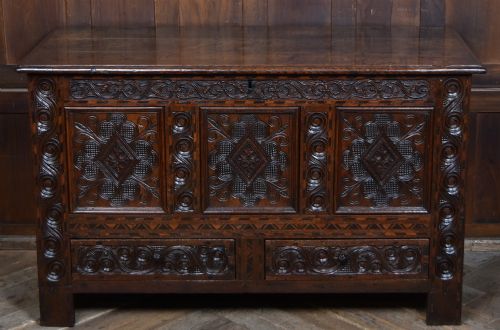
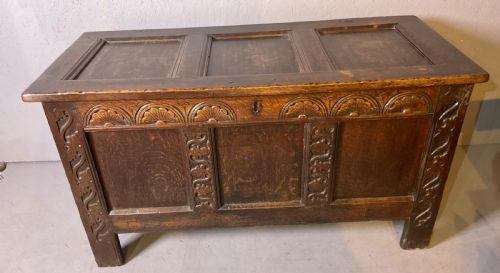
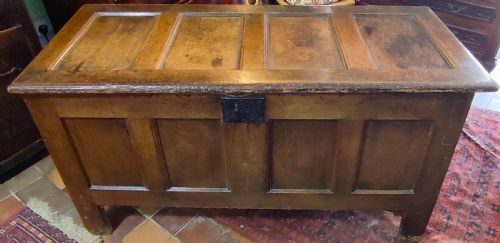
A historic storage trunk primarily appears on this page in the form of early oak coffers and mule chests. These heavy timber receptacles served centuries of households for storing textiles, valuables and documents.
The pieces span from the 16th century through the 19th century, with significant representation from the 17th and 18th centuries. Forms range from simple boarded constructions to joined Lancashire coffers and specialised sword chests.
Makers utilised sturdy native timbers to build these utilitarian objects for daily domestic life. Buyers encounter regional variations reflecting Jacobean, Elizabethan, Tudor and Georgian aesthetic preferences.
Materials and construction methods
Carpenters constructed these trunks predominantly from solid oak and pine, shaping the dense timber with hand tools. Boards were joined using traditional frame-and-panel techniques or heavy pegging to accommodate seasonal wood movement.
Makers reinforced the structural integrity of these storage pieces with wrought iron hinges, straps and brass mounts. Wood inlay and carved surface ornamentation frequently decorated the primary facades of the better examples.
Historic Storage Trunk Retail Price Guide 2026
Typical asking prices for historic storage trunk among the pieces listed under this phrase on Sellingantiques today, from the lower quarter to the upper quarter. They describe what is for sale here now, not the wider market.
Early carpenters occasionally hid secret compartments inside these chests, ensuring that clumsy household thieves only found spare wool.
Distinctions in craftsmanship and survival
Quality in these chests rests upon the integrity of the original timber and the depth of the hand carving. Finer pieces demonstrate precise joinery and sophisticated decorative motifs rather than purely utilitarian assembly.
The degree of original surface survival separates standard storage boxes from superior examples. Minimal timber replacement and undisturbed historic patina elevate the standing of a piece considerably.
The Historic Storage Trunk Glossary
- Coffer
- A heavy wooden chest traditionally used for storing valuables, textiles or documents. These form the majority of early storage pieces on this page.
- Mule chest
- A storage chest featuring one or more drawers beneath the main lidded compartment. This form emerged as domestic storage needs evolved.
- Boarded construction
- A simple method of building chests by pinning flat planks of timber directly together at the edges. This technique characterises the earliest sixteenth century examples.
- Joined construction
- A method utilising framed panels held together by mortise and tenon joints fixed with wooden pegs. This allowed the timber to expand and contract without splitting.
- Sword chest
- A narrow chest specifically designed to accommodate long edged weapons securely. These represent a specialised regional furniture form.
Historic Storage Trunk: Frequently Asked Questions
How do I date an old chest?
Examine the construction methods, tool marks and timber species visible across the piece. Pegged joints and hand-split boards generally point to earlier centuries.
Compare the surface wear and stylistic motifs, such as Jacobean carving or Elizabethan framing, against documented examples from the same era.
What is a mule chest?
A mule chest is a traditional storage chest that incorporates one or more drawers beneath the primary upper compartment. This hybrid form bridges the gap between simple coffers and modern drawer chests.
They gained popularity as households sought easier access to stored linens without lifting the heavy top lid every time.
Can I use an antique trunk for daily storage?
These robust timber vessels suit modern storage needs exceptionally well, provided you protect them from extreme humidity and direct heat sources. Blankets, heavy winter garments and linens find a natural home inside their spacious interiors.
Ensure the interior surfaces are clean and dry before placing textiles inside historic wood.
Why are some chests called coffers?
The term coffer historically denoted a strongbox used for safeguarding valuables, money or important documents rather than ordinary clothing. Over time, the distinction between chest and coffer blurred in everyday language.
On this page, the terms often describe heavy oak storage pieces built with robust lids and secure fastenings.
How should I care for historic oak furniture?
Maintain a stable indoor climate away from radiators and direct sunlight to prevent the timber from drying out or splitting. Gentle dusting with a dry, soft cloth preserves the historic wax or polish without harming the patina.
Avoid modern liquid polishes containing silicones, which can penetrate porous historic wood surfaces permanently.