

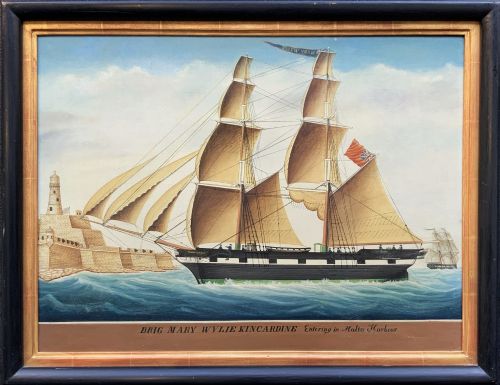


Historic Shipping Painting
A historic shipping painting captures the grit and grace of maritime heritage through oil and watercolour.
Historic Shipping Painting
A historic shipping painting brings naval vessels, bustling rivers and open sea voyages into focus across periods spanning the nineteenth and twentieth centuries. Buyers seeking a historic shipping painting will encounter framed oil paintings and watercolours depicting specific vessels, such as the brig Mary Wylie or HMS Swift.
The selection ranges from Victorian maritime scenes and Edwardian works to mid-century marine realism. Alongside framed canvases and paper watercolours, the selection includes model boats and pond yachts.
Makers and artists recorded in these works include James Hardy, Bernard Gribble, Charles William Wyllie, Dion Pears, Joseph Heard, WF Mitchell and Edward Fletcher. These pieces record naval engagements, coastal lighthouses and major liners like the RMS Lusitania.
Materials and construction methods
Canvas and wood panels serve as the primary supports for oil paintings, while paper accommodates watercolours. Artists applied oil paint and gold leaf to build rich textures and luminosity across maritime scenes.
Framed artwork utilises timber framing, often enhanced with gold leaf gilding to complement the maritime subjects. Watercolour works on paper utilise delicate pigments applied with precision to capture light and water.
Historic Shipping Painting Retail Price Guide 2026
Typical asking prices for historic shipping painting among the pieces listed under this phrase on Sellingantiques today, from the lower quarter to the upper quarter. They describe what is for sale here now, not the wider market.
Some naval vessels sailed straight off the canvas and into the living room as large model pond yachts.
Assessing quality in maritime art
The standard of a historic shipping painting rests upon the artist's command of maritime architecture, rigging detail and atmospheric water movement. Pieces by documented artists with clear historical context command greater attention.
The preservation of the original canvas, panel or paper surface, alongside the integrity of any associated gold leaf framing, determines the visual impact of the work. Accurate depiction of named vessels and locations adds significant depth to the piece.
James Hardy·Bernard Gribble·Charles William Wyllie·Dion Pears·Joseph Heard·WF Mitchell·Edward Fletcher
The Historic Shipping Painting Glossary
- Brig
- A two-masted, square-rigged sailing vessel frequently depicted in nineteenth-century maritime art. These agile ships served commercial and naval roles across global waters.
- Galleon
- A large, multi-decked sailing ship used by European states from the 16th to 18th centuries. Their imposing structures appear in dramatic historical and military compositions.
- West Indiaman
- A large merchant vessel engaged in trade between Europe and the West Indies. Artists often portrayed these ships near prominent coastal landmarks such as lighthouses.
- Watercolour
- A painting method where water-soluble pigments are suspended in a water-based solution on paper. This technique yields translucent effects suited to coastal light and open skies.
Historic Shipping Painting: Frequently Asked Questions
What periods do these maritime paintings represent?
The works span from the Georgian and Victorian eras through the Edwardian period to mid-century marine realism. Artists captured naval subjects and commercial shipping across these changing decades.
Changes in painting styles reflect the evolution of maritime art from formal ship portraits to dynamic sea battles and atmospheric river scenes.
How do I identify a named ship in a painting?
Many historic works record specific vessels, such as naval cruisers, merchant brigs or famous liners, often noted in the title or inscribed on the canvas. Details like pennants, flag signals and port backgrounds assist in identification.
Artists frequently documented historical events or specific commissions, anchoring the visual record in maritime archives.
Where should I hang a framed oil painting?
Choose a wall away from direct sunlight and excessive humidity to protect the oil paint, canvas and gold leaf framing. Stable indoor environments preserve the structural integrity of wood panels and stretched fabric.
Proper lighting enhances the fine details of rigging, coastal landmarks and water textures without generating damaging heat.
What is the difference between oil and watercolour works?
Oil paintings utilise pigments bound in drying oils on canvas or wood panels, offering rich texture and deep colour saturation. Watercolours employ water-based pigments on paper, presenting a lighter, more translucent quality.
Both mediums were utilised by marine artists to capture the shifting moods of the sea and the precise architecture of historic vessels.