



Historic Shipping Artwork
Historic shipping artwork captures centuries of maritime trade and naval power through oil paintings, watercolours, and etchings.
Historic Shipping Artwork
Historic shipping artwork encompasses oil paintings, watercolours, and fine art prints depicting vessels ranging from 19th-century brigantine ships to royal navy cruisers. Collectors encounter pieces spanning the Georgian, Victorian, Edwardian, and mid-century eras, reflecting the evolving maritime history of Britain and the wider world.
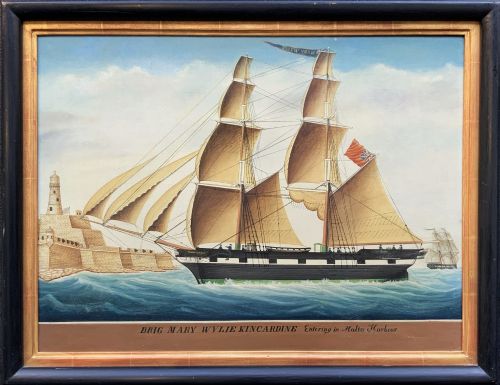
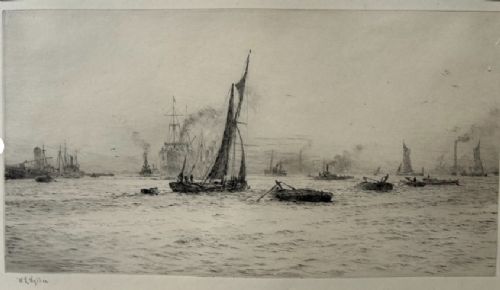
The subjects on this page focus heavily on specific named vessels, naval engagements, and bustling river scenes along the Thames. Portraits of individual sailing ships off lighthouses or foreign harbours dominate the offerings, providing detailed records of historic naval architecture.
Materials and Technique
Artists typically worked with oil paint on canvas or wooden panel, building up rich layers of sea and sky to capture changing atmospheric conditions. Watercolour on paper also appears frequently, particularly for detailed naval ship portraits and illustrative works.
Many of these works are housed in period frames finished with gold leaf, which complement the traditional maritime aesthetic. Original pencil signed etchings demonstrate the graphic techniques utilised by artists to record river scenes.
Historic Shipping Artwork Retail Price Guide 2026
Typical asking prices for historic shipping artwork among the pieces listed under this phrase on Sellingantiques today, from the lower quarter to the upper quarter. They describe what is for sale here now, not the wider market.
Napoleon Bonaparte occasionally drops by the 19th-century navy to supervise naval men.
Assessing Quality
Quality in these works rests upon the artist's precise understanding of rigging, hull construction, and nautical perspective. Skilled hands render the weight of the water and the tautness of the canvas sails with convincing accuracy, whereas lesser works treat these technical details as generic approximations.
The historical significance of the vessel and the documentary value of the setting also elevate certain pieces above standard decorative marine art. Signed works by recognised marine painters carry stronger provenance and technical execution.
Bernard Gribble·William Lionel Wyllie·Charles William Wyllie·Dion Pears·Joseph Heard·WF Mitchell·Edward Fletcher
The Historic Shipping Artwork Glossary
- West Indiaman
- A large merchant ship trading between Europe and the West Indies. These vessels are often depicted in detailed ship portraits.
- Etching
- A printmaking process where lines are incised into a metal plate with acid. Artists like William Lionel Wyllie utilised this technique for river scenes.
- Panel
- A flat wooden support used instead of canvas for oil paintings. Panel paintings often allow for finer detail in smaller formats.
Historic Shipping Artwork: Frequently Asked Questions
How do I date a maritime painting?
Examine the riggings, hull design, and clothing of any figures depicted, as these changed rapidly across the Georgian, Victorian, and Edwardian periods.
Signatures, framing materials, and artist exhibition records also help narrow down the specific decade of creation.
What is a ship portrait?
A ship portrait is a specific genre of marine art that focuses on accurately depicting a named vessel, often shown from a side profile.
Commissioned by ship captains or owners, these works prioritize technical precision regarding the ship's architecture and rigging.
How should I display historic marine art?
Hang these works away from direct sunlight to protect delicate watercolours and oil pigments from fading over time.
Pairing them with traditional gold leaf frames enhances their historical character within a room.
Are all marine artworks oil paintings?
No, the genre includes watercolours, pencil signed etchings, and fine art prints alongside traditional oil on canvas.
Each medium offers a different visual texture, from the fluid washes of watercolour to the crisp lines of an etching.